Virginia gave this statue to the National Statuary Hall Collection in 2025.
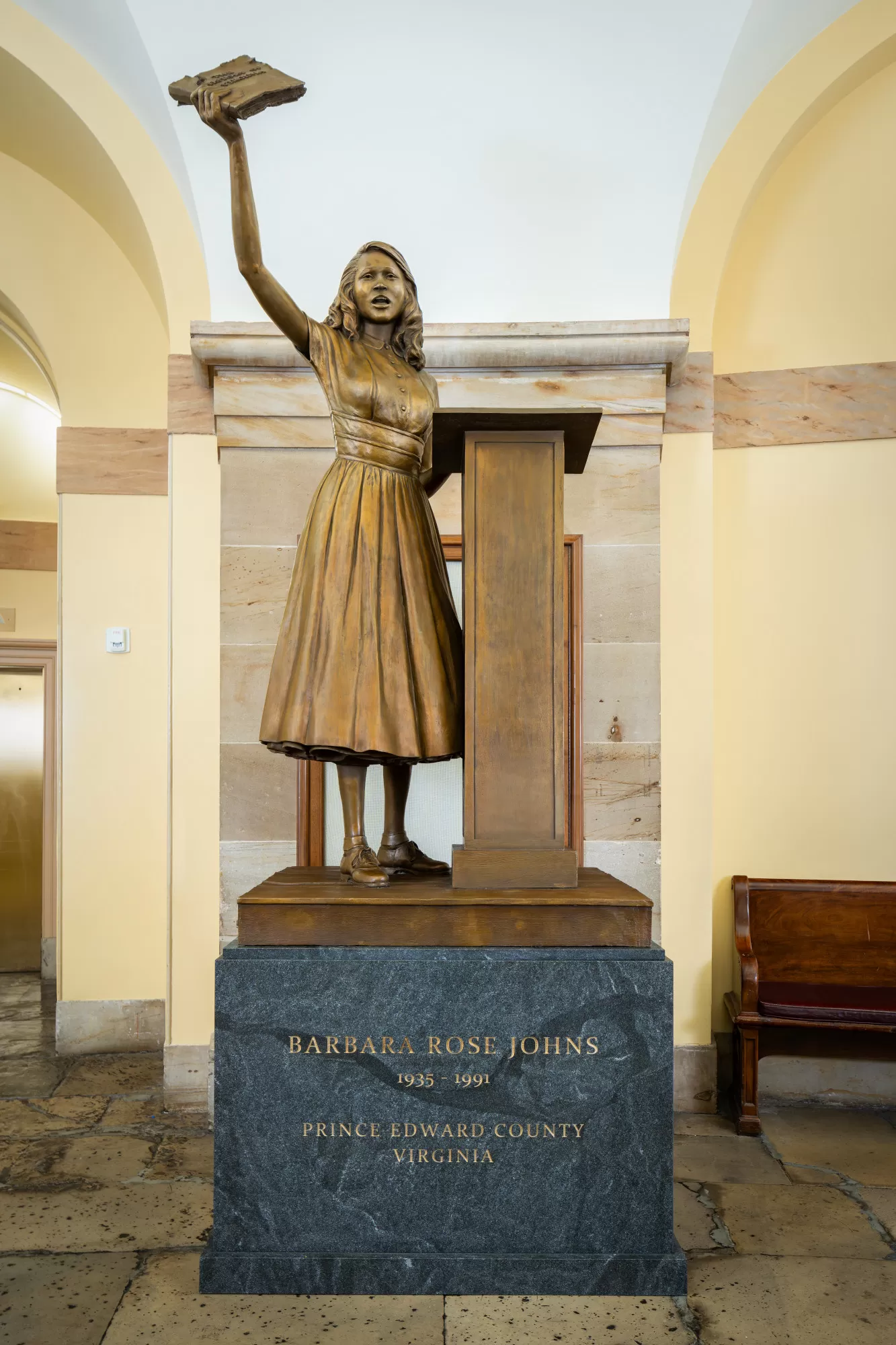
Artist Steven Weitzman depicts Johns during a pivotal moment in her life: she is 16 years old speaking to her classmates at Robert Russa Moton High School in Farmville, Virginia, convincing them to join her and other student organizers to strike for better school facilities and supplies. Her focused expression and clenched left fist show her passion and intensity as she exhorts her classmates. In her right hand, Johns brandishes a tattered textbook, titled The History of Virginia, indicative of the subpar, second-hand materials the school district provided for Moton students.
Johns steps slightly forward on her right foot, a lectern to her left. The lectern, and the wood floor beneath, suggest the auditorium where Johns and the other organizers gathered Moton students on April 23, 1951. After asking the teachers to leave, Johns delivered the speech that convinced the entire student body to walk out of school to protest the severe overcrowding and unequal conditions endured by black students in the county. The students stayed on strike for two weeks, only returning to classes once they were assured legal action was imminent. They had contacted a Richmond law firm that worked with the NAACP on its national strategy to challenge segregated schools. The students convinced the lawyers to represent them, and the lawyers convinced the students and their parents to demand an end to segregation rather than merely equal facilities. Ultimately, the Supreme Court of the United States heard the case, titled Davis v. County School Board of Prince Edward County, Virginia, bundled with four other similar cases under Brown v. Board of Education of Topeka, Kansas. That 1954 decision ended segregation in schools nationwide, though Prince Edward County in particular resisted implementing the change.
Johns wears clothing typical for a teenager in the 1950s, including a crinoline under her skirt, short cuffed socks, and saddle shoes. Before the protest, she was an involved student and leader, though she wasn't known as an activist. However, she was tenacious and persistent in her cause; she gave another impassioned speech before community members at a mass meeting that helped solidify wider support for the striking students and the new demand to desegregate county schools. In the aftermath of the strike, her family feared for her safety, so Johns completed her last year of school in Montgomery, Alabama, before attending Spelman College in Atlanta, Georgia.
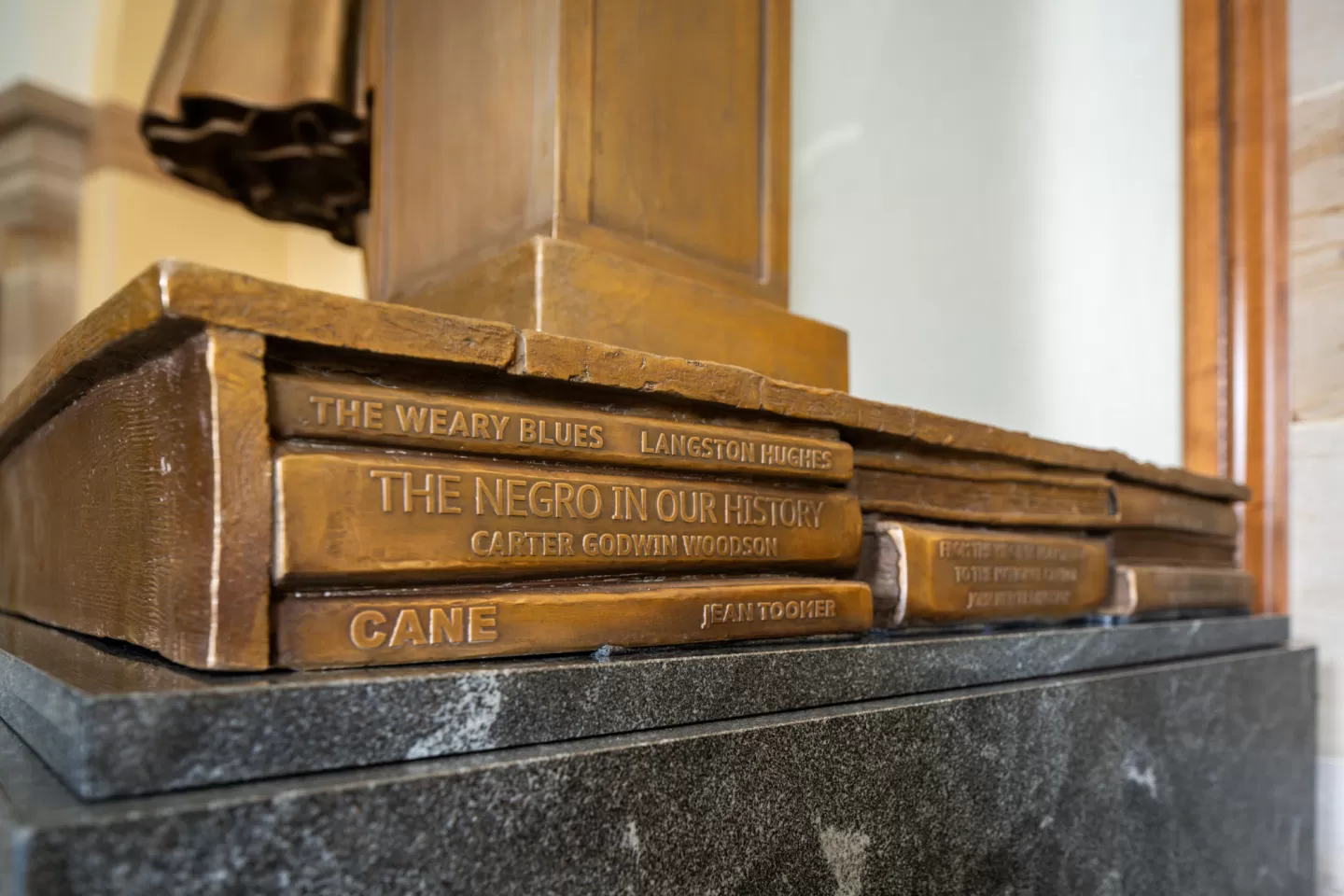
In Montgomery, Johns lived with an uncle, Vernon Johns. He was a preacher who headed Dexter Avenue Baptist Church in the years prior to Dr. Martin Luther King Jr.'s tenure there. He made his library available to Johns during her childhood, and sculptor Weitzman placed examples of the books she may have encountered there—and that were less likely to be available at her school—under the floorboards of the statue's self-base. The statue commissioners selected titles from prominent African American scholars and authors to signify the materials Moton students were missing. The titles and authors embossed on the books' spines include:
Incidents in the Life of a Slave Girl/Harriet Jacobs Poems/Phillis Wheatley My Bondage and My Freedom/Frederick Douglass Their Eyes Were Watching God/Zora Neale Hurston The Souls of Black Folk/W.E.B. Du Bois The Mis-Education of the Negro/Carter Godwin Woodson The Weary Blues/Langston Hughes The Negro in Our History/Carter Godwin Woodson Cane/Jean Toomer From the Virginia Plantation to the National Capitol/John Mercer Langston Up from Slavery/Booker T. Washington What the Negro Thinks/By Robert Russa Moton The Talented Tenth/W.E.B. Du Bois Native Son/by Richard Wright Black Reconstruction in America/W.E.B. Du Bois
Johns's nonviolent civil disobedience in 1951 had local and national consequences, but Johns herself did not engage in further activism. She left college to marry and move to Philadelphia, where she worked as a school librarian in the Philadelphia public schools and raised five children with her husband, William H.R. Powell Jr. She completed a degree at Drexel University in 1979. She so rarely spoke about this period of her life that her children knew nothing about it until a film crew asked to interview her for a documentary. Years after Johns's death from bone cancer in 1991, her husband found an unfinished memoir about her youth and the strike which provided some insight into her inspiration and feelings during that period.
The statue rises over 10 feet from the floor to the top of Johns's head. It was cast at Laran Bronze in Pennsylvania and stands on a granite pedestal. There are inscriptions on three sides of the pedestal.
The front reads:
BARBARA ROSE JOHNS 1935-1991 PRINCE EDWARD COUNTY VIRGINIA
A verse from the Christian Bible is engraved on the proper left:
…and a little child shall lead them Isaiah 11:6
A Johns quote is on the proper right side:
Are we going to just accept these conditions? Or are we going to do something about it?
Weitzman won over the selection commission with his passion for the project and maquette, or small-scale model, of Johns. He worked with Johns's younger sister, Joan Johns Cobb, and other family members to learn about her appearance, clothing, and hair, and he had a model wear a 1950s-style dress in the studio. Since there are very few existing photographs of Johns, and none in which she is speaking, Weitzman relied on her family members to refine her expression and posture.
The statue was unveiled in Emancipation Hall on December 16, 2025, and is currently placed in the Crypt, joining other statues that represent the first 13 states.
Image Gallery
Image
Books under the floorboards of the statue's self-base.
Image
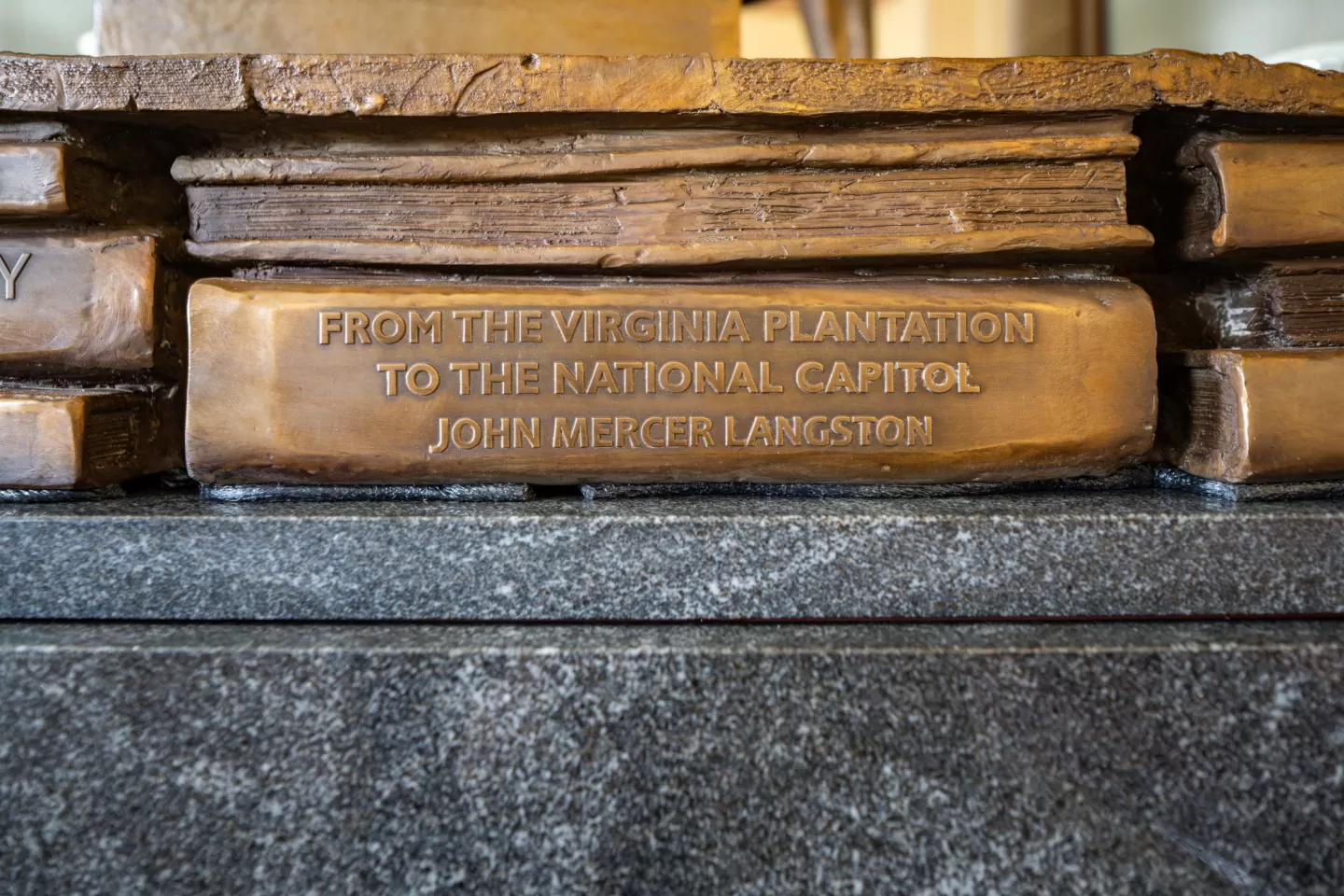
Books under the floorboards of the statue's self-base.
Image
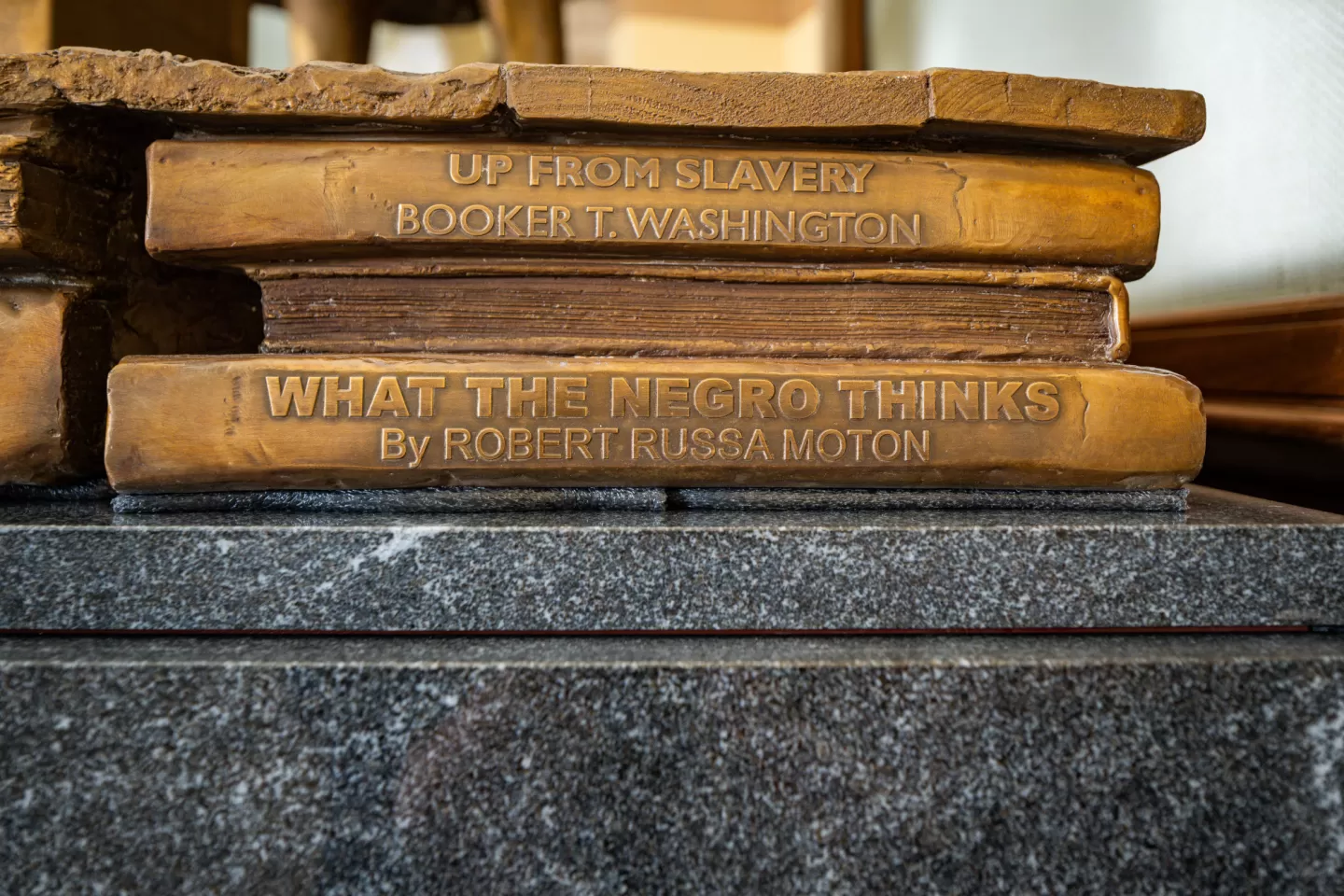
Books under the floorboards of the statue's self-base.
Image
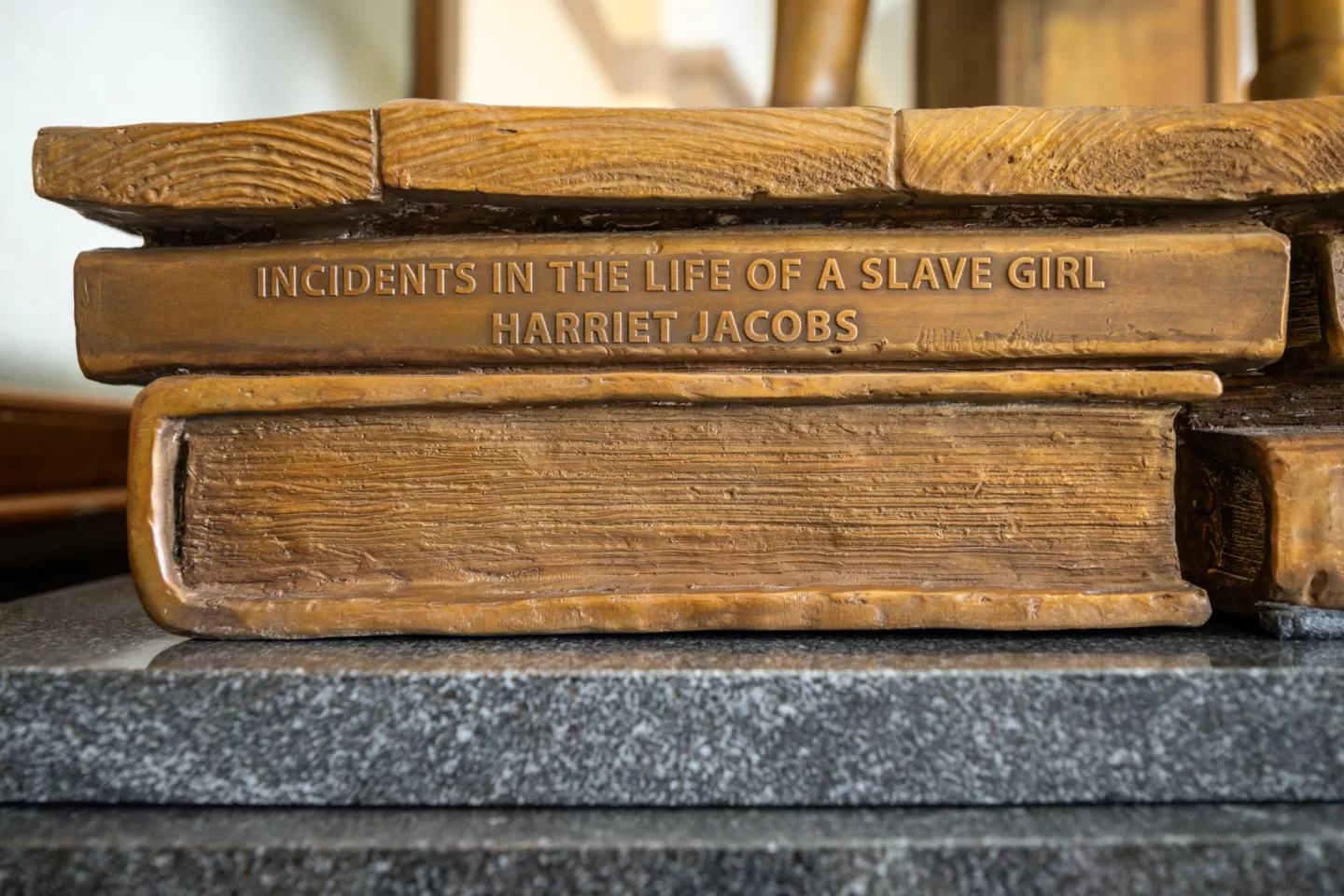
Books under the floorboards of the statue's self-base.
Image
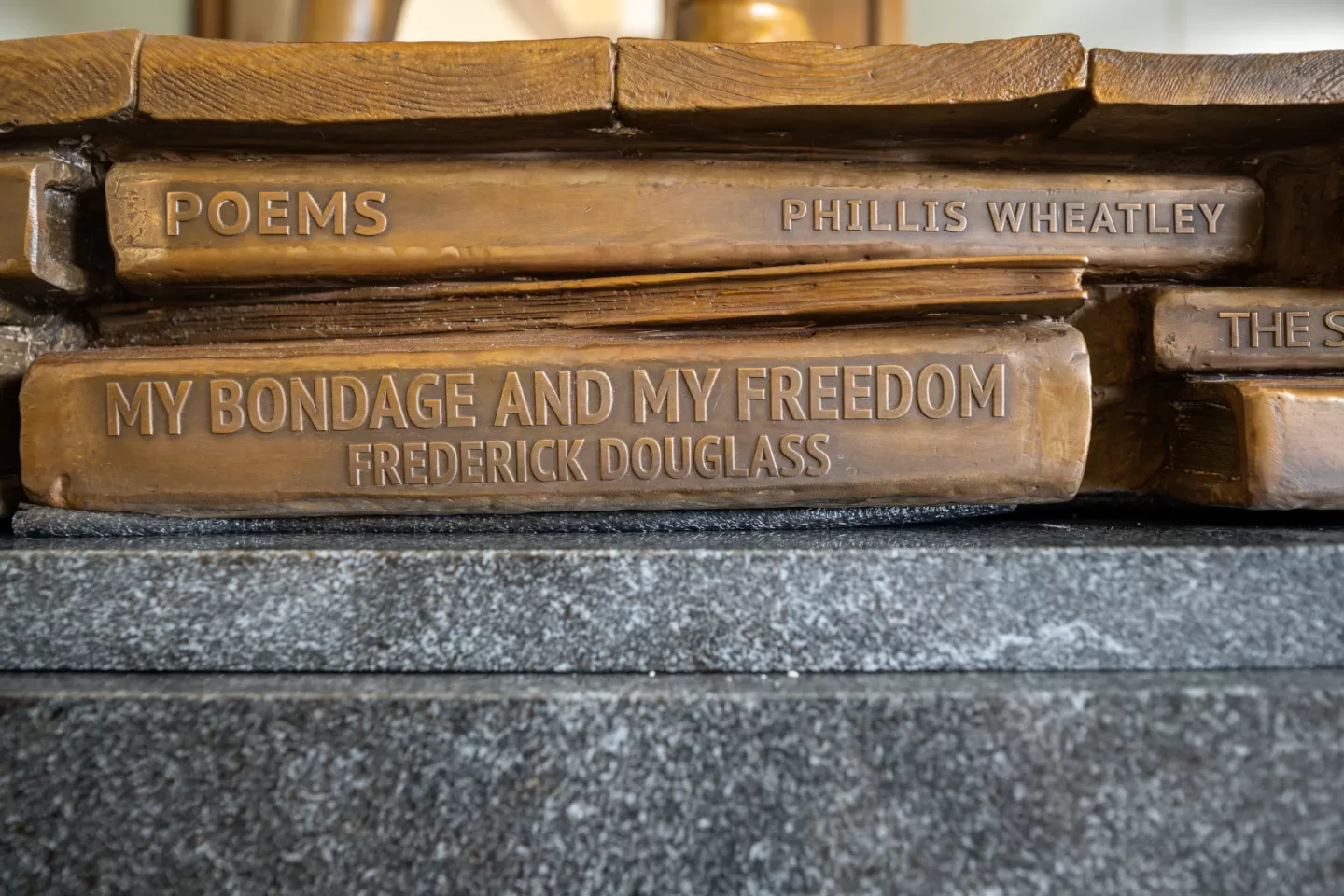
Books under the floorboards of the statue's self-base.
Image
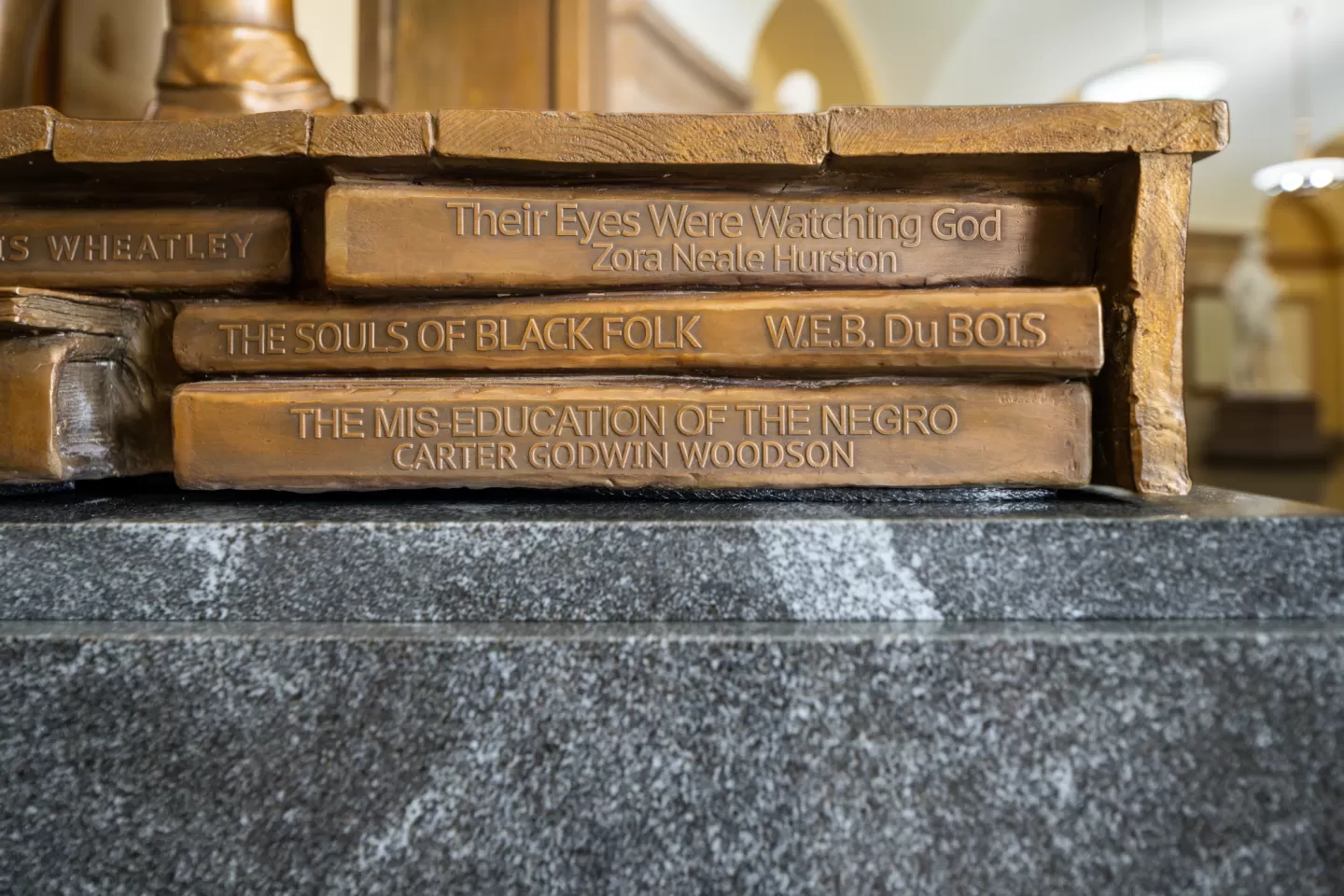
Books under the floorboards of the statue's self-base.
Image
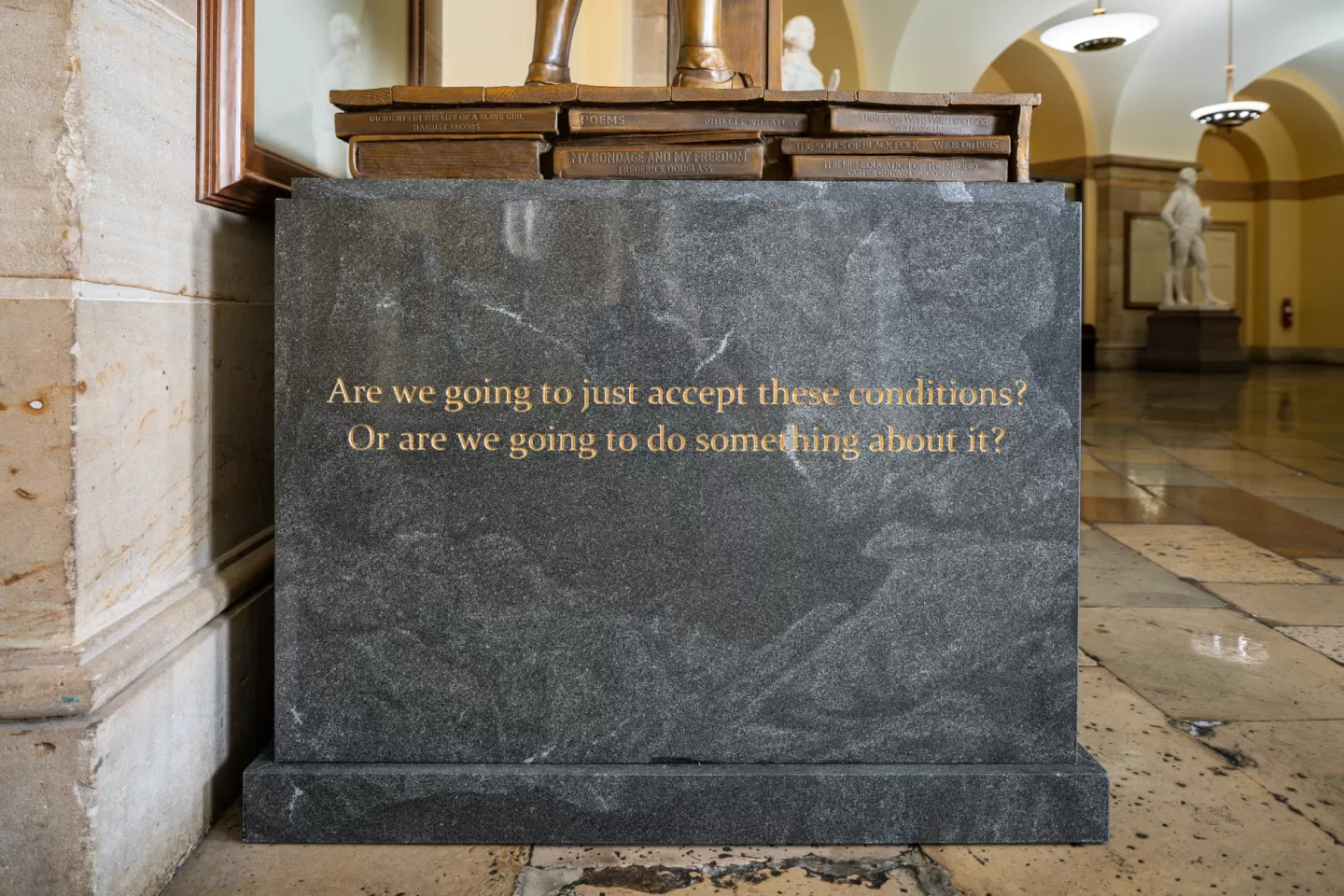
A Johns quote is on the proper right side of the pedestal.