Highlights

Artist
Pierre-Jean David d'Angers
Medium
Bronze
Year
1834
Location

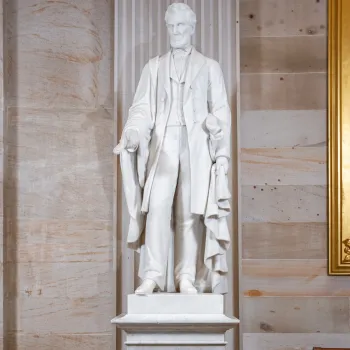
This statue of Thomas Jefferson was the first full-length portrait statue placed in the U.S Capitol Building. Its bronze medium was unusual in early 19th-century America, where sculpture was more commonly carved in marble.

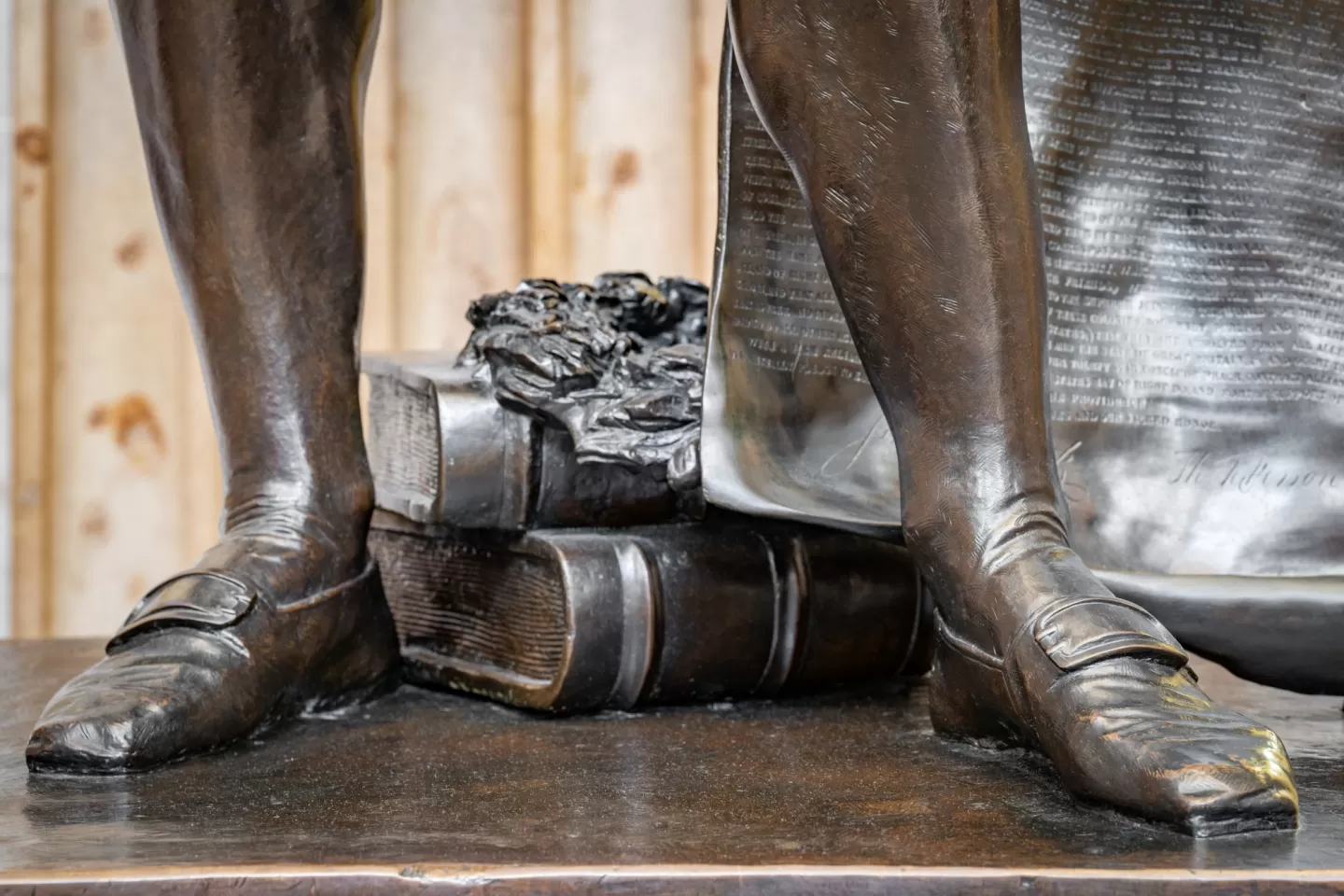
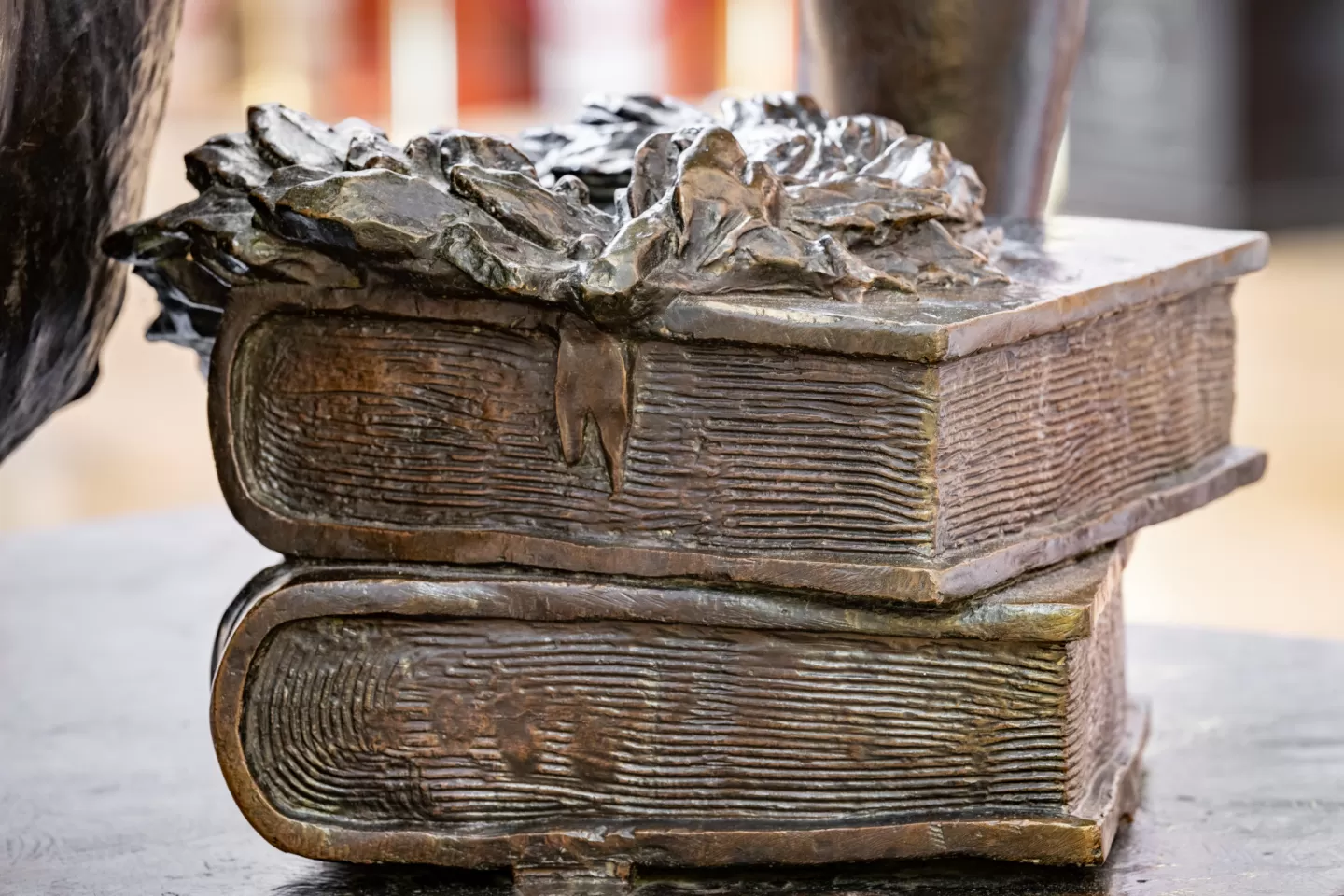
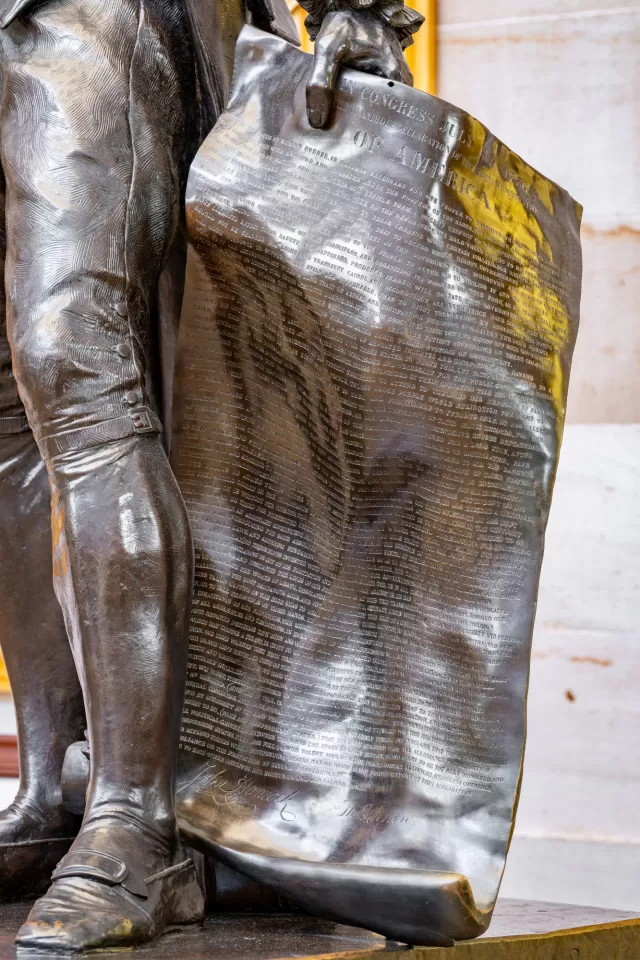
Thomas Jefferson is depicted in his best known role as author of the Declaration of Independence. He stands in a dynamic contrapposto pose with his right hand holding a quill pen. The pen's tip points to Jefferson's left hand, which holds the Declaration of Independence. Jefferson's famous words, which are readable, were created by pressing type into the statue's clay model. Two bound books—perhaps representing the collection that he donated to the Library of Congress—and a wreath, a symbol of victory, lie at his feet. The statue's pedestal is composed of marble and granite, in contrasting colors. The front inscription reads "JEFFERSON."

The statue of Thomas Jefferson was privately commissioned by Uriah Phillips Levy as a gift to the American people. A lieutenant in the Navy, Levy admired Jefferson's politics, social philosophies and views on religious freedom; he held Jefferson in such esteem that in 1836 he purchased Monticello, which had been neglected, and restored it.

The statue was sculpted in France by Pierre-Jean David d'Angers and cast by Honoré Gonon and Sons using the lost-wax technique. On March 21, 1834, the statue was placed in the center of the Capitol Rotunda. Members of the House of Representatives expressed concern regarding the acceptance of the statue as a gift, its placement and the use of bronze rather than the more traditional marble.

Over the next decade, the statue was variously displayed in the Capitol Rotunda and other areas of the building, while never being formally accepted by the Congress. Beginning in the mid to late 1840s, it was displayed on the grounds of the White House. Years later, its neglected condition attracted attention and led to renewed interest in its history. In 1874, the Congress passed a resolution to accept the statue and appropriated funds for its repair. After restoration, the statue was placed in National Statuary Hall and, in 1900, it was moved back to the Rotunda, where it has remained.

Today our Curator, Dr. Michele Cohen, is in the Rotunda with the statue that started it all!

Video Series

Capitol Extra!

Our Curator, Dr. Michele Cohen, is in the Rotunda with the statue that started it all! This statue of Thomas Jefferson was the first full-length portrait statue placed in the U.S Capitol Building.

Watch More