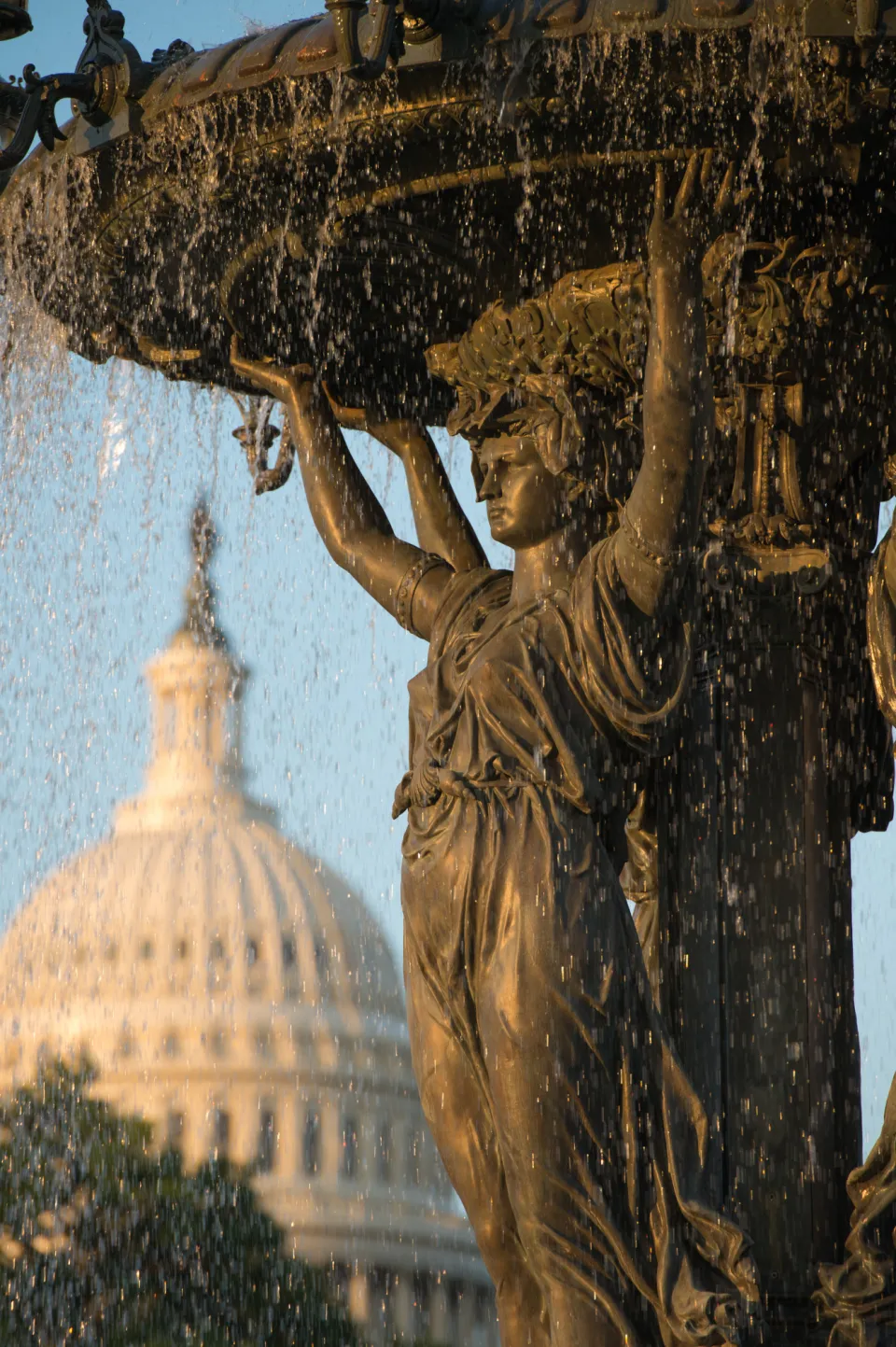
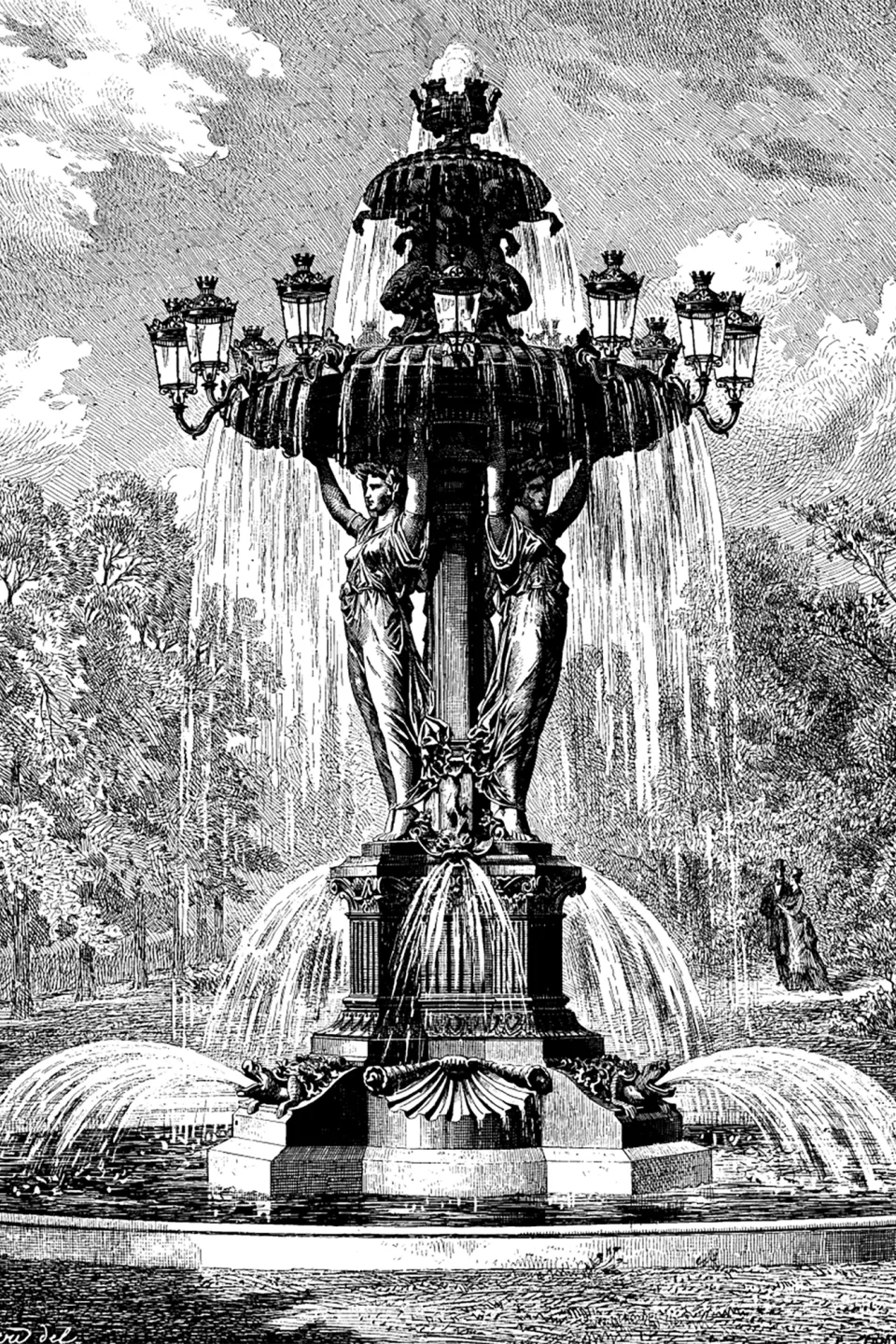
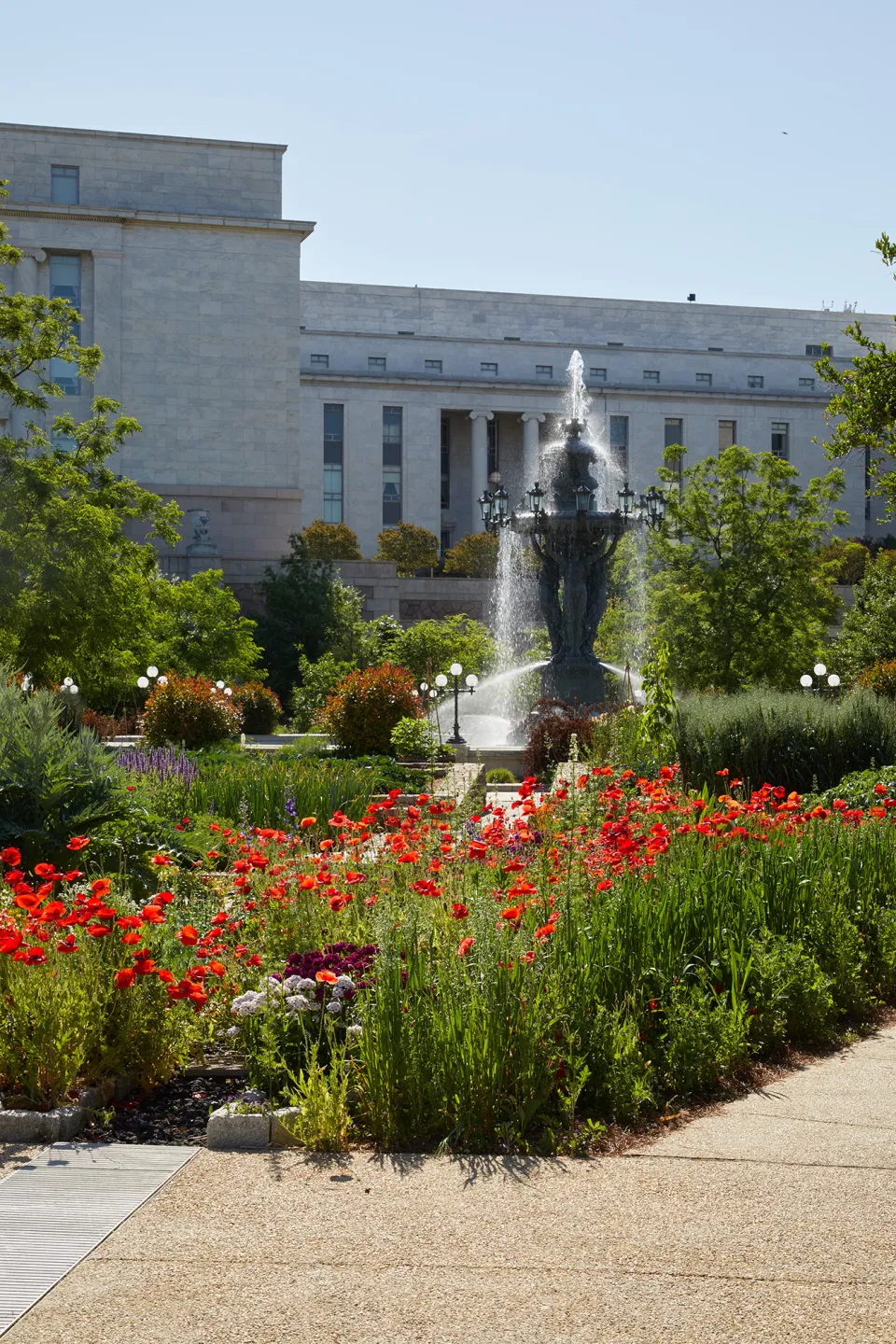
Ten years before New York's statue of Liberty Enlightening the World was dedicated in 1886, French sculptor Frédéric-Auguste Bartholdi created another monumental public work: the Fountain of Light and Water.

The fountain was created for the Centennial Exposition in Philadelphia in 1876, which celebrated the 100th anniversary of the adoption of the Declaration of Independence. Situated near the main entrance gate, it greeted the 10 million visitors (more than 20% of all American citizens!) who came to that first World's Fair in the U.S. The 30-foot-tall fountain was in line with Bartholdi's goal of creating larger-than-life works of art, and, being made of cast iron, had a weight of more than 30,000 pounds.

Image
Image
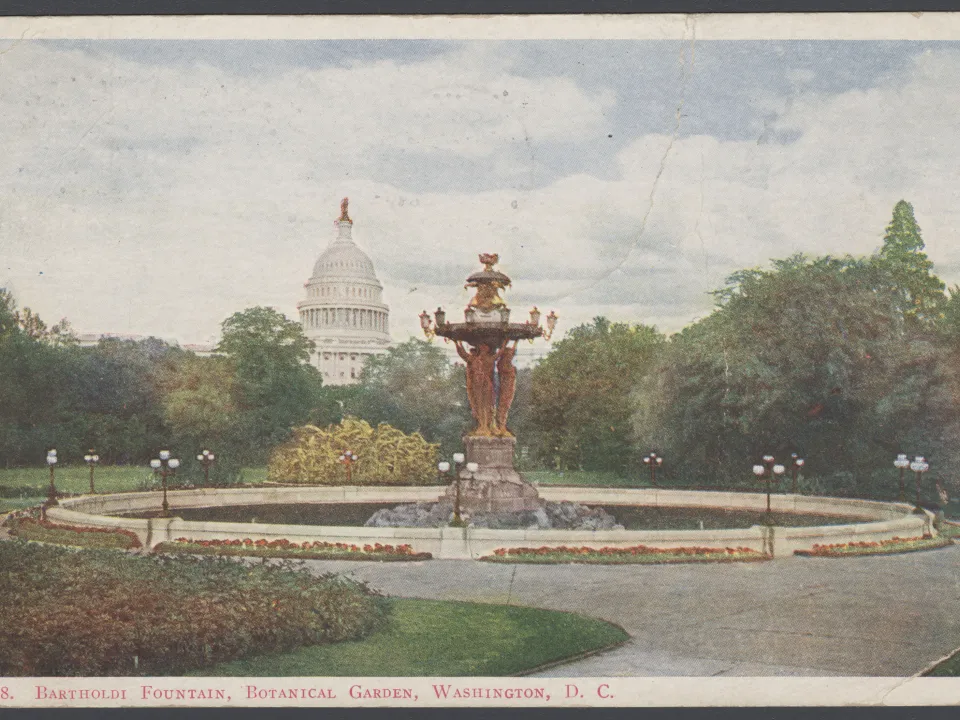
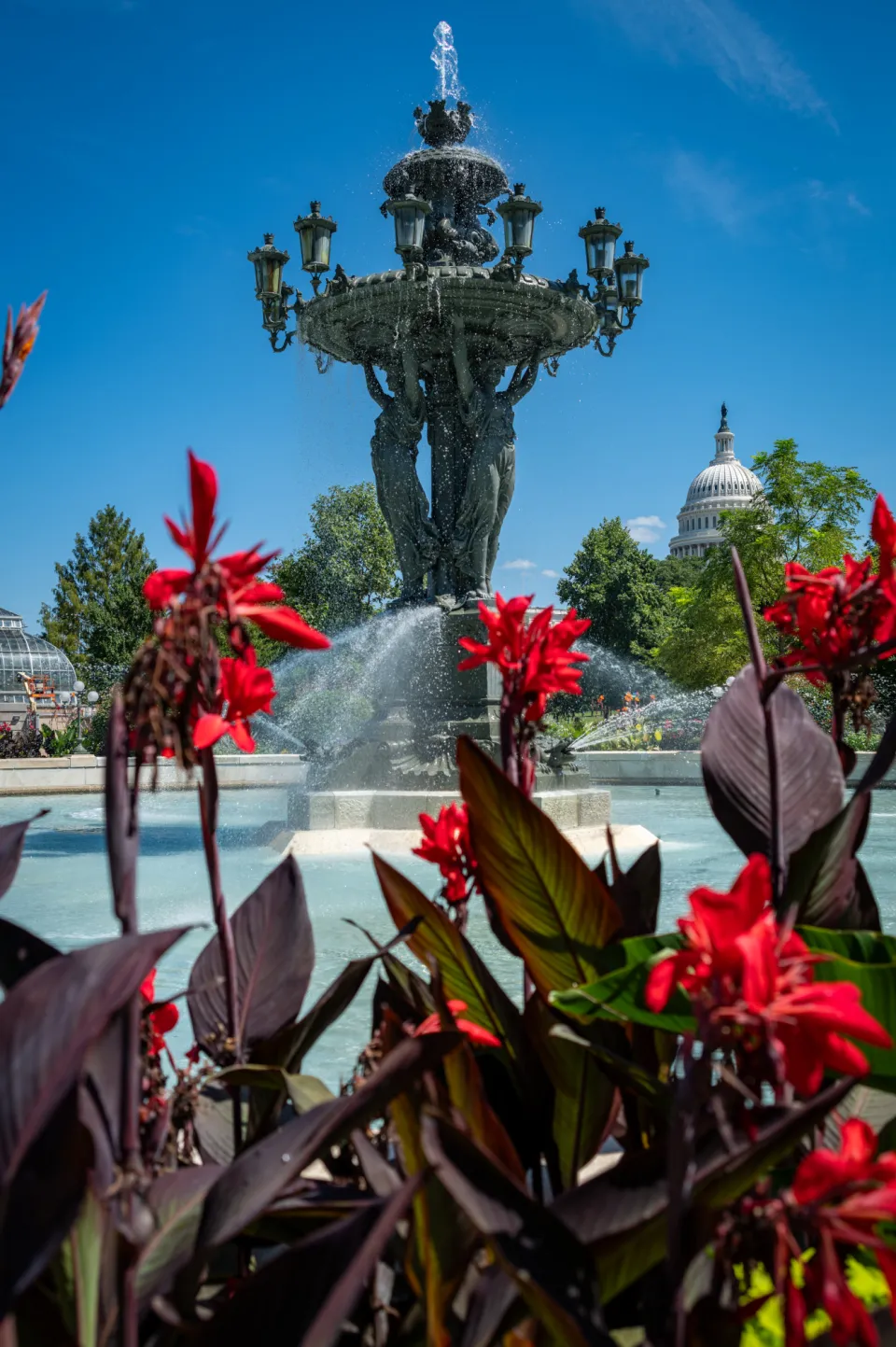
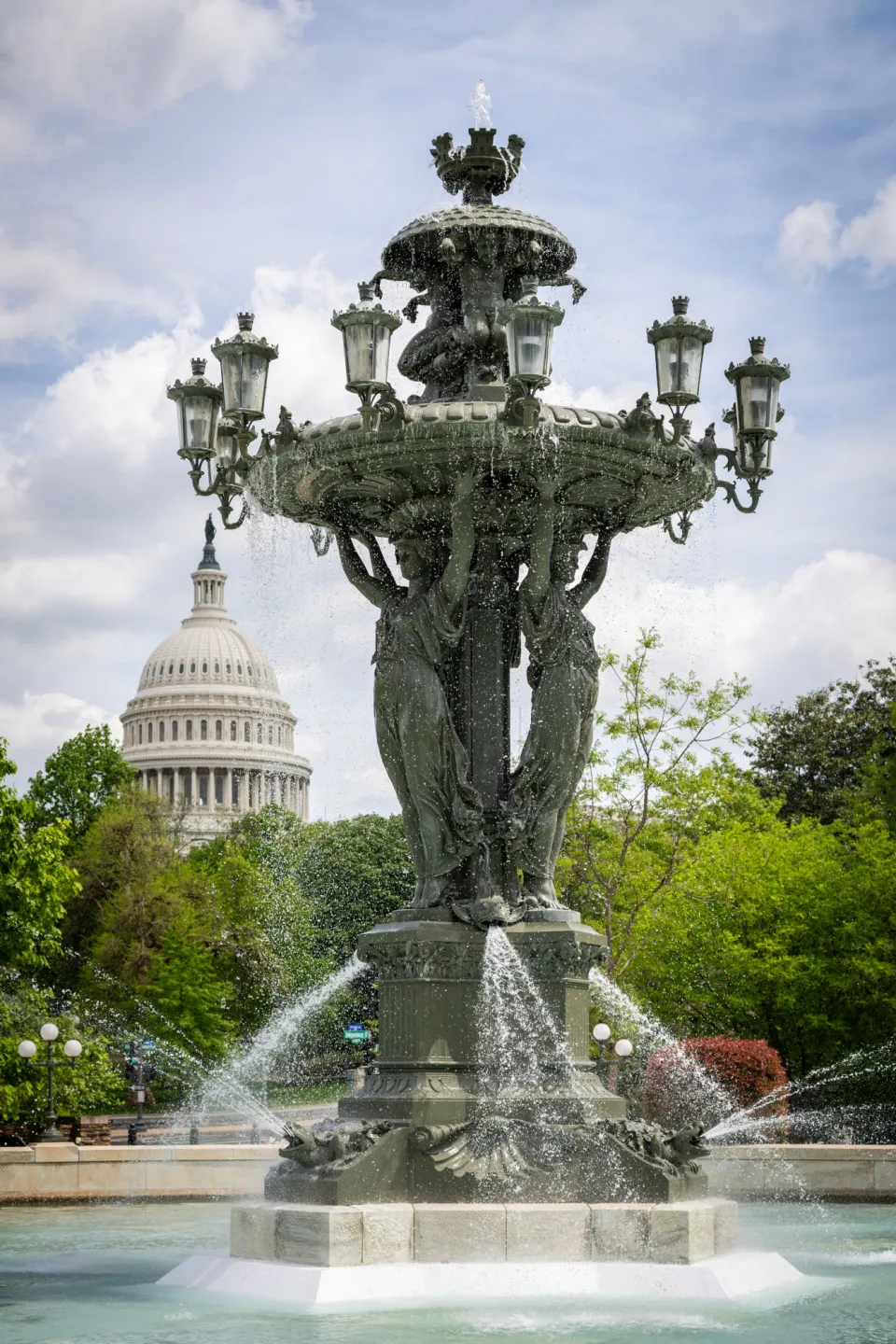
Views of Bartholdi’s fountain with the Capitol Dome in a 1926 postcard and 2017 photograph.
Photos by
Collection of the U.S. House of Representatives; Susanne Bledsoe

In 1877, at the end of the Expo, it was purchased by Congress at the recommendation of Capitol landscape architect Frederick Law Olmsted, moved to the nation's capital, and placed in the United States Botanic Garden (USBG) on U.S. Capitol Grounds. The fountain's first location was on the north side of the USBG's first Conservatory, which today is the site of the Capitol Reflecting Pool in Union Square.

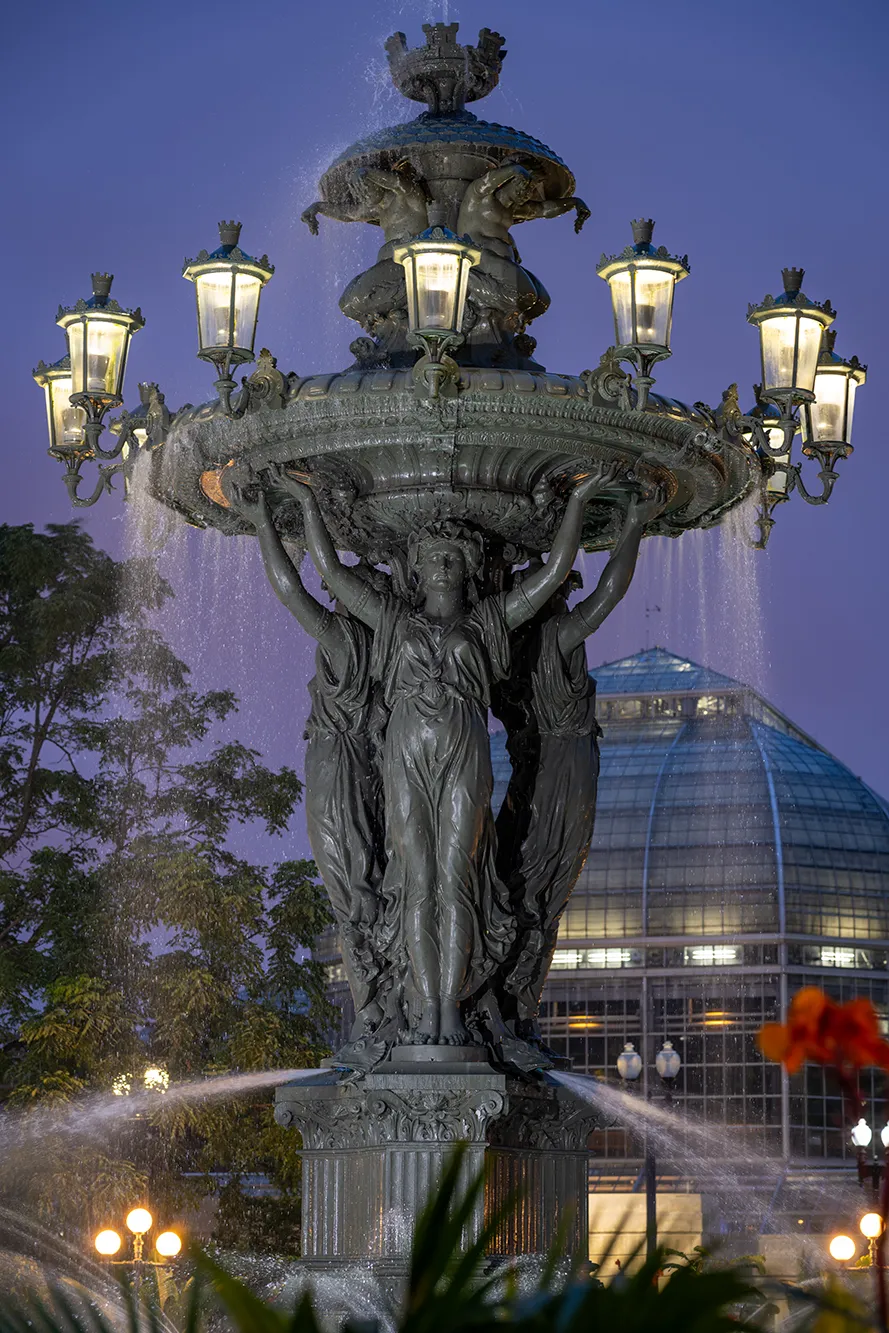
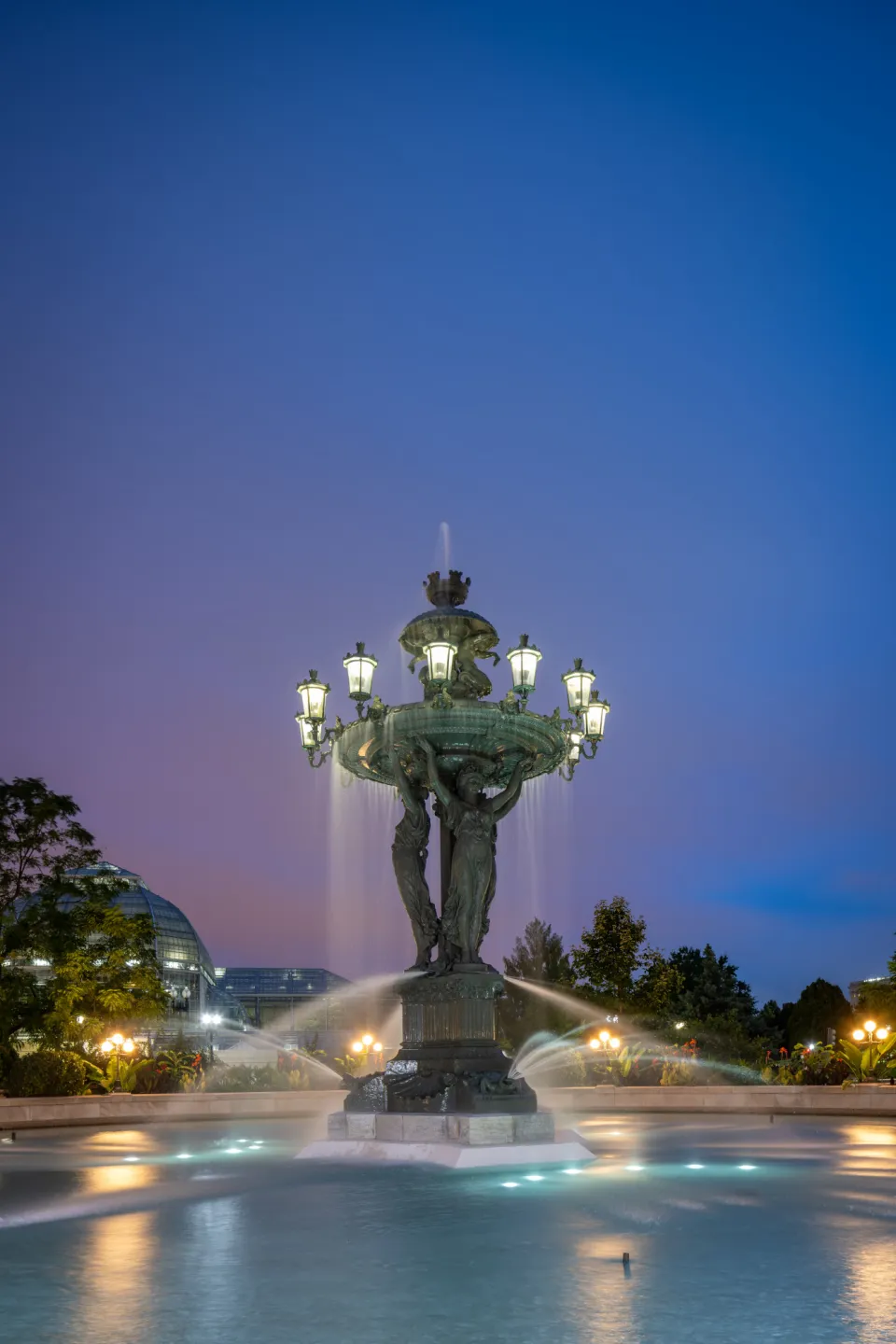
From the beginning, Bartholdi's vision was to marry light with water. Gas lanterns made the fountain a popular destination as one of the first attractions in Washington, D.C., to be brightly illuminated at night.

Image
November 1876 Olmsted drawing.
Image
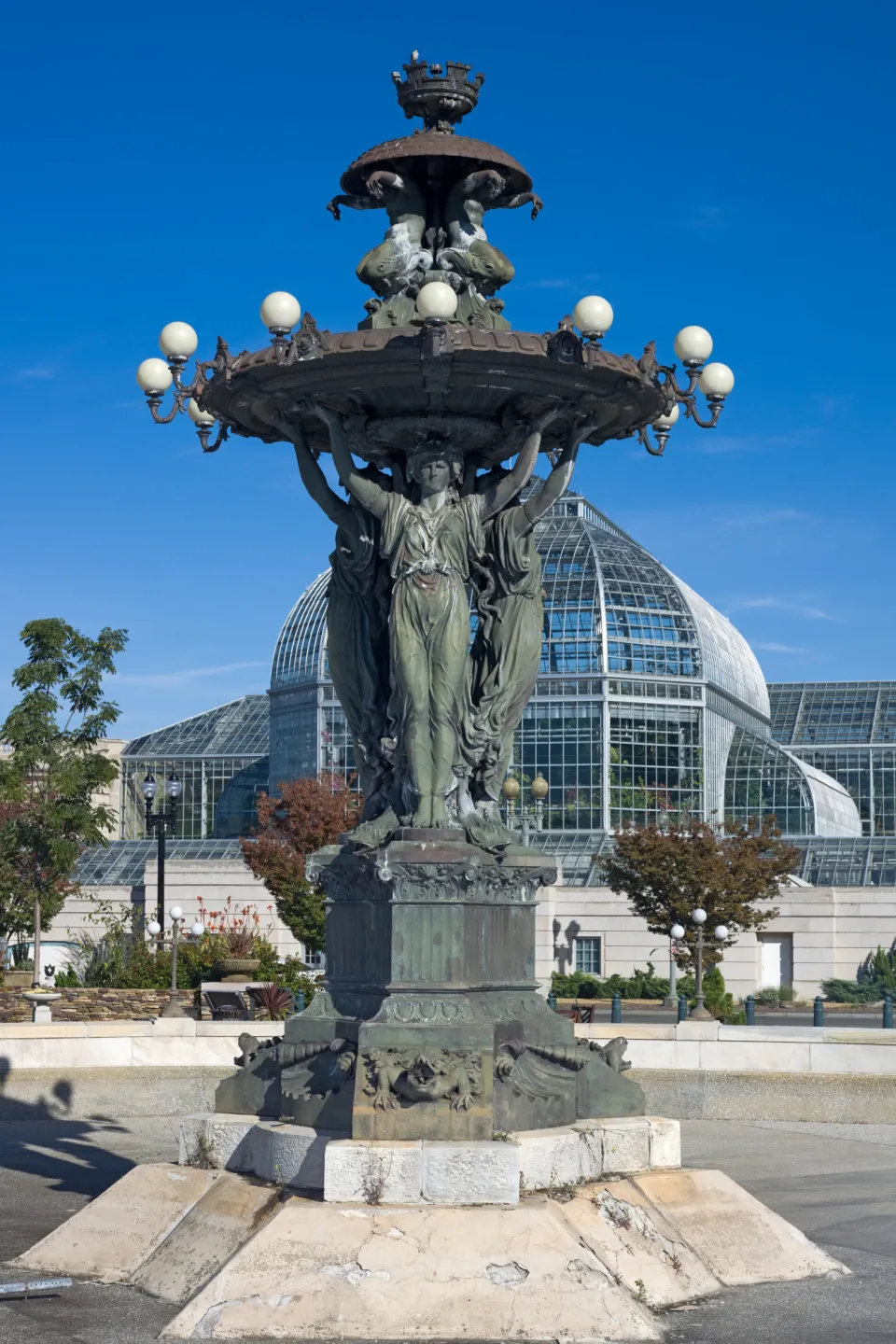
October 2008
Photo by
Susanne Bledsoe
Image
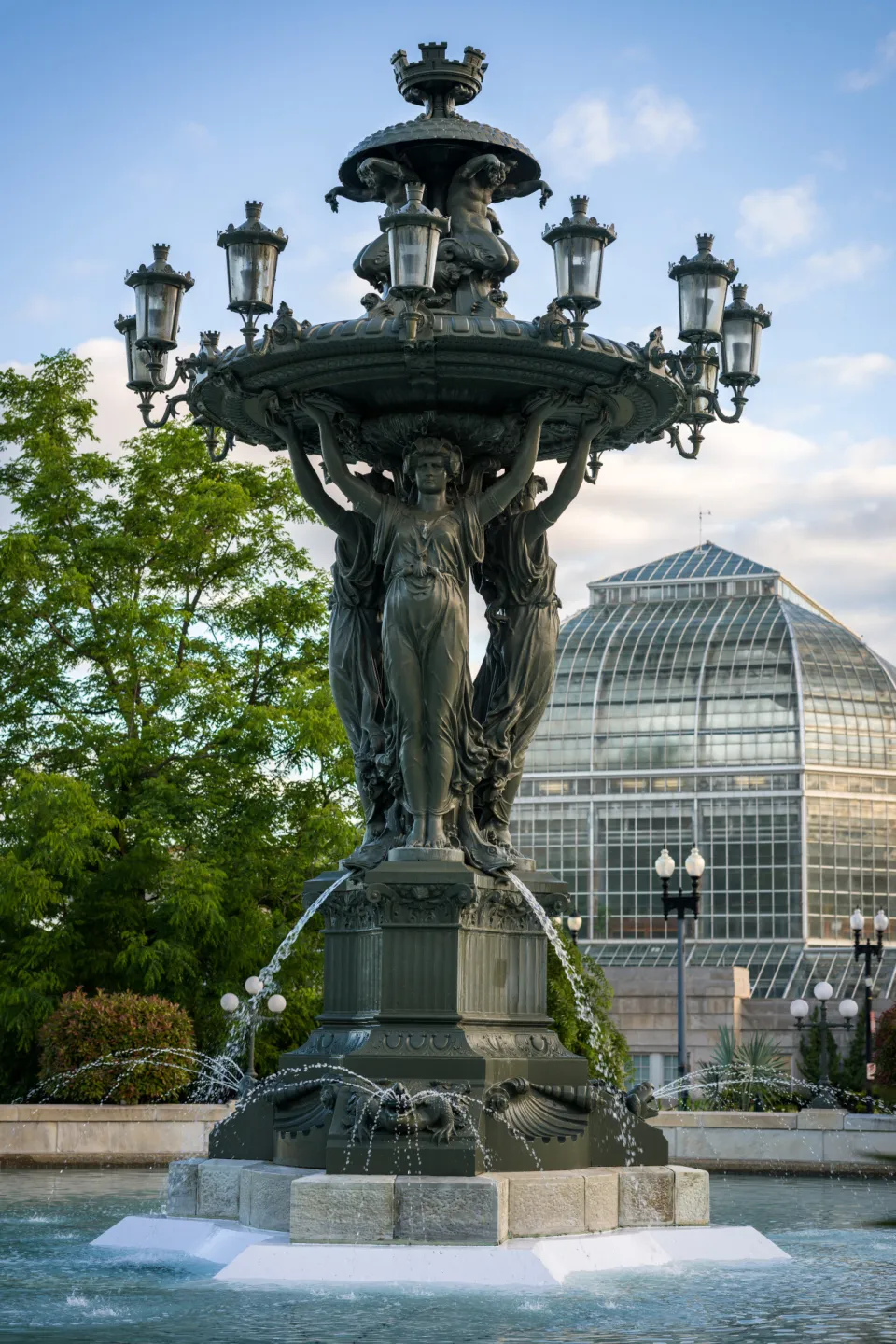
May 2025
Photo by
Thomas Hatzenbuhler

Round, glass globes replaced the original gas fixtures when the fountain was completely electrified in the early 1900s. In 2011, the round globes were replaced with LED, energy-efficient replicas of the original lanterns. These 12 lanterns, which Bartholdi based on Parisian streetlights, are the ones that can be seen today.

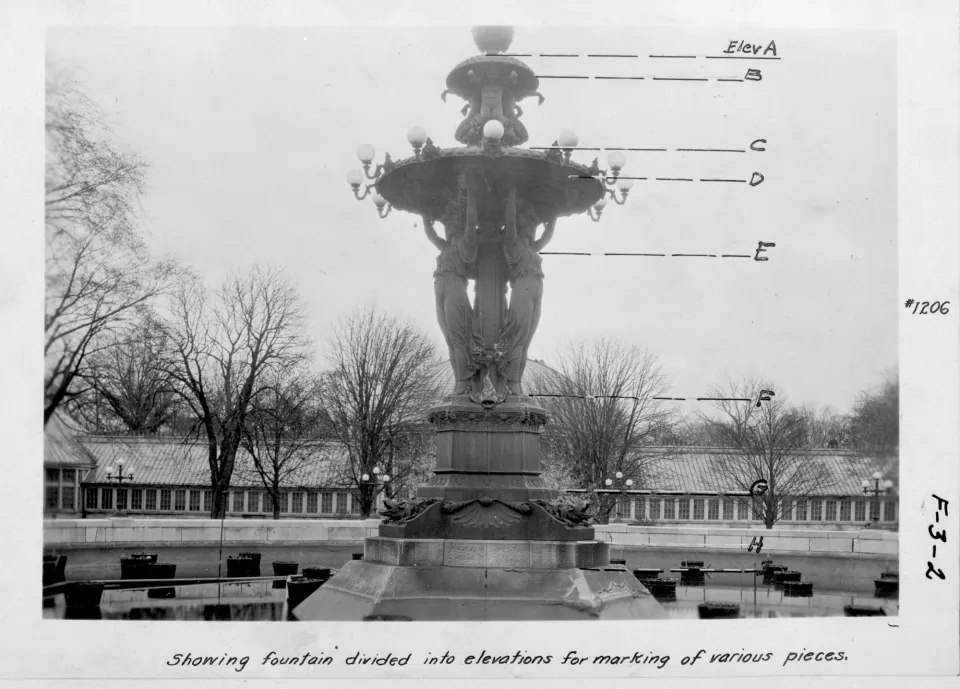
In 1927, in preparation for the relocation of the USBG, the fountain was dismantled and then erected in its present location at Independence Avenue and First Street, SW in 1932. A new garden area was created, with the fountain as the centerpiece. Today, this area of the USBG is known as Bartholdi Fountain and Gardens, in honor of the fountain's creator.

Image
Image from 1927 with markings used in the designation of parts for moving the fountain to its present location.
Photo by
unknown

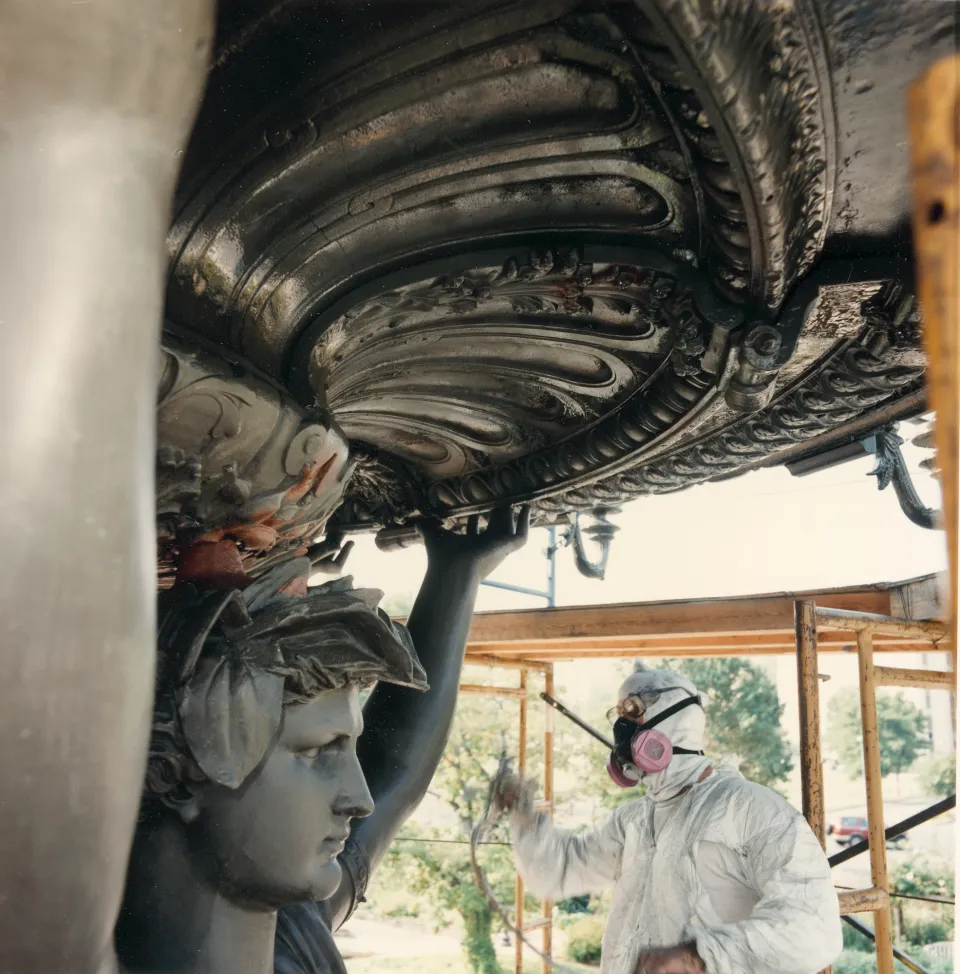
The fountain has been cared for season after season by the Operations team of the USBG throughout its 149 years here in D.C. The fountain has been refinished and restored multiple times, with new protective coats of paint and plumbing and wiring updates.

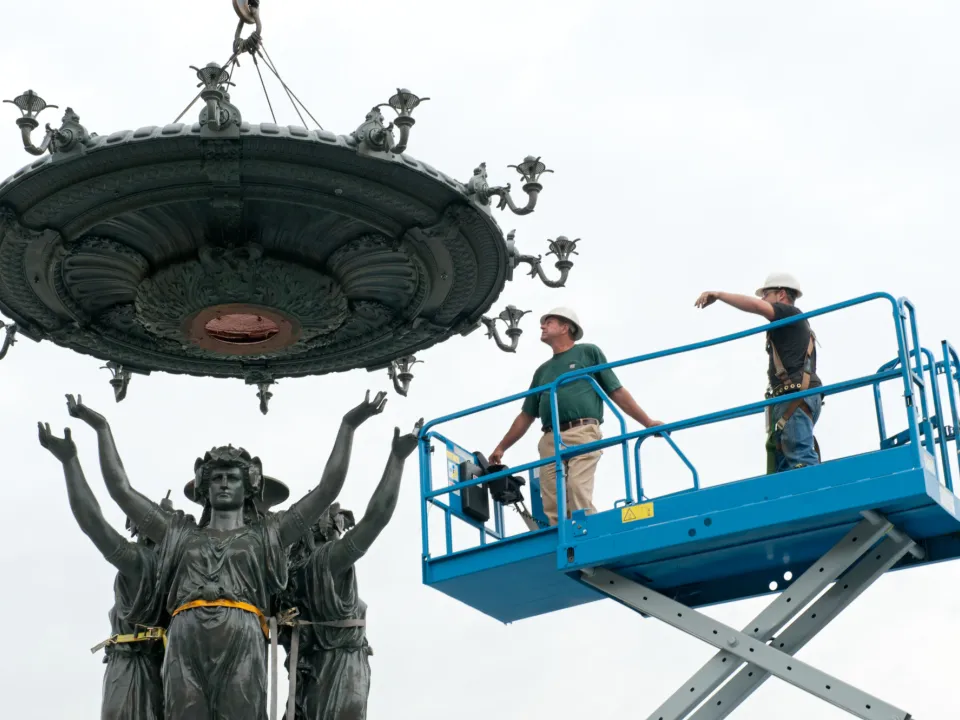
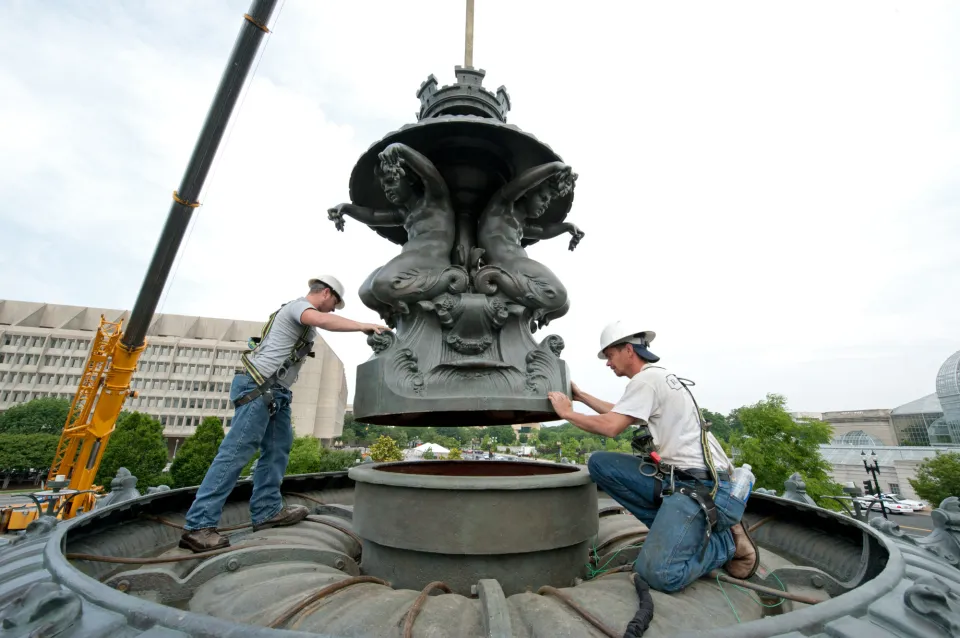
With deterioration from its age, constant water flow, and exposure in the outdoor environment, a full restoration was in order by 2008. The cast iron pieces were fully disassembled, removed by crane, and taken to an architectural metal specialist to be fully restored.

Image
Image
Reassembling after restoration, 2011.
Photos by
Susanne Bledsoe
Image
Image
Fountain repainting efforts in 1986 and 2020.
Photos by
Steve Payne; Sean Greene

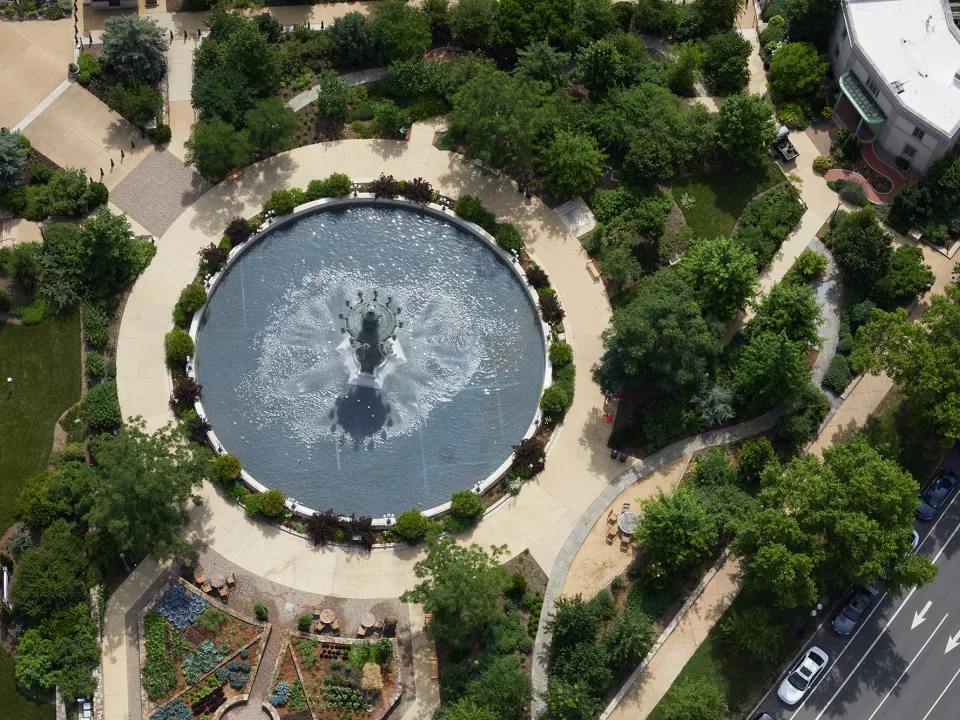
The Architect of the Capitol (AOC) and USBG restored and retrofitted the plumbing, electrical and lighting infrastructure, replaced the statue pedestal, and repaired the 96-foot-diameter, 3-foot-deep fountain basin. The project, completed in 2011, modernized the fountain with a new underground concrete utility vault to control the mechanical and lighting operations of the refurbished water feature.

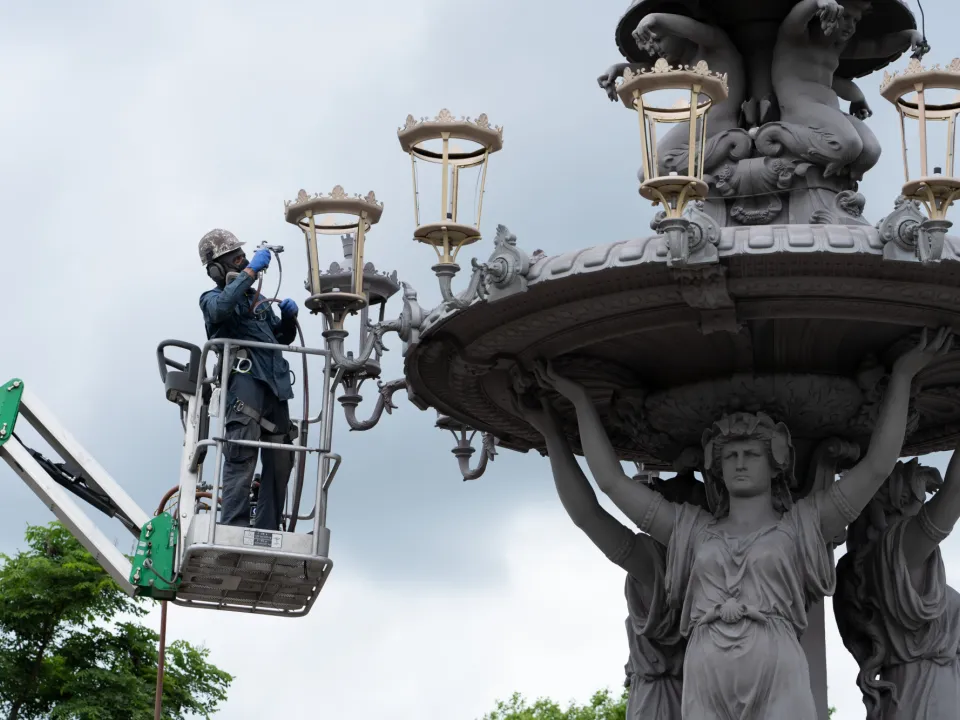
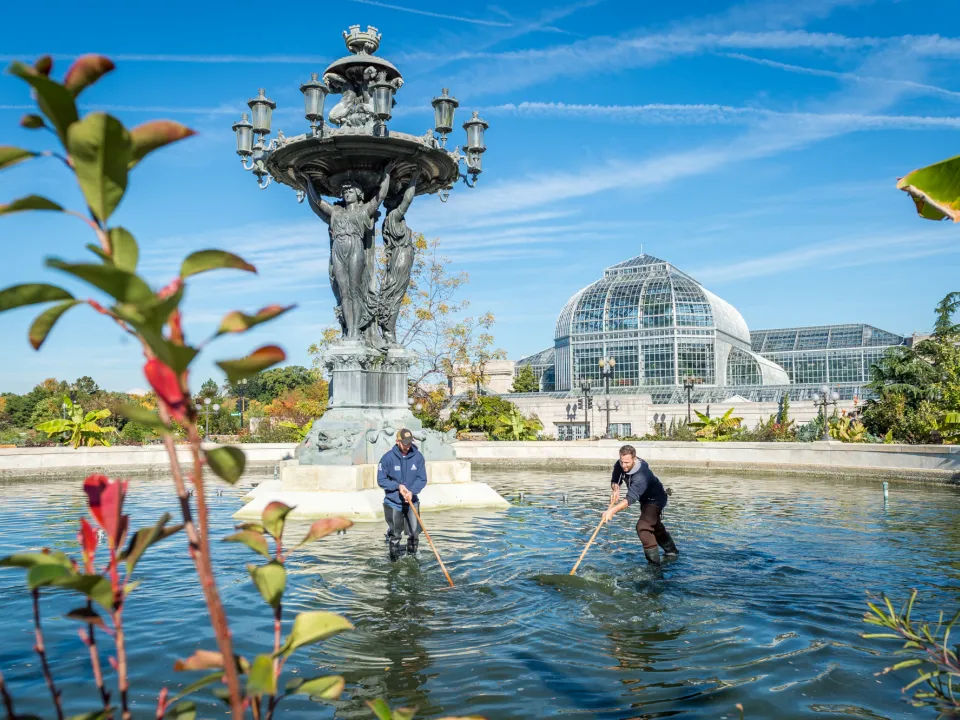
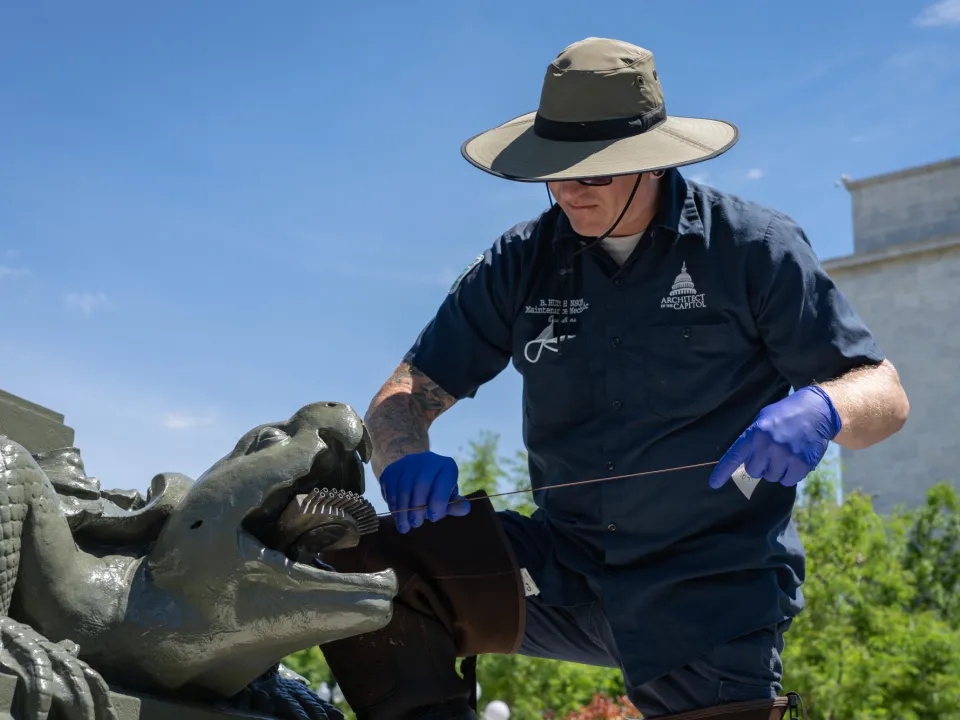
Since this large-scale restoration, the USBG continues to clean, paint and perform routine maintenance on the fountain and the lamp posts. The paint used on top of the cast iron mimics the color of aged bronze, as intended by Bartholdi.

Spirit of '76 - Bartholdi Fountain
Image
Image
Image
View of the fountain from above; USBG Operations staff performing maintenance and upkeep of the fountain.
Photos by
Luke Walter; Kaleena Dwyer; Thomas Hatzenbuhler

For nearly 150 years, the AOC and USBG team has cared for this historic, monumental water feature. Their work ensures that Bartholdi's fountain will continue to provide beauty and enjoyment for many more years to come.

Visit the fountain by day and night in the USBG's Bartholdi Gardens, which showcase sustainable landscaping and design. It is an island of green space in the city where visitors, office workers, and a variety of birds, pollinators and wildlife can still find respite by the sound of falling water.

Image
May 2021
Photo by
Luke Walter
Image
August 2023
Photo by
Thomas Hatzenbuhler
Image
August 2024
Photo by
Thomas Hatzenbuhler
Image
April 2025
Photo by
Thomas Hatzenbuhler

Written by SARAH DAVIS, AOC PUBLIC AFFAIRS Specialist, and DEVIN DOTSON, USBG SENIOR COMMUNICATIONS SPECIALIST.

Add a new comment

The content of this field is kept private and will not be shown publicly.

Plain text

  • No HTML tags allowed.
  • Lines and paragraphs break automatically.
  • Web page addresses and email addresses turn into links automatically.

Our Stories

Recent Articles
History & Discoveries

Notable Oaks of the U.S. Capitol Grounds

This month we celebrate our national tree: the oak. Oaks often live for hundreds of years and are considered a keystone species with entire ecosystems depending on them for survival and habitat.
Public Notice

What's Happening at the Capitol In October

Upcoming tours and student programs provided by the U.S. Capitol Visitor Center. Highlights include in person, online and homeschool opportunities designed by the Capitol Visitor Center's Education team.