Grounds Features
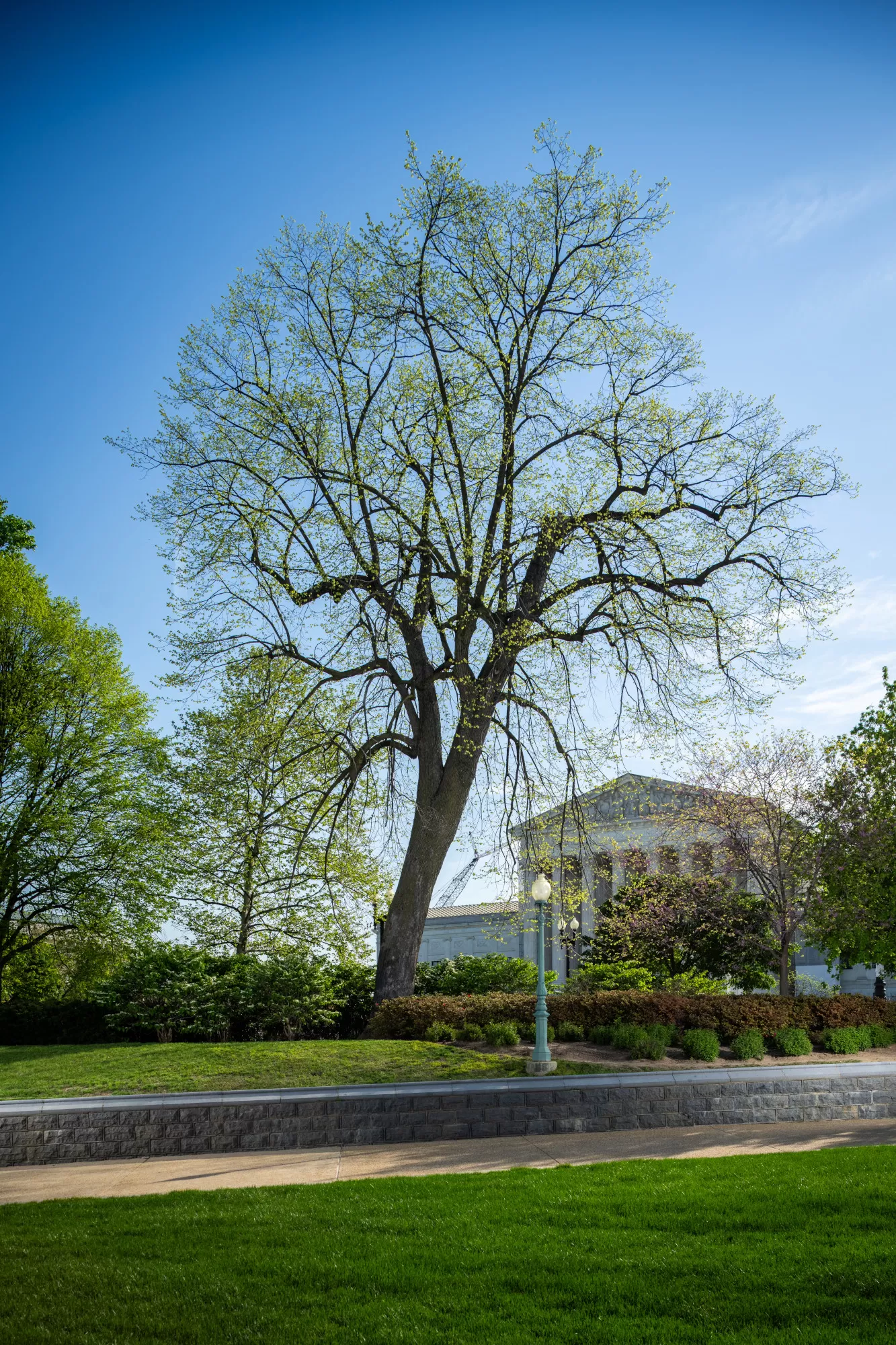
Also known as basswood, the American linden is a native deciduous tree found throughout eastern North America. It is known for its broad, heart-shaped leaves, fragrant pale-yellow flowers that attract pollinators, and its smooth gray bark that develops ridges with age.
Historically, its soft, lightweight wood was used for carving and making musical instruments, while its fibrous inner bark was used by Indigenous peoples for cordage and textiles. As an early summer bloomer, the flowers are a valuable nectar source for honeybees, producing a prized light-colored honey.
There are three original American linden trees still living on the U.S. Capitol campus today.
About the Olmsted Originals
Landscape architect Frederick Law Olmsted's 1874 General Plan for the U.S. Capitol Grounds sought to create a setting to accentuate the monumentality of the Capitol Building. Approximately 45 of Olmsted's trees remain today, having endured more than a century of urban life on the front stage of American democracy.
Each tree has its own unique features and preservation challenges, and the Architect of the Capitol's arborists employ industry best management practices to ensure these trees are given the very best care to remain safely in the landscape for current and future generations to enjoy.