Grounds Features
Nearby Trees
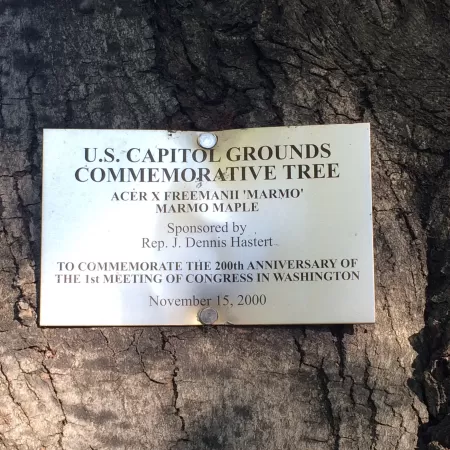
Acer x freemanii
2000
Capitol Square, S.E.
U.S. Capitol Grounds
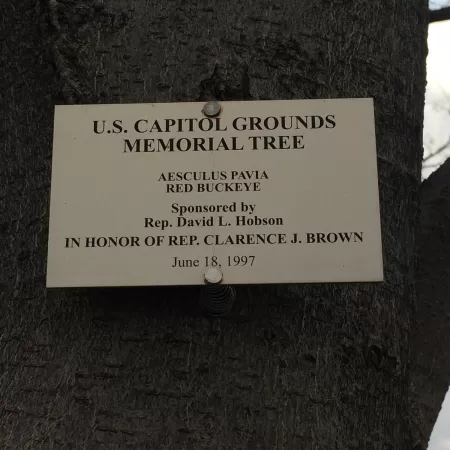
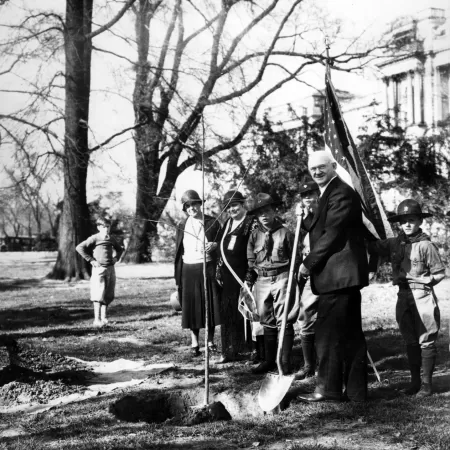
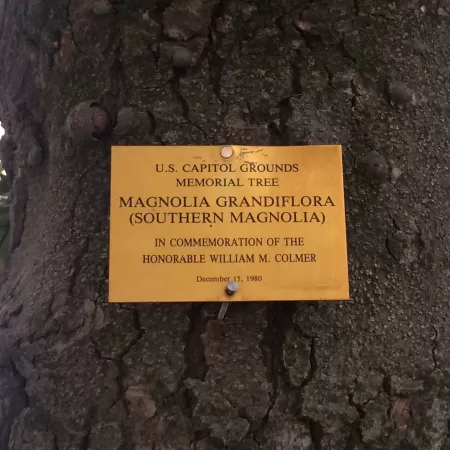
Magnolia grandiflora
1980
Capitol Square, S.E.
U.S. Capitol Grounds
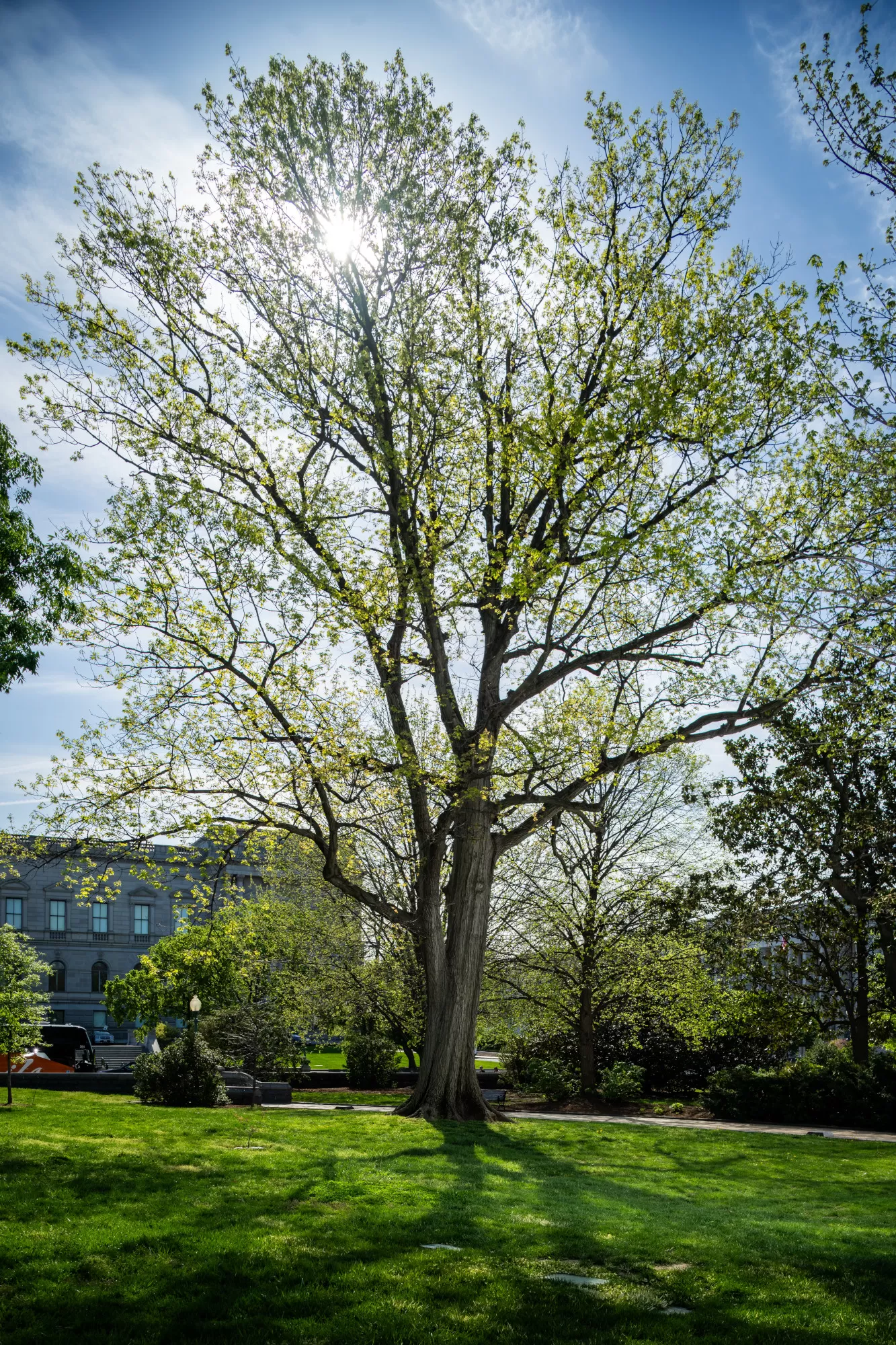
A dominant species in eastern North American forests, the northern red oak is prized for its fast growth, strong wood, and brilliant red fall foliage. It has large, pointed-lobed leaves and a straight trunk with distinctive ridged bark featuring shiny stripes on young trees. Red oaks produce acorns that are an essential food source for wildlife, though they take two years to mature.
Highly adaptable, the species thrives in urban environments and is widely planted as a street and shade tree. It is also a valuable timber species, frequently used in furniture and flooring.
There is one original northern red oak tree still living on the U.S. Capitol campus today.
Landscape architect Frederick Law Olmsted's 1874 General Plan for the U.S. Capitol Grounds sought to create a setting to accentuate the monumentality of the Capitol Building. Approximately 45 of Olmsted's trees remain today, having endured more than a century of urban life on the front stage of American democracy.
Each tree has its own unique features and preservation challenges, and the Architect of the Capitol's arborists employ industry best management practices to ensure these trees are given the very best care to remain safely in the landscape for current and future generations to enjoy.