Grounds Features
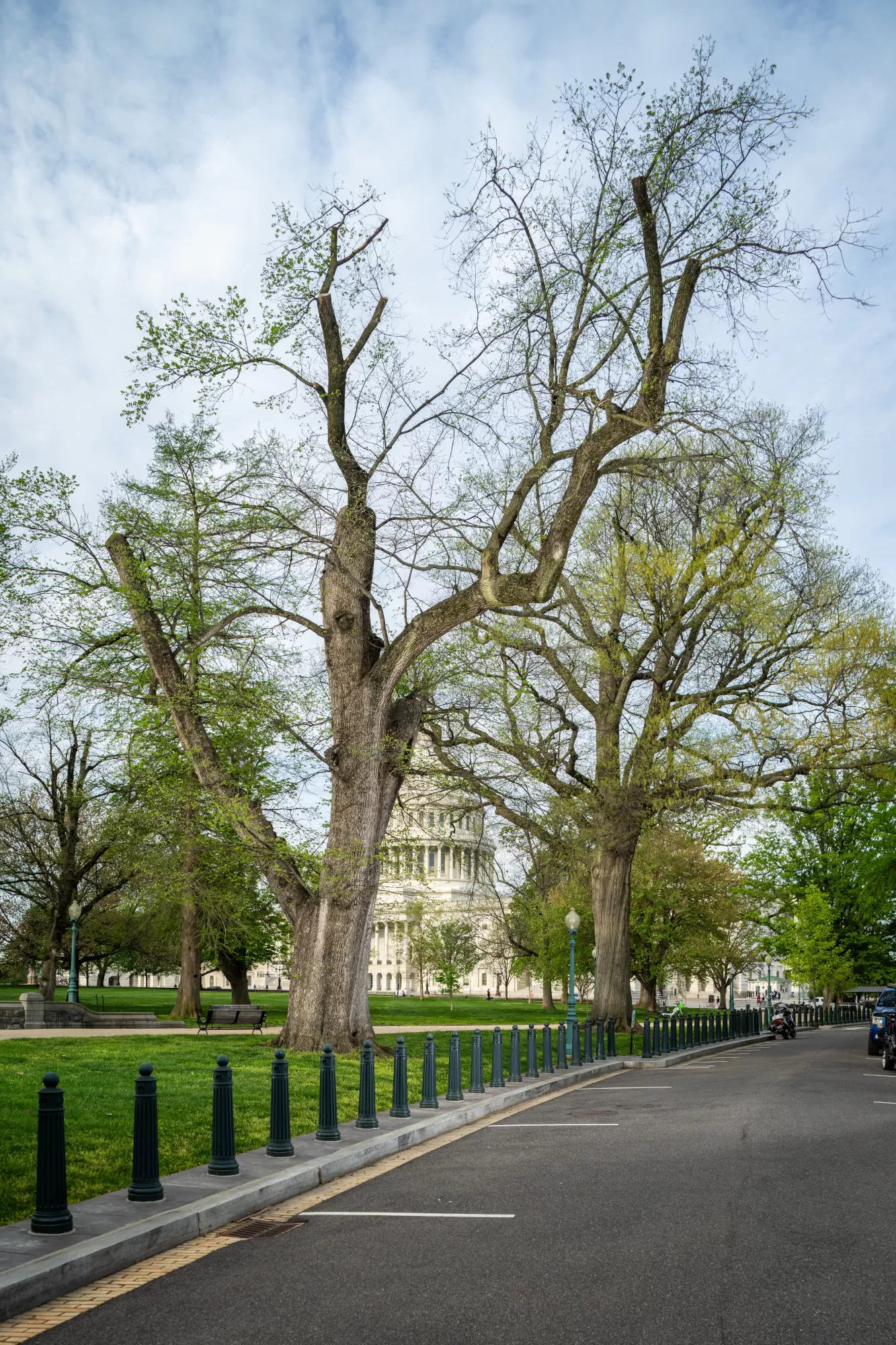
Also called the field elm, the smoothleaf elm is native to Europe and western Asia and is distinguished by its small, oval, asymmetrical leaves with a rough upper surface. It has a compact, rounded canopy and can develop suckering growth, leading to dense thickets. The bark is dark gray and furrowed with age.
Historically used in hedgerows and timber production, smoothleaf elm was widely planted in urban settings but suffered losses due to Dutch elm disease.
There is one original smoothleaf elm tree still living on the U.S. Capitol campus today.
About the Olmsted Originals
Landscape architect Frederick Law Olmsted's 1874 General Plan for the U.S. Capitol Grounds sought to create a setting to accentuate the monumentality of the Capitol Building. Approximately 45 of Olmsted's trees remain today, having endured more than a century of urban life on the front stage of American democracy.
Each tree has its own unique features and preservation challenges, and the Architect of the Capitol's arborists employ industry best management practices to ensure these trees are given the very best care to remain safely in the landscape for current and future generations to enjoy.