Displaying 151 - 180 of 814 Clear

Highlight
A list of some of the quotations and inscriptions found in the buildings on Capitol Hill.

Behind the Scenes
Article
Nick Nelson combines diverse passions into a landscape architecture career.

Behind the Scenes
Article
The AOC University team has a clear sense of purpose to make learning fun, increase employee engagement, encourage retention of valued talent and attract the next generation of AOC leaders.
History & Discoveries
Article
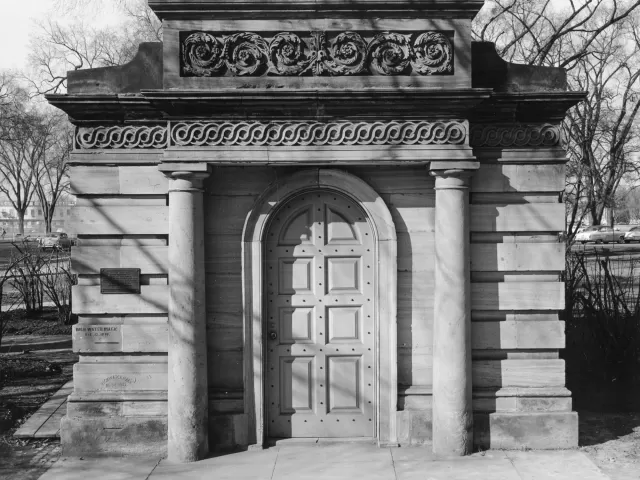
The pencil-like shape of the Washington Monument, the grand pediment of the Lincoln Memorial and the Capitol Dome are all emblematic shapes of Washington, D.C. But in addition to these architectural juggernauts, two smaller, more understated buildings on the National Mall often draw the eye.
Projects
Article
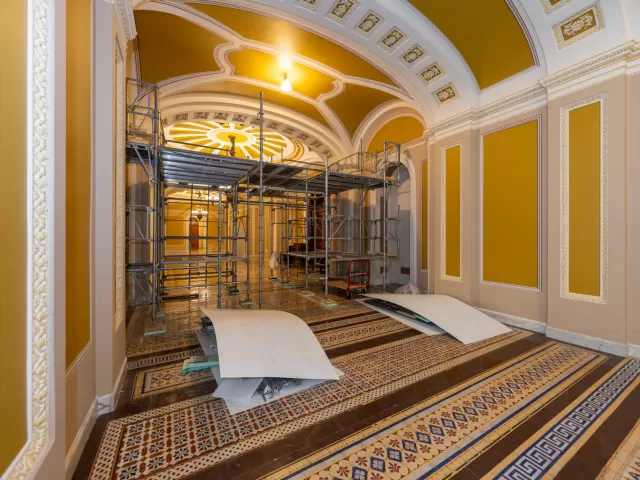
An in-depth look at the most recent phase of the Capitol Building Paint Analysis and Plaster Repairs project.

Behind the Scenes
Article
From Project Mastery to People Skills, Women in Construction Build Up the AOC

Public Notice
Article
Highlights include articles featuring the U.S. Botanic Garden, women in construction and the Capitol Building Paint Analysis and Plaster Repairs project.

Behind the Scenes
Article
Architect of the Capitol (AOC) employees have completed a new mural installation in the Longworth House Office Building.

History & Discoveries
Article
Follow the path the British took in 1814 to burn the U.S. Capitol and learn more about damage done to this historic building.
Programs & Events
Article
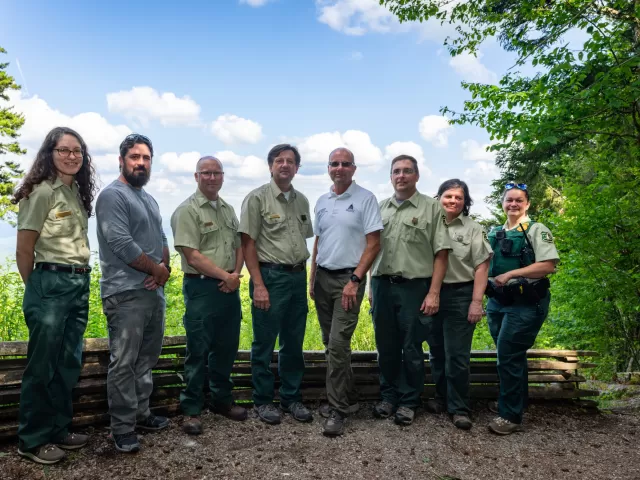
To most, July in Washington, D.C., means hot weather and Independence Day celebrations. At the Architect of the Capitol it also means it's time to go Christmas tree hunting!
Highlight
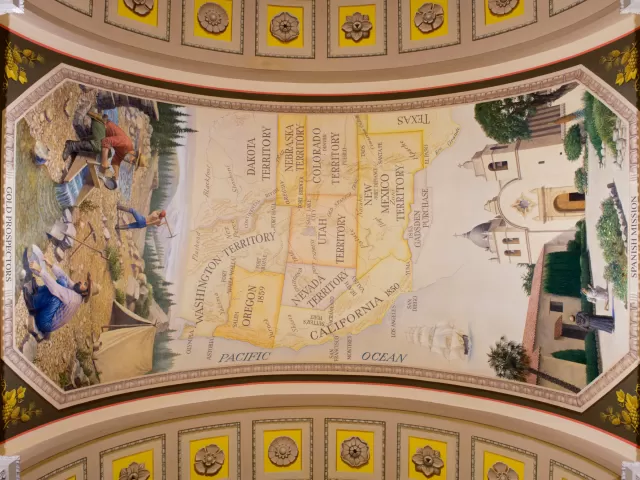
The map shows the states and territories stretching west from Texas to the Pacific Ocean and marks the Oregon, California, and Old Spanish Trails as well as the Pony Express route.

Highlight
The map shows the central section of the continent to illustrate the effect of the Louisiana Purchase (1803), the Lewis and Clark expedition, and the opening of the West.

Highlight
The map shows the states and territories between the Atlantic Ocean and the Mississippi River. Important cities (state capitals, trade centers, or otherwise influential in westward expansion) are indicated, and the names of Native American tribes appear to the north and west. The corner motifs are

Highlight
The map shows the first four settlements in America, from St. Augustine (1565) to Plymouth (1620).

Highlight
The map is inscribed "Terra Incognita" (Latin for "Unknown Territory"). On it, the names of the original Native American tribes of the eastern coast of North America appear in the tribes' approximate geographic locations.

Highlight
U.S. Capitol Grounds memorial tree to honor Frederick Law Olmsted Sr. sponsored by Rep. French Hill and Rep. Debbie Dingell.

Public Notice
Article
Located in Capitol Square on Northwest Drive near the Summerhouse.

Highlight
Pierre Charles L'Enfant designed the new federal city, Washington, D.C.

Highlight
Thomas Crawford designed the House and Senate bronze doors, the Senate pediment sculpture, and the Statue of Freedom that stands atop the U.S. Capitol Dome.

Highlight
Frederick Law Olmsted designed and carried out the landscaping of the U.S. Capitol grounds in the late 19th century.

Highlight
John Trumbull painted four scenes related to the Revolutionary War for the U.S. Capitol Rotunda.

Highlight
George M. White, who served as Architect of the Capitol from 1971 until 1995, constructed the Library of Congress Madison building, the Hart Senate Office Building, and the Thurgood Marshall Federal Judiciary Building.

Highlight
The extension of the U.S. Capitol's East Front and construction of the Rayburn House Office Building were highlights of Architect of the Capitol J. George Stewart's 1954-1970 term of service.
Highlight
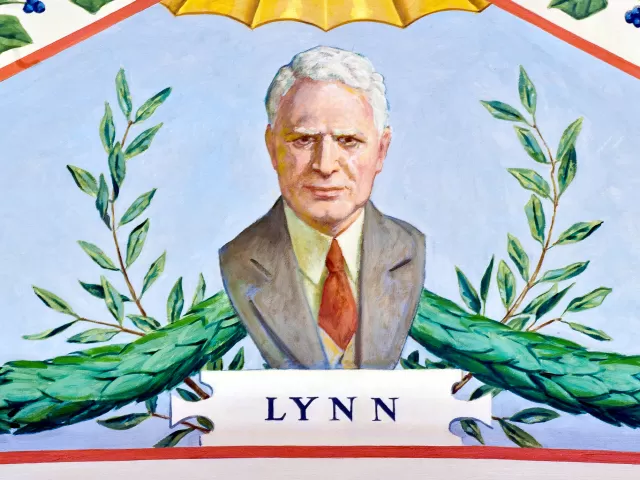
During his tenure as Architect of the Capitol, from 1923 to 1954, David Lynn built the second House and Senate office buildings (now named the Longworth and Dirksen buildings, respectively), the second Library of Congress building (now named the Adams building), and the Supreme Court building.
Highlight
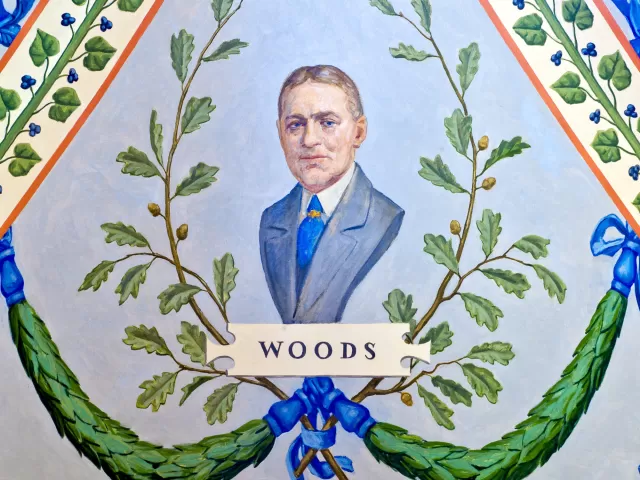
Elliott Woods, who served as Architect of the Capitol from 1902 to 1923, constructed the first House and Senate office buildings (now named the Cannon and Russell buildings, respectively).

Highlight
Edward Clark, the longest-serving architect to date (1865-1902), completed the porticoes of the new wing extensions and oversaw construction of the first Library of Congress building (now named the Jefferson building).
Highlight
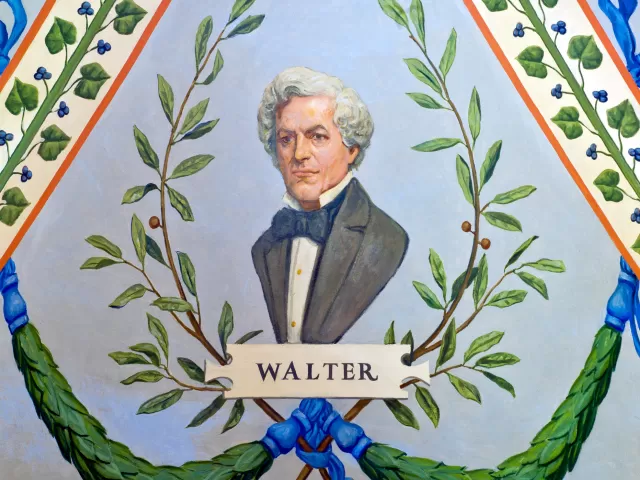
Architect Thomas U. Walter served at the U.S. Capitol from 1851 to 1865; he constructed the House and Senate wing extensions and the present dome.

Highlight
Between 1818 and 1829 the Capitol's center section and first dome were constructed under the direction of architect Charles Bulfinch.

Highlight
Benjamin Henry Latrobe, who served as the U.S. Capitol's architect from 1803 to 1811 and from 1815 to 1817, built the Capitol's south wing and redesigned and rebuilt the north wing.

Highlight
The expansion of the nation led to the growth of the Congress, and by 1850 the Capitol Building was much too small. Over a period of 17 years, the present House and Senate wings were added to the old building and the low central dome was replaced with a cast-iron dome better suited to the enlarged