Displaying 481 - 496 of 496 Clear
Highlight
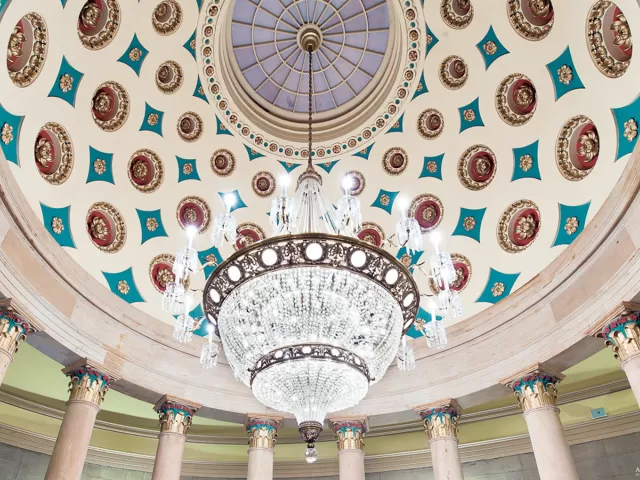
This chandelier has hung in the Small Senate Rotunda since 1965. Imported from Europe in 1903, it previously hung in a historic Baltimore theater and a Capitol Hill church. Originally smaller, it has been enlarged and modified over its history.

Highlight
The painting Surrender of Lord Cornwallis by John Trumbull is on display in the Rotunda of the US Capitol. The subject of this painting is the surrender of the British army at Yorktown, Virginia, in 1781, which ended the last major campaign of the Revolutionary War.
Highlight
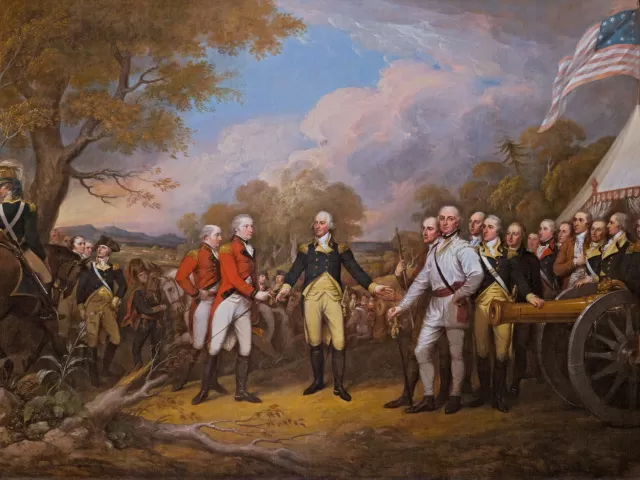
The event shown in this painting is the surrender of British General John Burgoyne at Saratoga, New York on October 17, 1777.

Highlight
This painting depicts Christopher Columbus and members of his crew on a beach in the West Indies, newly landed from his flagship Santa Maria on October 12, 1492.

Highlight
The painting General George Washington Resigning His Commission by John Trumbull is on display in the Rotunda of the U.S. Capitol. This painting depicts the scene on Dec. 23, 1783, in the Maryland State House in Annapolis when George Washington resigned his commission as commander-in-chief of the

Highlight
This painting depicts the Pilgrims on the deck of the ship Speedwell on July 22, 1620, before they departed from Delfs Haven, Holland, for North America, where they sought religious freedom.
Highlight
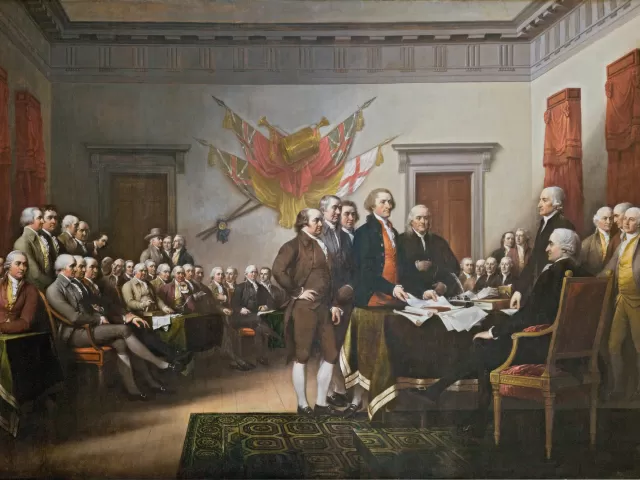
This painting depicts the moment on June 28, 1776, when the first draft of the Declaration of Independence was presented to the Second Continental Congress.

Highlight
This painting depicts the ceremony in which Pocahontas, daughter of the influential Algonkian chief Powhatan, was baptized and given the name Rebecca in an Anglican church.

Highlight
The Spaniard Hernando Cortez, conqueror of Mexico, enters the Aztec temple in 1519. He is welcomed by Emperor Montezuma II, who thought Cortez was a god. The calendar stone and idols are based on sketches that artist Constantino Brumidi made in Mexico City. (1520)

Highlight
Early settlers cut and saw trees and use the lumber to construct a building, possibly a warehouse for their supplies.

Highlight
Spanish explorer Hernando DeSoto died of a fever while searching for gold in Florida and the territory north of the Gulf of Mexico. To protect his body from enemies, his men buried him at night in the Mississippi River, which he had been the first European to discover. (1542)

Highlight
General Winfield Scott is shown during the Mexican War, entering the capital. Peace came in 1848 with the Treaty of Guadalupe Hidalgo, which fixed the Mexican-American border at the Rio Grande River and recognized the accession of Texas. The treaty also extended the boundaries of the United States
Person
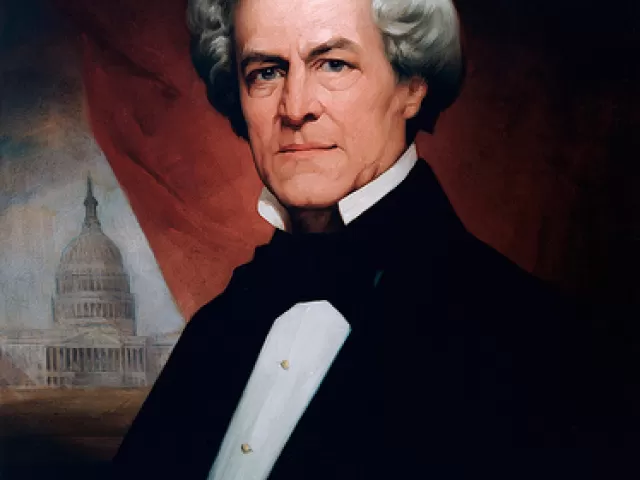
Thomas U. Walter's plans for the enlargement of the U.S. Capitol were approved by President Millard Fillmore and he was appointed Architect of the Capitol Extension in 1851.
Person
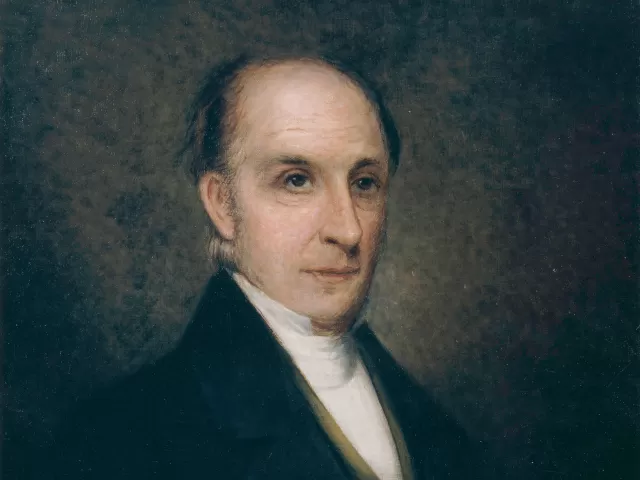
Charles Bulfinch was hired by the commissioner of public buildings in 1818 to replace Benjamin Henry Latrobe.

Person
Benjamin Henry Latrobe was hired by President Jefferson in 1803 to fill the position of "Surveyor of Public Buildings," with the principal responsibility of constructing the Capitol's south wing.

Person
Design selected by President George Washington, 1793; appointed a commissioner of the federal city by President Washington, 1794, and served until 1802. Dr. William Thornton was an amateur architect who is honored as the "first architect" because his design for the U.S. Capitol was accepted by