Displaying 1 - 15 of 15 Clear
Highlight
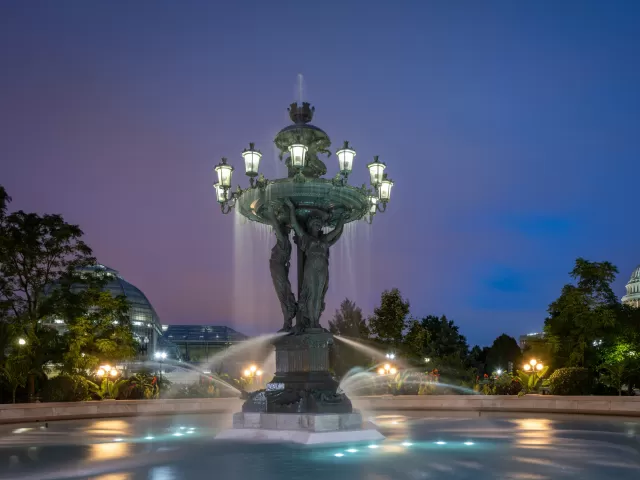
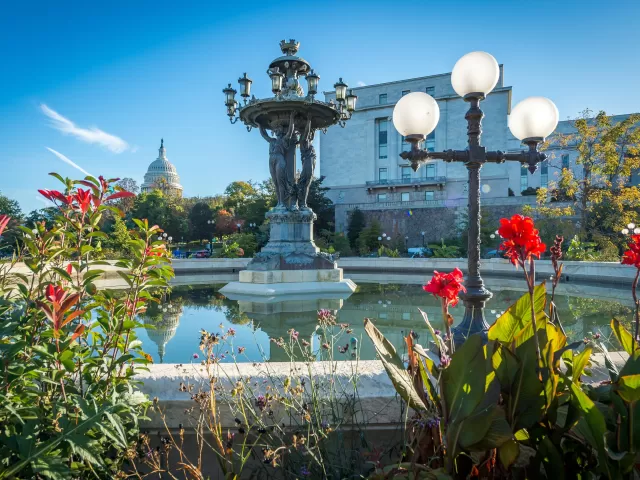
Image Fountain of Light and Water The cast-iron fountain, painted to look like bronze, weighs more than 15 tons and is 30 feet high. It was intended to be an allegorical representation of water and light, designed in three identical sections with classical forms and symbols. Turtle-like aquatic monsters and large …
The cast-iron fountain, painted to look like bronze, weighs more than 15 tons and is 30 feet high. The fountain previously stood at the 1876 Centennial Exhibition in Philadelphia's Fairmont Park before it was purchased in 1877 by the United States government.
Place
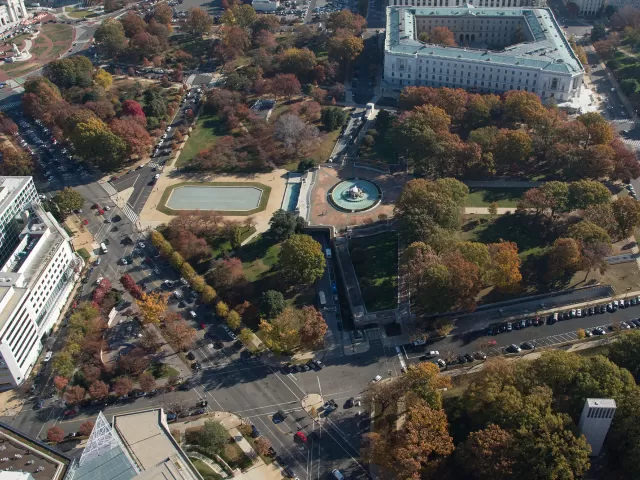
Initially designed in 1929 by William E. Parsons, of the Chicago firm of Bennett, Parsons and Frost, the grounds were planned with the clear purpose of providing a gracious, functional and formal link between the U.S. Capitol and Union Station. Parsons' plan was carefully considered with a spatial
Highlight
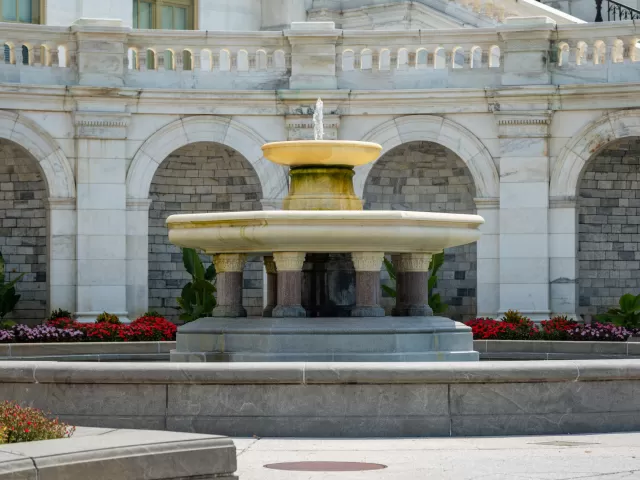
Image West Central Fountain An octagonal bowl upheld by short granite columns designed in the Romanesque style. During preparations for presidential inaugurations on the West Front, this fountain is covered by the special platform built for the occasion. … An octagonal bowl upheld by short granite columns designed in the …
An octagonal bowl upheld by short granite columns designed in the Romanesque style.
Highlight
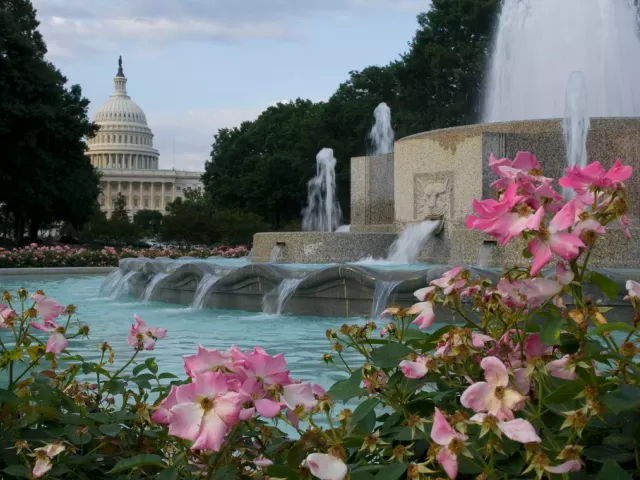
The hexagon is 25 feet across and the basin measures 85 feet by 100 feet. From the oval basin the water is piped underground to three sculpted stone bubbler fountains in the north wall of the terrace. The scalloped rims of their tiered basins repeat the pattern of the large fountain above. From there the water is again piped underground to the lower level of the 180-foot-by-80-foot reflecting pool. The present lighting display is comprised of 114 underwater …
The Senate Fountain, a hexagonal granite monolith with high jets of water spouting from its center, is surrounded by six smaller jets on a lower level.
Place
Image Bartholdi Fountain and Gardens Created in 1932 when the U.S. Botanic Garden (USBG) was relocated, the park was renamed in 1985 after the sculptor of the historic " Fountain of Light and Water " located at its center, Frédéric Auguste Bartholdi—later famous for the Statue of Liberty. Bartholdi Fountain and Gardens …
Bartholdi Gardens serves as a home landscape demonstration garden and showcases innovative plant combinations in a variety of styles and design themes.
Highlight
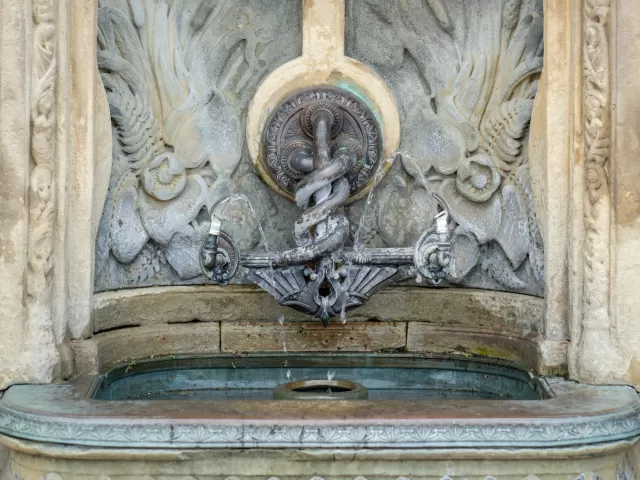
Image West Boundary Wall Drinking Fountain Designed by Frederick Law Olmsted, this unique fountain is slightly hidden in the terrace wall that borders Capitol Square to the west, just across from the Grant Memorial. This fountain was added here after the former central pedestrian entrance and its gatehouses were removed from the U.S. Capitol …
Designed by Frederick Law Olmsted, this unique fountain is slightly hidden in the terrace wall that borders Capitol Square, just across from the Grant Memorial.
Highlight
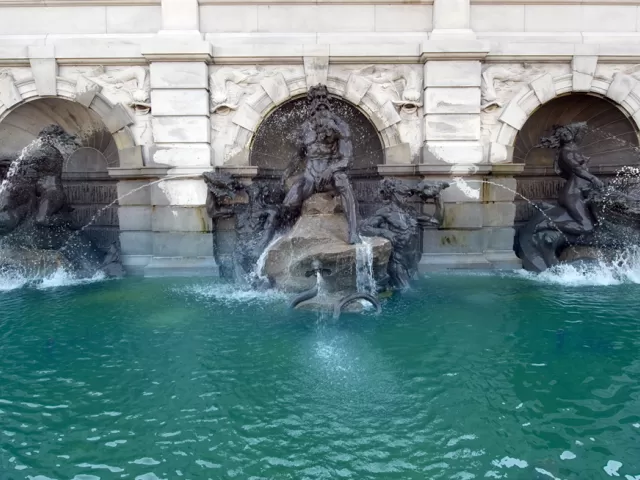
Passersby enjoy the play of the jets of water on the majestic, bearded and muscular king of the sea; his sons the tritons blowing conches; the frolicking, horseback-riding Nereids (sea nymphs); and the water-spouting turtles, frogs and sea serpent, placed in front of a grotto-like wall. The tritons
Place
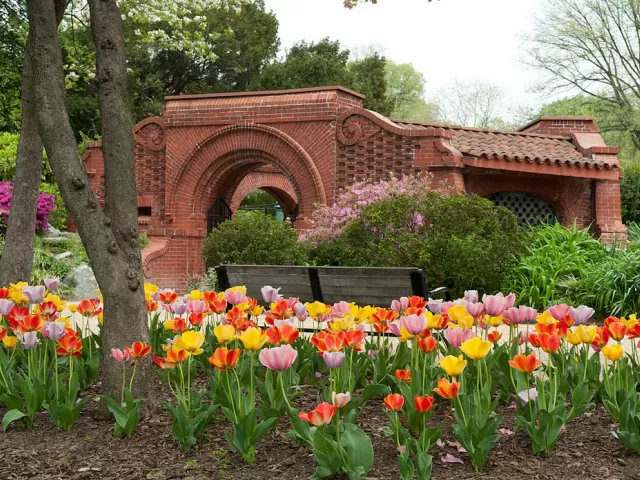
The fountain in the center of the building originally provided drinking water piped from a spring. The six small metal fittings around the fountain's upper perimeter secured chains that are believed to have held drinking cups or ladles. Three individual drinking fountains connected to the filtered city water supply now provide drinking water, and the central fountain is used only for display. The water supply for the grotto was originally provided by a runoff stream from a drinking fountain at the Capitol's west entrance. Later, a city-water stream was made to flow …
Construction on the Summerhouse began in 1879 and was completed in late 1880 or early 1881 by landscape architect Frederick Law Olmsted.
Place
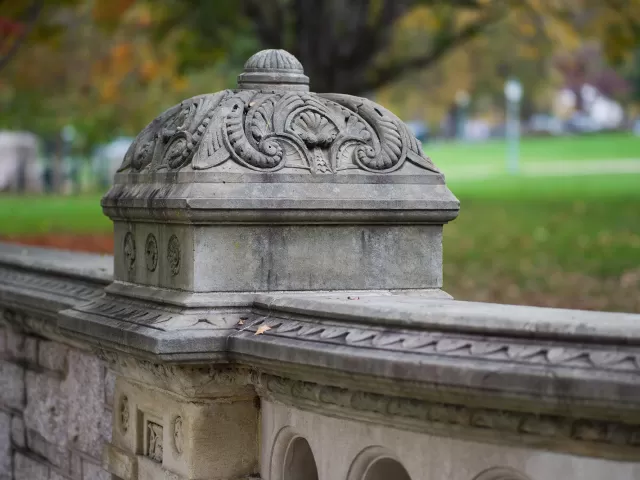
Some of Olmsted's significant hardscape elements can be found on the East Front plaza of the U.S. Capitol . Restoration and modernization work was completed as part of the building of the Capitol Visitor Center . The fountains and lanterns are fully modernized , and new technologies, such as the fountain's water pressure levels, are tied to an anemometer that lowers the water pressure as winds rise. The terrace walls that wrap around the Capitol to the north, west and south are constructed largely of Lee Massachusetts …
In 1874, Frederick Law Olmsted was charged with devising a comprehensive landscape scheme for the U.S. Capitol. Olmsted's major concern was the visual presentation of the Capitol Building and the support of its daily functions.
Place
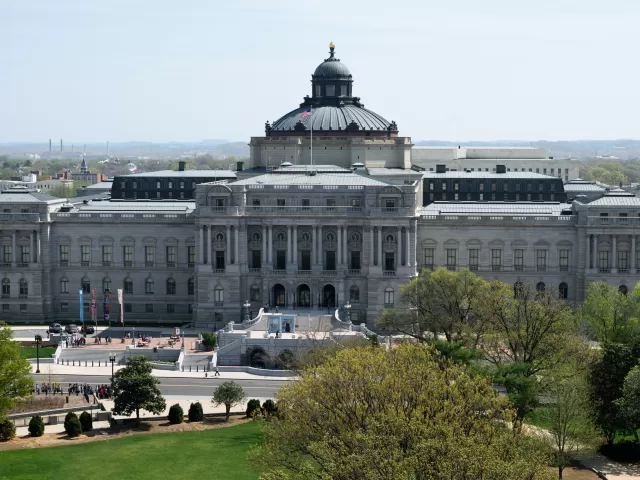
The Library of Congress began in 1800 with a small appropriation to buy reference books and was originally housed in the U.S. Capitol's west center building.
Place
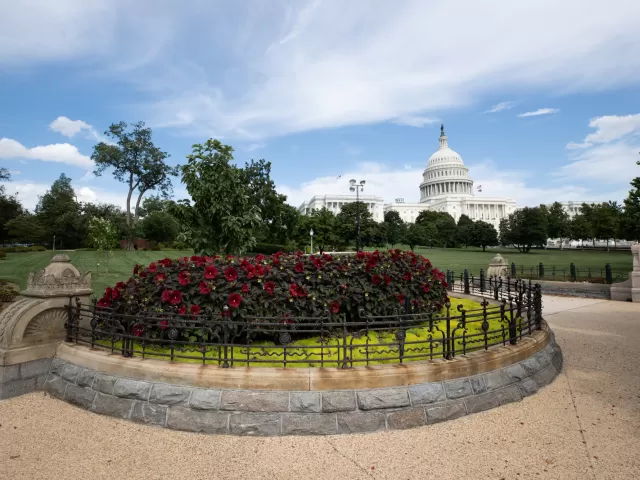
Many of the trees on the grounds bear plaques that identify their species and their historic significance. The eastern part of the grounds contains the greatest number of historic and commemorative trees. At the East Capitol Street entrance to the Capitol Plaza are two large rectangular stone fountains. The bottom levels now contain plantings, but at times in the past they have been used to catch the spillover from the fountains. At other times, both levels have held plantings. Six massive red granite lamp piers topped with light fixtures in wrought-iron cages and 16 smaller bronze light fixtures …
The grounds immediately surrounding the U.S. Capitol are bordered by a stone wall and cover an area of 58.8 acres. Its boundaries are Independence Avenue on the south, Constitution Avenue on the north, First Street NE/SE on the east, and First Street NW/SW on the west.
Highlight
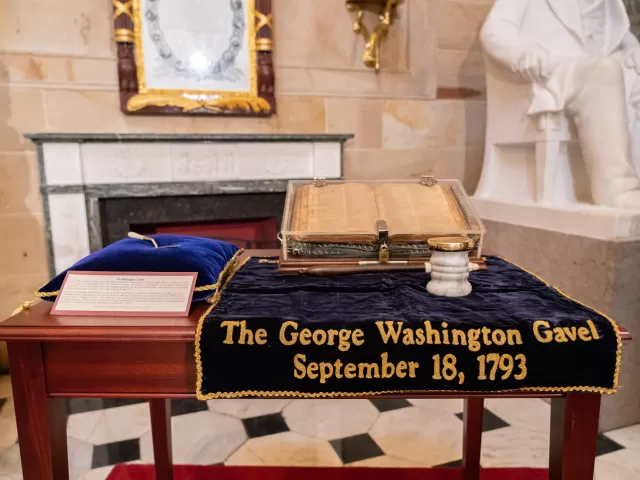
The cornerstone was laid on Wednesday, September 18, 1793, during the first large public event staged in the federal city.
Place
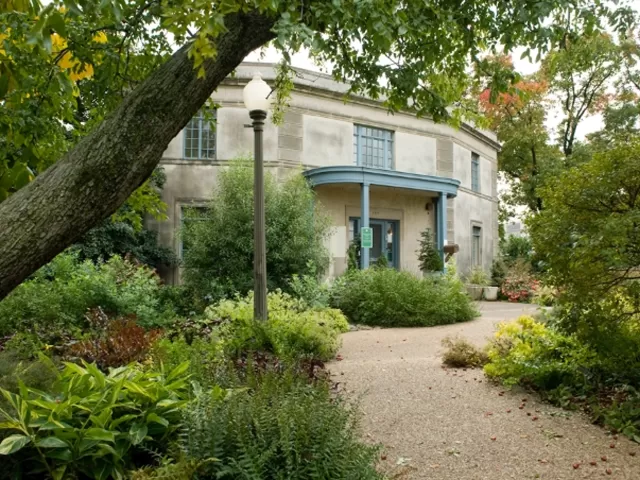
The offices of the United States Botanic Garden's (USBG) executive director are located in a residential building at the south end of Bartholdi Park.
Highlight
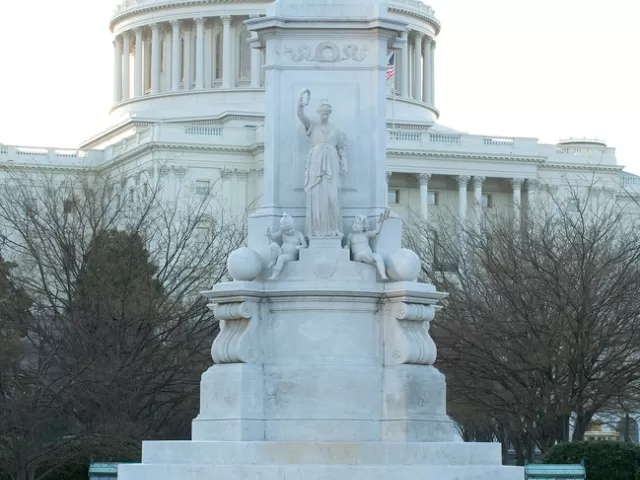
The white marble Peace Monument was erected in 1877-1878 to commemorate the naval deaths at sea during the Civil War.