Displaying 1 - 30 of 109 Clear
Basic page
Kentia palms, approximately five to six feet in height, are available to Senators and Representatives for rent for special events that are held on Capitol Hill.
Place
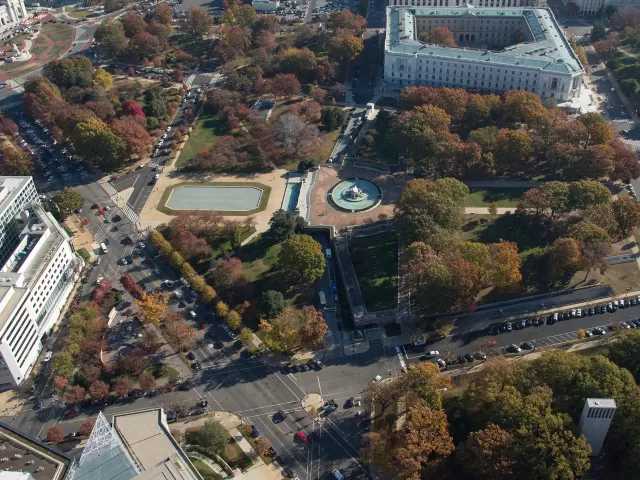
Initially designed in 1929 by William E. Parsons, of the Chicago firm of Bennett, Parsons and Frost, the grounds were planned with the clear purpose of providing a gracious, functional and formal link between the U.S. Capitol and Union Station. Parsons' plan was carefully considered with a spatial

Basic page
Looking for how to get here, where to eat and where to shop? Below are some available options for visitors to the U.S. Capitol and other campus buildings.

Basic page
The Architect of the Capitol summer internship program is for current students.
Basic page
Single stall restrooms are available to the public in the following locations.
Basic page
In accordance with legislation enacted in 2000, "Any State may request the Joint Committee on the Library of Congress to approve the replacement of a statue the State has provided for display in Statuary Hall" under certain conditions.

Basic page
The regular practice of displaying a Christmas tree on the U.S. Capitol grounds is relatively recent. Records at the Architect of the Capitol (AOC) show correspondence from 1919 indicate that a Christmas tree was purchased that year. However, it was not until 1964 that a definite procedure was

Place
The USBG Production Facility is located in D.C.'s Anacostia neighborhood, about eight miles from Capitol Hill, and is home to some of the world's most exotic and beautiful plants. The facility opened in 1994 and is 85,000 square feet under glass divided into 34 greenhouse bays.
Basic page
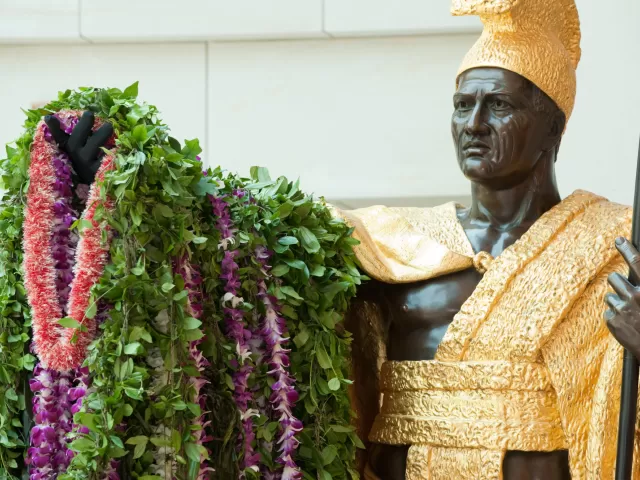
This list includes works in the collections under the care of the Architect of the Capitol, U.S. House of Representatives and U.S. Senate, and is not exhaustive.
Place
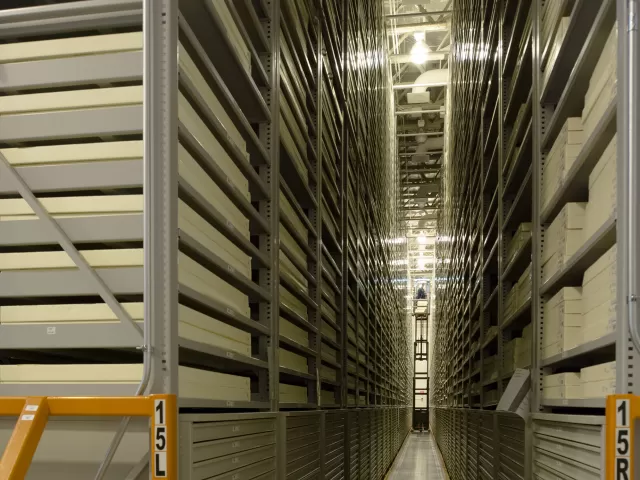
The Architect of the Capitol (AOC) manages all of the buildings and grounds on Capitol Hill, but we also maintain several facilities across the National Capital Region, including Fort Meade, Maryland.
Basic page
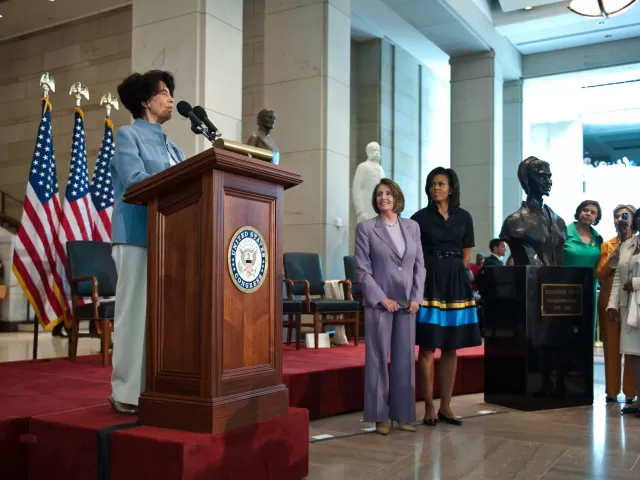
Examples of African American artists with works featured in the United States Capitol and congressional office buildings.
Basic page
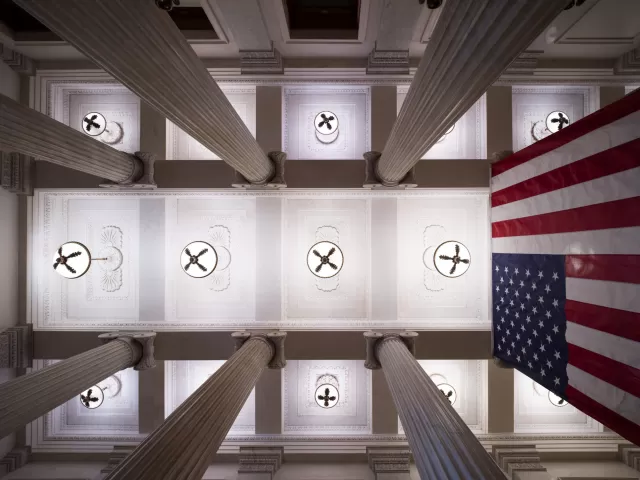
Accomplishing these initiatives is critical to laying the foundation for the Architect of the Capitol's (AOC) long-term success and providing a governance framework that supports effective management. Each strategic objective aligns with multiple strategic goals.
Basic page
The Architect of the Capitol's (AOC) annual Performance and Accountability Report (PAR) provides the results of the AOC's financial performance each fiscal year (FY). It demonstrates the AOC's commitment to the accomplishment of its mission and accountability for its financial resources to the
Basic page
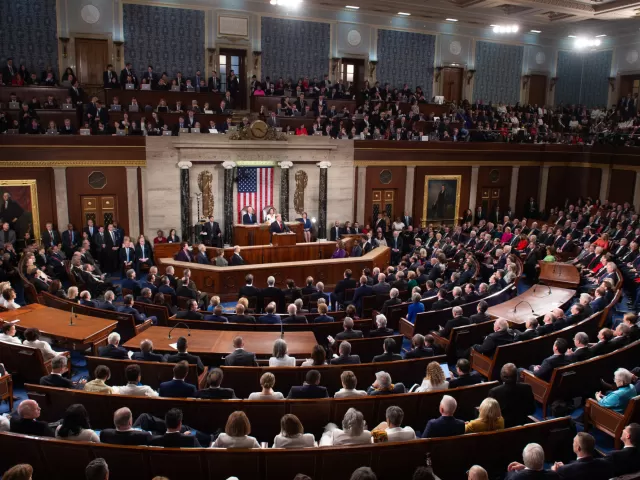
The Architect of the Capitol works behind the scenes to ensure that everything is impeccable for this important event — even the smallest details, like monitoring the temperature to ensure it's comfortable for the hundreds of members, staff and visitors who fill the House Chamber.

Place
At the U.S. Capitol Building the Senate and the House of Representatives come together to discuss, debate and deliberate national policy; develop consensus; and craft the country's laws.

Place
In the pre-fire period this elliptical space housed the Senate wing’s main staircase. Benjamin Henry Latrobe remarked to Thomas Jefferson that "it was one of the most remarkable parts of the Capitol."
Place
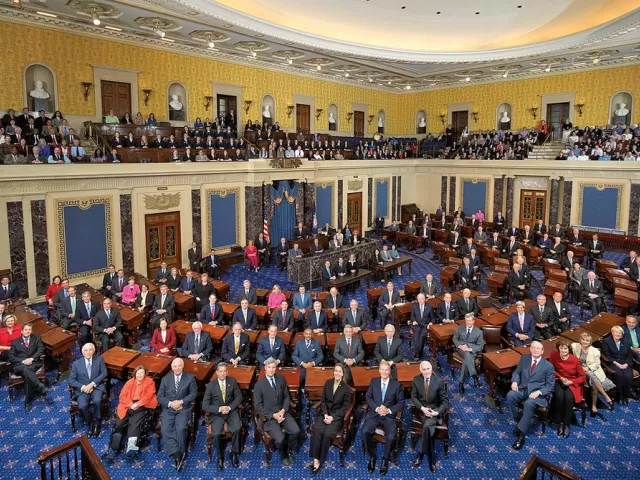
The nation's 100 senators sit at individual desks arranged on a tiered semicircular platform facing a raised rostrum. A visitor's gallery overlooks the chamber on four sides.
Place
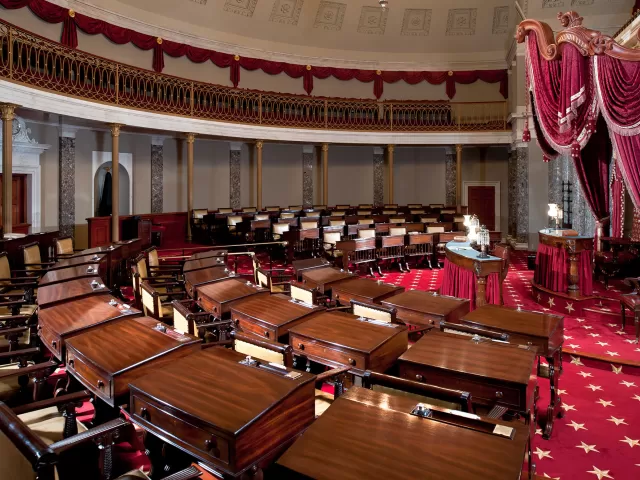
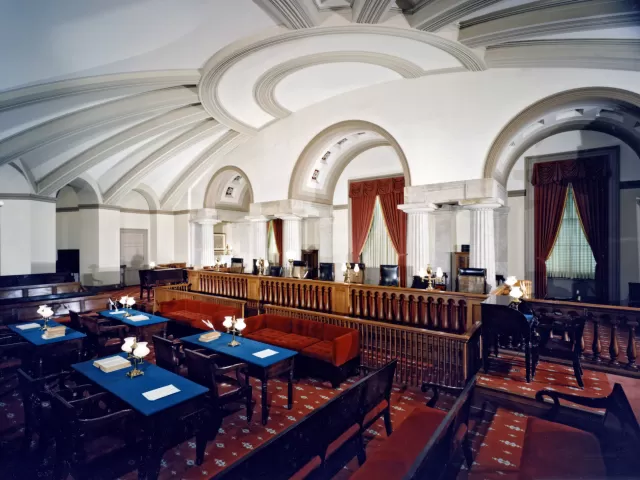
Located north of the Capitol Rotunda is the richly decorated Old Senate Chamber. Designed by Benjamin Henry Latrobe, this room was home to the U.S. Senate from 1819 until 1859 and later to the U.S. Supreme Court from 1860-1935.
Place
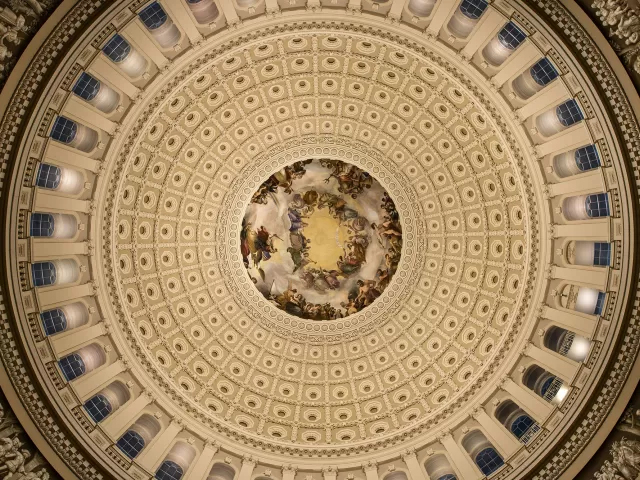
Conceived in the age of neoclassicism, the Rotunda was intended to recall the Pantheon, the ancient Roman temple. Bulfinch created in the U.S. Capitol Rotunda an ambitious orchestration of architecture, sculpture and painting.
Place
In addition to housing the Supreme Court, this space later served as a committee room, a law library, a meeting room, and a storage room. Today, it has been restored to its mid–19th-century appearance.

Place
National Statuary Hall is one of the most popular rooms in the U.S. Capitol Building. It, and its collection of statuary from individual states, is visited by thousands of tourists each day and continues to be used for ceremonial occasions.
Place
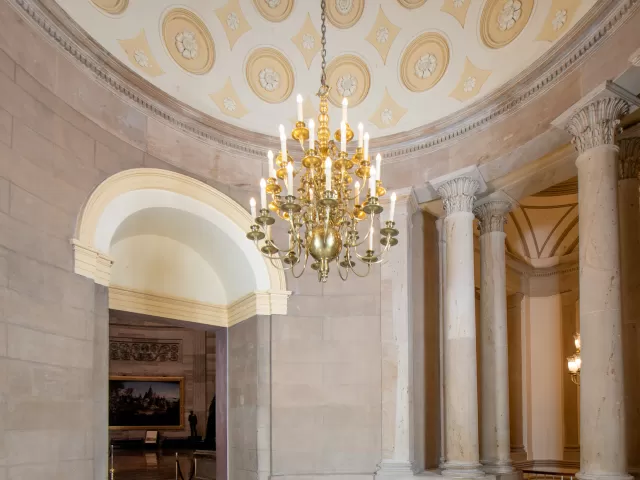
In the south wing, Latrobe created a progression of spaces from the entrance door on the first floor up a grand staircase to the small rotunda in front of the principal doorway leading into the Hall of the House (now called National Statuary Hall).
Place
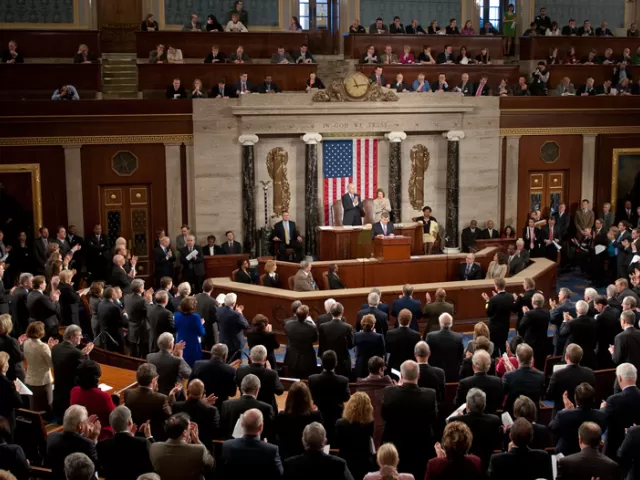
The House Chamber, also known as the "Hall of the House of Representatives," is a large assembly room located in the center of the U.S. Capitol's south wing.
Place
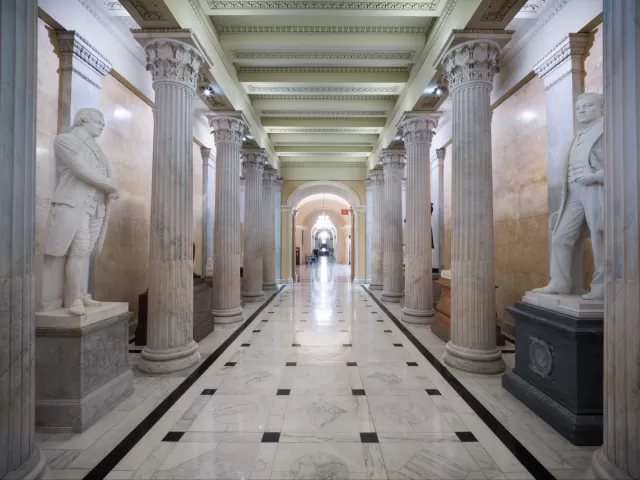
The hall was constructed in the mid-19th century as part of architect Thomas U. Walter's extension of the Capitol, which added the present House and Senate wings and the dome.

Place
The murals and decorations complement those in the Brumidi Corridors in the Senate wing of the U.S. Capitol.
Place
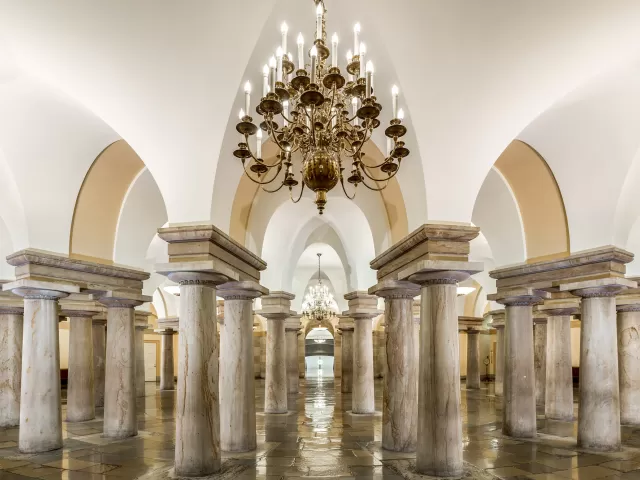
This center section of the building was completed in 1826 under the direction of the third Architect of the Capitol, Charles Bulfinch.

Place
The U.S. Capitol Visitor Center is the newest addition to the historic Capitol Complex. At nearly 580,000 square feet, the Visitor Center is the largest project in the Capitol's more than two-century history and is approximately three-quarters the size of the Capitol itself.

Place
The U.S. Capitol subway consists of three lines: two on the Senate (north) side of the Capitol, and one on the House (south) side of the Capitol.

Place
Construction on the Summerhouse began in 1879 and was completed in late 1880 or early 1881 by landscape architect Frederick Law Olmsted.

Place
The Capitol Reflecting Pool was included in master plans for the Washington Mall area prepared by the architectural firm of Skidmore, Owings, and Merrill in the 1960s and 1970s to reduce vehicular traffic on the Mall and facilitate pedestrian and recreational use.