Displaying 1 - 9 of 9 Clear
Basic page
Capitol Police at 202.225.4200. Restaurants and Dining Capitol Visitor Center Restaurant House Office Building Restaurants Library of Congress Restaurants Senate Office Building Restaurants Supreme Court Building Restaurant Restrooms and Water Fountains Single-Stall Restrooms Summerhouse Drinking Fountains … First Aid Office of Attending Physician Locations Getting Here U.S. Capitol Campus Map Gift Shops Capitol Visitor Center Gift Shops Library of Congress Gift Shop Supreme Court Building Gift Shop U.S. Botanic Garden Gift Shop U.S. House of …
Looking for how to get here, where to eat and where to shop? Below are some available options for visitors to the U.S. Capitol and other campus buildings.
Place
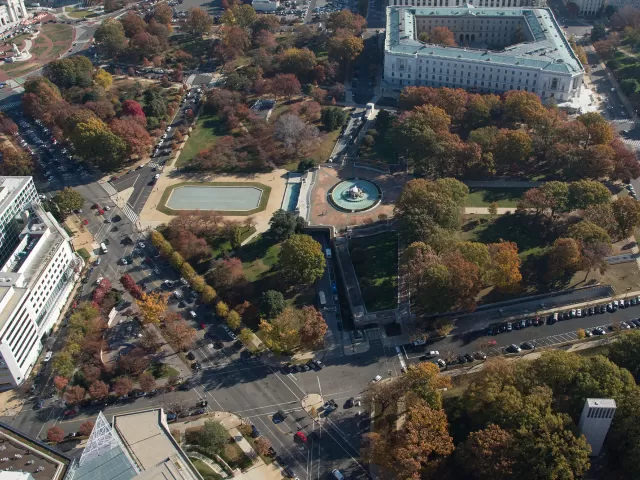
Initially designed in 1929 by William E. Parsons, of the Chicago firm of Bennett, Parsons and Frost, the grounds were planned with the clear purpose of providing a gracious, functional and formal link between the U.S. Capitol and Union Station. Parsons' plan was carefully considered with a spatial
Place
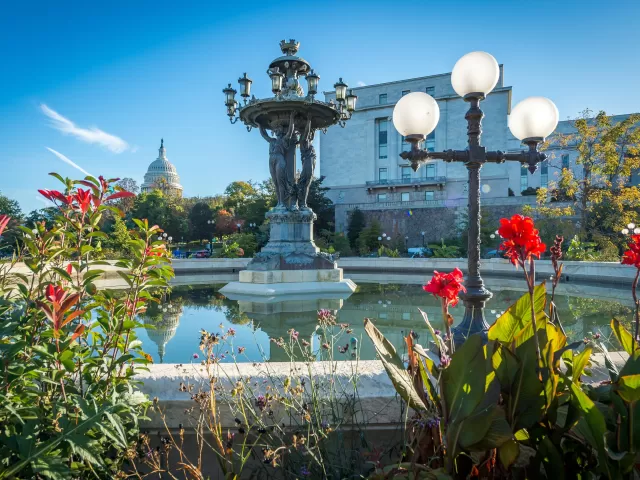
Image Bartholdi Fountain and Gardens Created in 1932 when the U.S. Botanic Garden (USBG) was relocated, the park was renamed in 1985 after the sculptor of the historic " Fountain of Light and Water " located at its center, Frédéric Auguste Bartholdi—later famous for the Statue of Liberty. Bartholdi Fountain and Gardens …
Bartholdi Gardens serves as a home landscape demonstration garden and showcases innovative plant combinations in a variety of styles and design themes.
Place
The fountain in the center of the building originally provided drinking water piped from a spring. The six small metal fittings around the fountain's upper perimeter secured chains that are believed to have held drinking cups or ladles. Three individual drinking fountains connected to the filtered city water supply now provide drinking water, and the central fountain is used only for display. The water supply for the grotto was originally provided by a runoff stream from a drinking fountain at the Capitol's west entrance. Later, a city-water stream was made to flow …
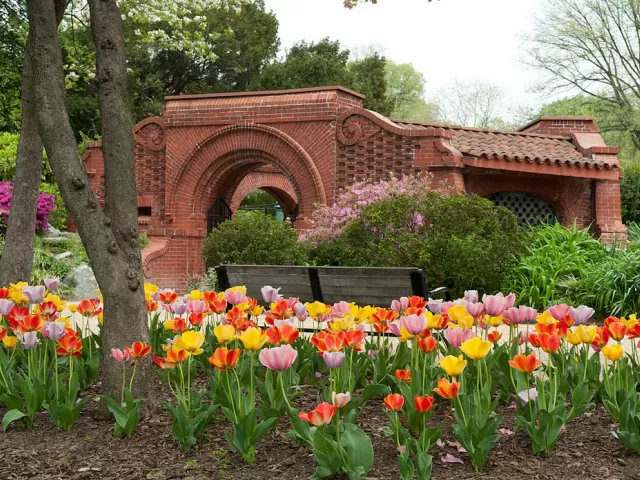
Construction on the Summerhouse began in 1879 and was completed in late 1880 or early 1881 by landscape architect Frederick Law Olmsted.
Place
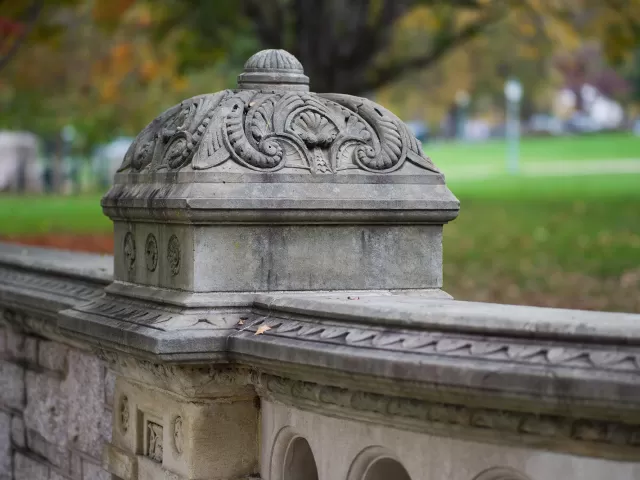
Some of Olmsted's significant hardscape elements can be found on the East Front plaza of the U.S. Capitol . Restoration and modernization work was completed as part of the building of the Capitol Visitor Center . The fountains and lanterns are fully modernized , and new technologies, such as the fountain's water pressure levels, are tied to an anemometer that lowers the water pressure as winds rise. The terrace walls that wrap around the Capitol to the north, west and south are constructed largely of Lee Massachusetts …
In 1874, Frederick Law Olmsted was charged with devising a comprehensive landscape scheme for the U.S. Capitol. Olmsted's major concern was the visual presentation of the Capitol Building and the support of its daily functions.
Basic page
Image Summer at the U.S. Capitol Summer in Washington, D.C. brings heat, humidity and families on vacation. Across the Capitol campus, visitors can find relief in the cool shade of thousands of trees and aquatic inspiration from more than 20 water features. What can visitors see and do in summer? Fountains Although the water features maintained by the Architect of the Capitol (AOC) are not designed for humans to recreate in, several crowd-pleasing pools of cool are located near the U.S. Capitol including the Capitol Reflecting Pool , Senate Park fountain , the Court of Neptune and the U.S Botanic …
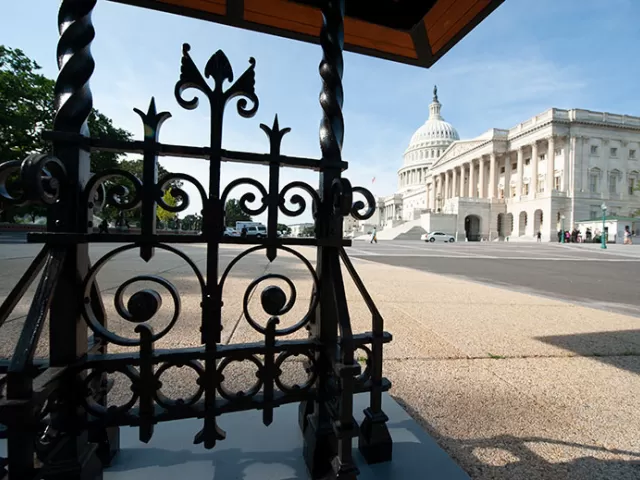
Summer in Washington, D.C. brings heat, humidity and families on vacation. Across the Capitol campus, visitors can find relief in the cool shade of thousands of trees and aquatic inspiration from more than 20 water features.
Place
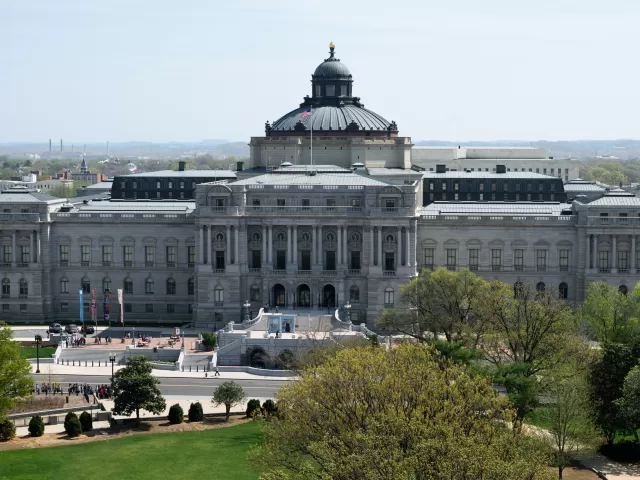
The Library of Congress began in 1800 with a small appropriation to buy reference books and was originally housed in the U.S. Capitol's west center building.
Place
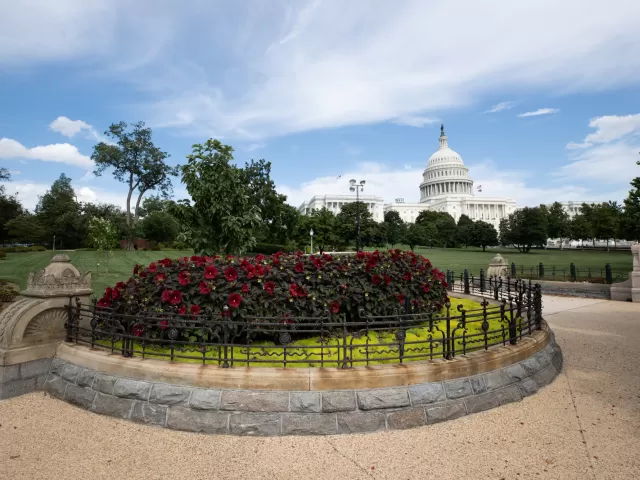
Many of the trees on the grounds bear plaques that identify their species and their historic significance. The eastern part of the grounds contains the greatest number of historic and commemorative trees. At the East Capitol Street entrance to the Capitol Plaza are two large rectangular stone fountains. The bottom levels now contain plantings, but at times in the past they have been used to catch the spillover from the fountains. At other times, both levels have held plantings. Six massive red granite lamp piers topped with light fixtures in wrought-iron cages and 16 smaller bronze light fixtures …
The grounds immediately surrounding the U.S. Capitol are bordered by a stone wall and cover an area of 58.8 acres. Its boundaries are Independence Avenue on the south, Constitution Avenue on the north, First Street NE/SE on the east, and First Street NW/SW on the west.
Place
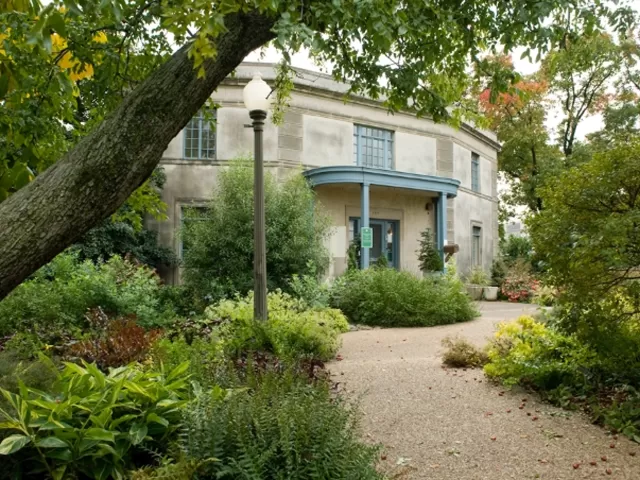
The offices of the United States Botanic Garden's (USBG) executive director are located in a residential building at the south end of Bartholdi Park.