John Adams was born on October 30, 1735, in Massachusetts. He was a delegate to the Continental Congress, a diplomat in Europe and would go on to become the first vice president, and second president, of the United States of America.

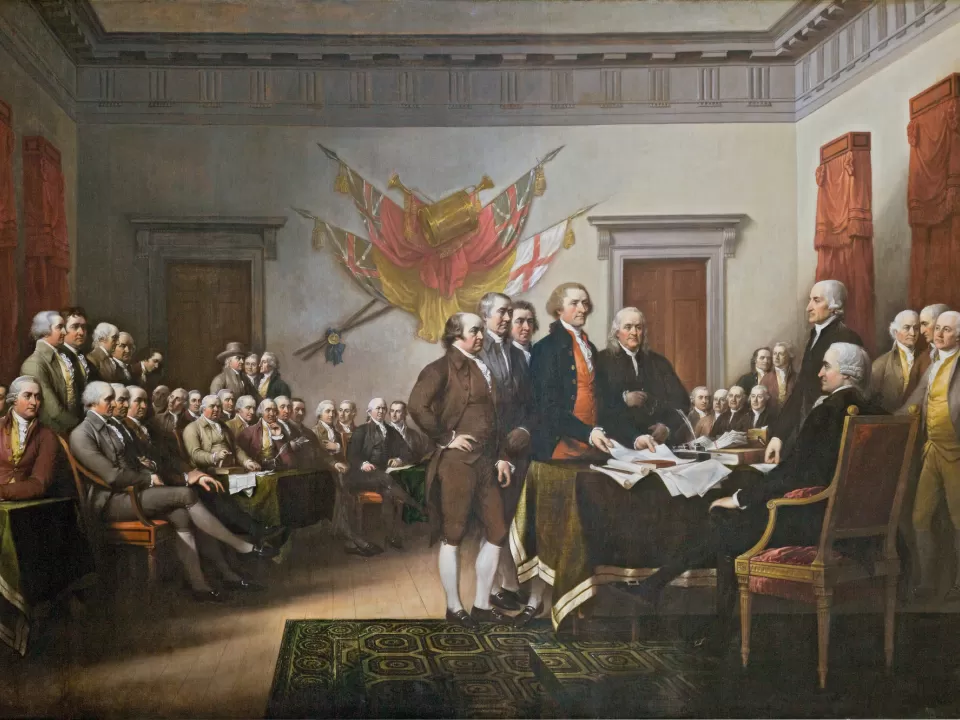
Adams played a large role in the Declaration of Independence, and artwork involving this document is where he can be seen the most.

Image
Image
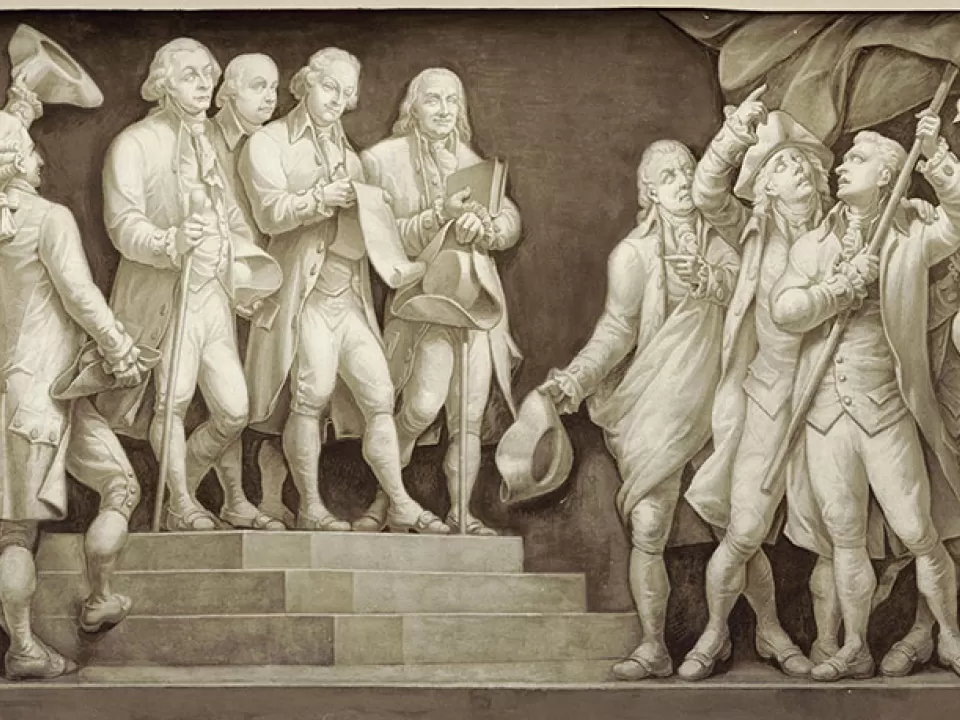
"Declaration of Independence" scene from the Frieze of American History found in the U.S. Capitol Rotunda.
Image
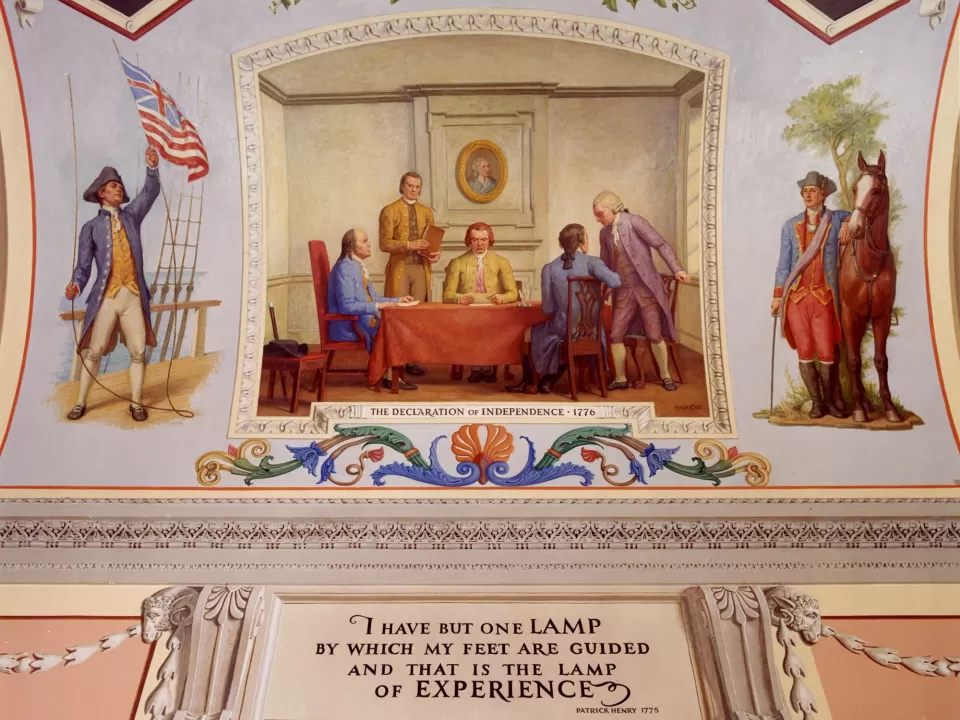
"The Declaration of Independence, 1776" by Allyn Cox

There are three instances of the signing of the Declaration in the U.S. Capitol that include Adams: a painting in the Rotunda, the Frieze of American History and a mural in the Cox Corridors.

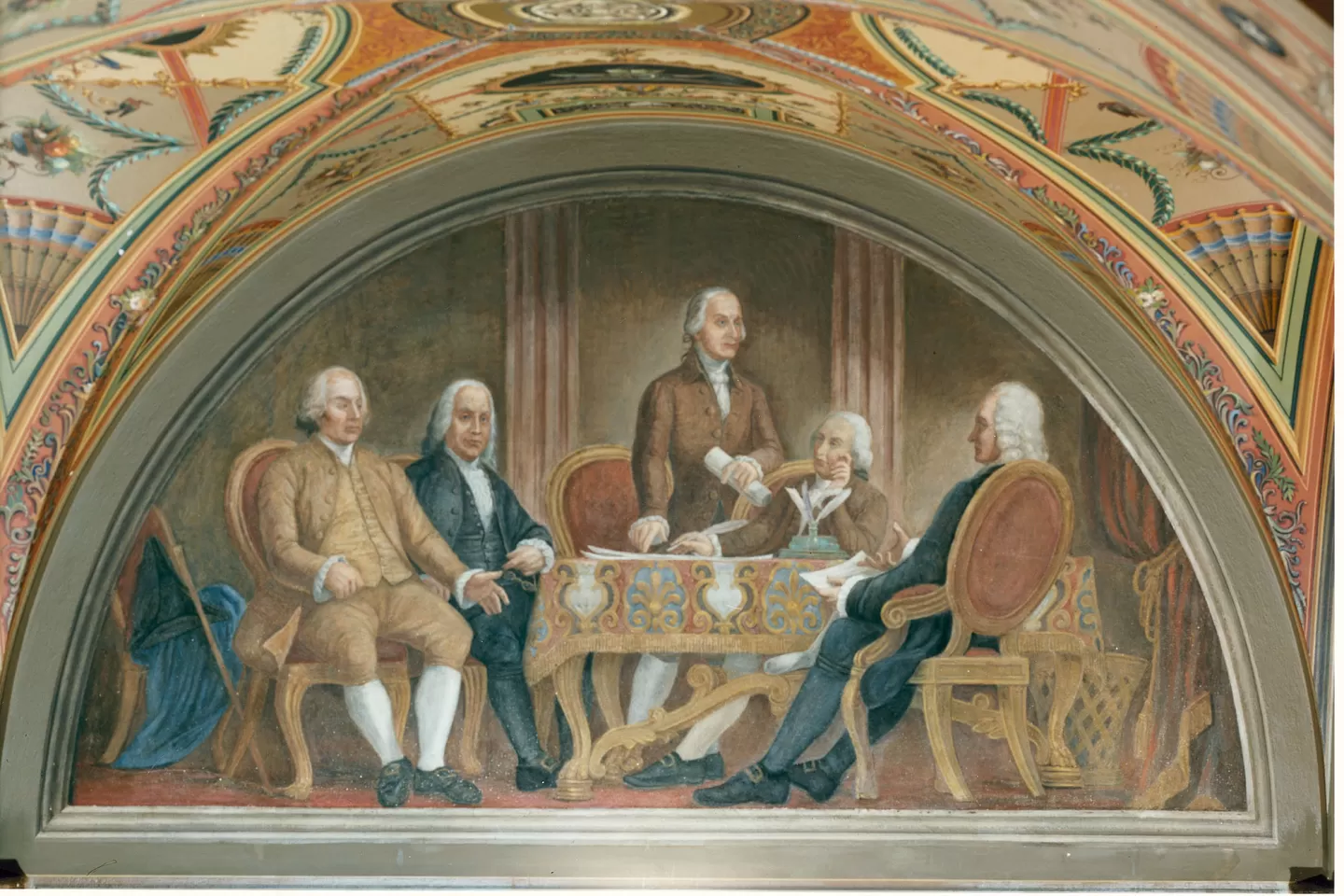
This isn't the only event-based art in which Adams is spotted. At one end of the Brumidi Corridors, Adams appears in The Signing of the First Treaty of Peace with Great Britain (cover image above). Joining him in this 1782 setting are Benjamin Franklin, John Jay, Henry Laurens and Richard Oswald.

Image
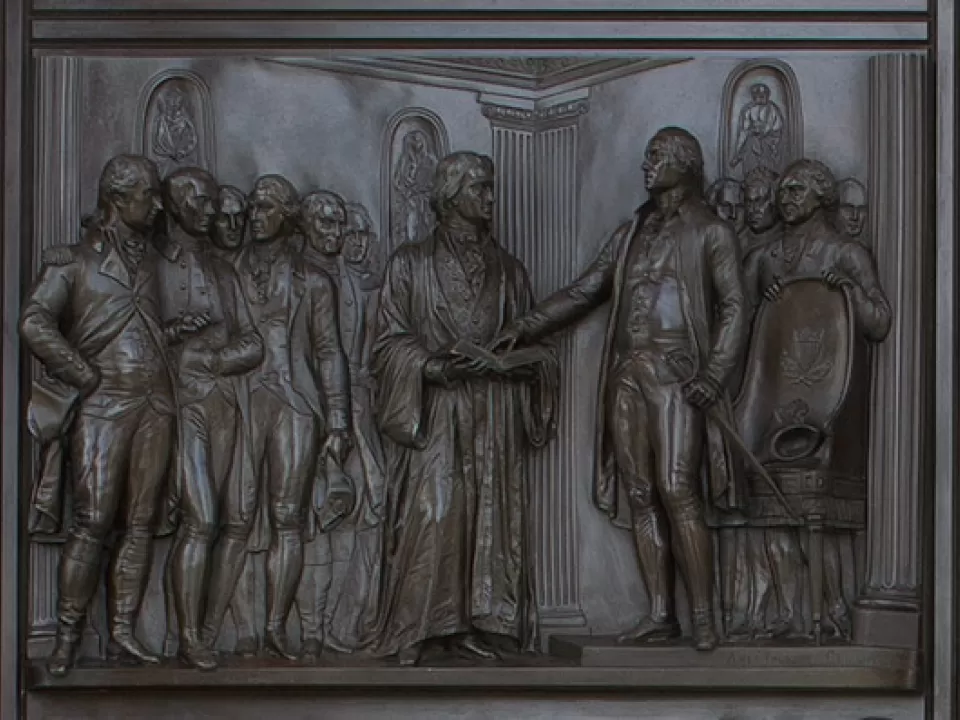
Panel from the U.S. Capitol Senate Bronze Doors depicting the 1789 Inauguration of George Washington as First President.
Image
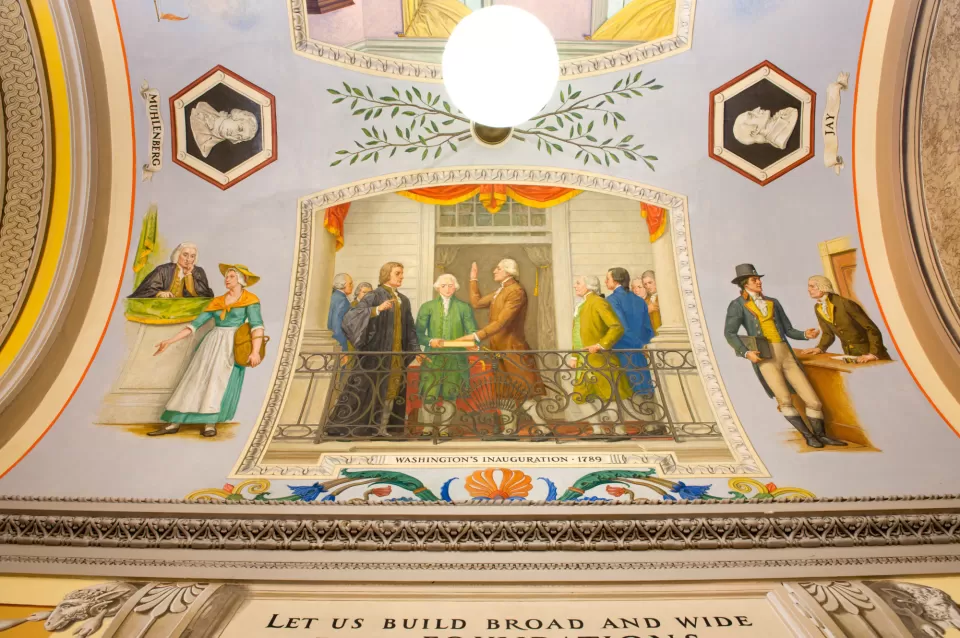
"Washington's Inauguration, 1789" by Allyn Cox

In the Senate wing's bronze doors, Vice President John Adams is shown on the right of the panel depicting the 1789 "Inauguration of George Washington as First President" scene. This event featuring Adams can also be found painted in the Cox Corridors of the U.S. Capitol.

While these pieces of art show Adams in action among other historic figures, there are also two instances on the U.S. Capitol campus that highlight him on his own.

Image
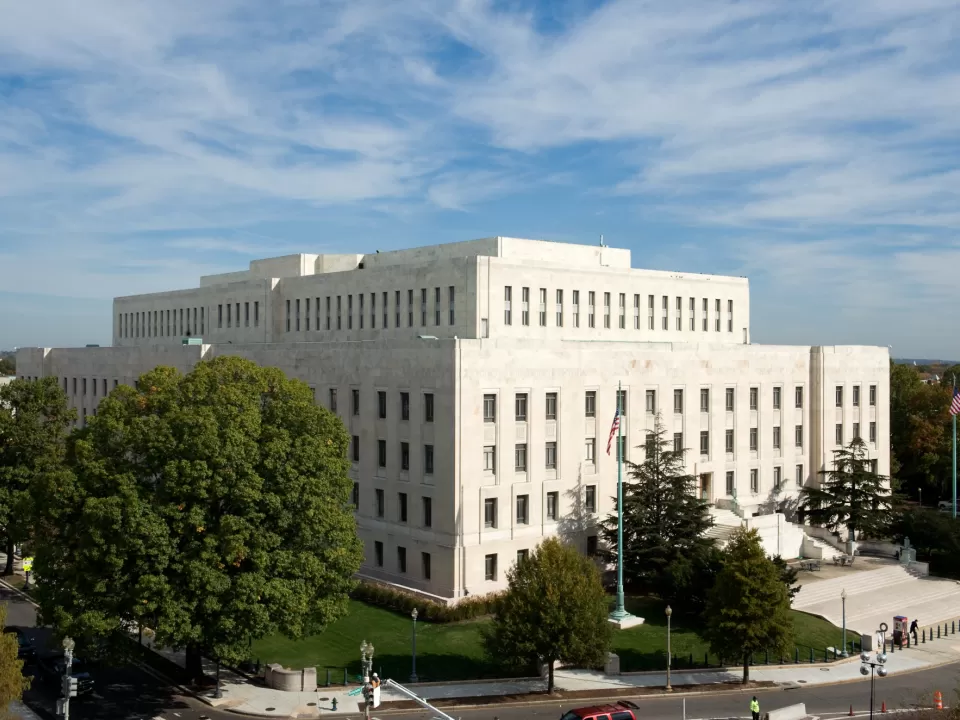
View of the Library of Congress John Adams Building in Washington, D.C.
Image
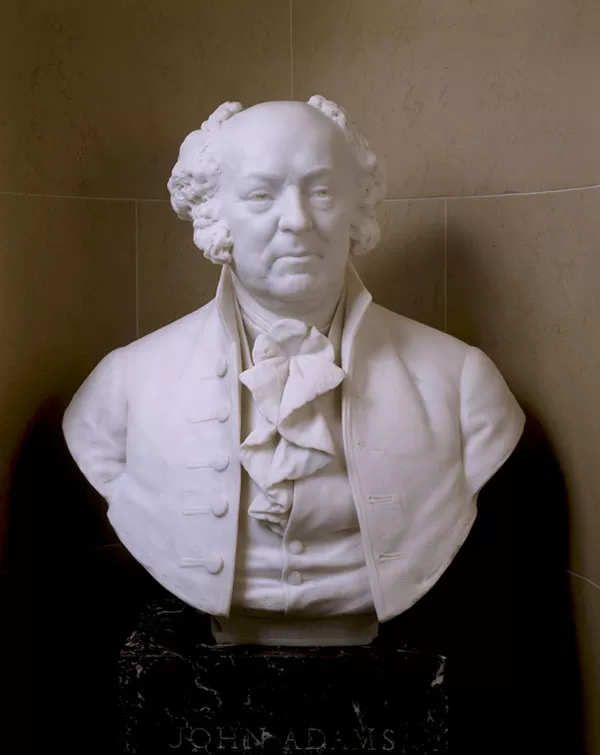
Bust of John Adams in a Senate Gallery niche. Photo via Senate.gov.

First, a bust of Adams sits almost directly above the rostrum of the Senate Chamber as part of the Senate's Vice Presidential Bust Collection.

Second, a building on Capitol Hill bears his name. In 1980, after being known for years as "The Annex," the Library of Congress' second building was named to honor Adams. A fitting tribute for the person who approved the law establishing the Library of Congress in 1800.

Comments

Excellent article, love history

this is very helpful😀

Add a new comment

The content of this field is kept private and will not be shown publicly.

Plain text

  • No HTML tags allowed.
  • Lines and paragraphs break automatically.
  • Web page addresses and email addresses turn into links automatically.

Our Stories

Recent Articles
History & Discoveries

Allyn Cox: An Artist's Materials

The AOC Curator Division maintains a small collection of objects related to Cox's work, representing project material left during his design and painting of the House corridors in the 1970s.
Public Notice

Celebrate America 250 at the U.S. Capitol

Join us July 2-4, 2026, for our celebration! From 9:30 a.m.-3:30 p.m. we will have free family-friendly events, interactive experiences and lots of patriotic fun.