Displaying 1021 - 1050 of 1073 Clear
Highlight
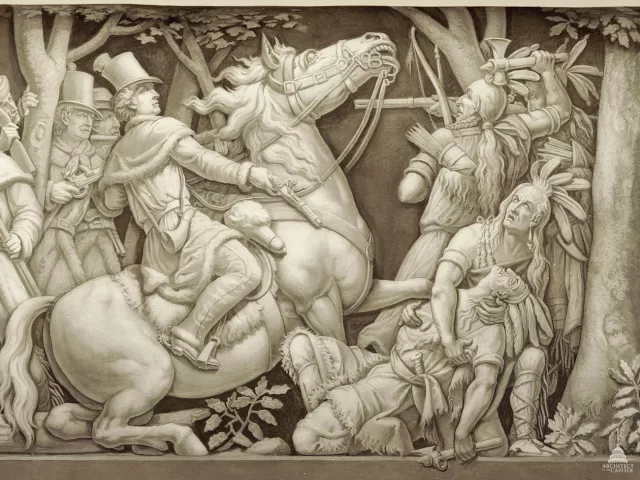
Tecumseh, a brilliant Indian chief, warrior and orator, is shown being fatally shot by Colonel Johnson at the Battle of the Thames in Upper Canada during the War of 1812. Tecumseh and his followers joined forces with the British to resist the encroachment of settlers on Indian territory. With
Highlight
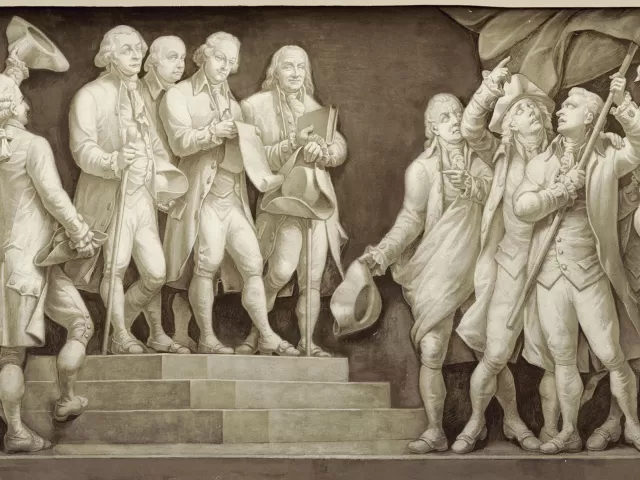
This idealized depiction shows the principal authors of the Declaration of Independence, John Adams, Thomas Jefferson and Benjamin Franklin, reading the document to colonists. (1776)
Highlight
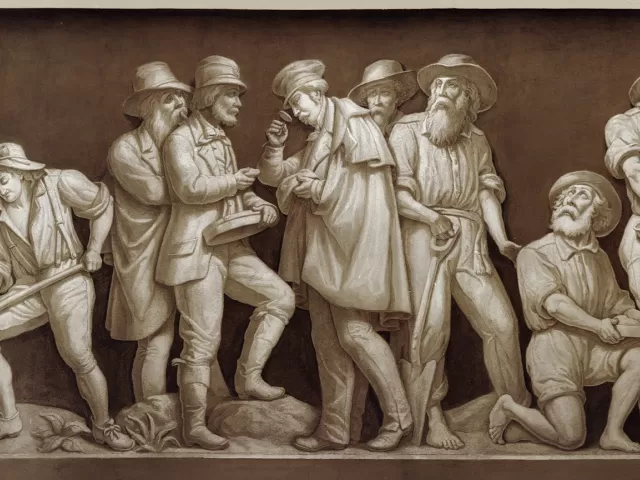
The discovery of gold at Sutter's Mill set off the California gold rush of 1849. In this scene prospectors dig for gold with picks and shovels and pan for the precious metal. In the center three well-dressed men, possibly Sutter and two friends, carefully examine the contents of a prospector's pan
Highlight
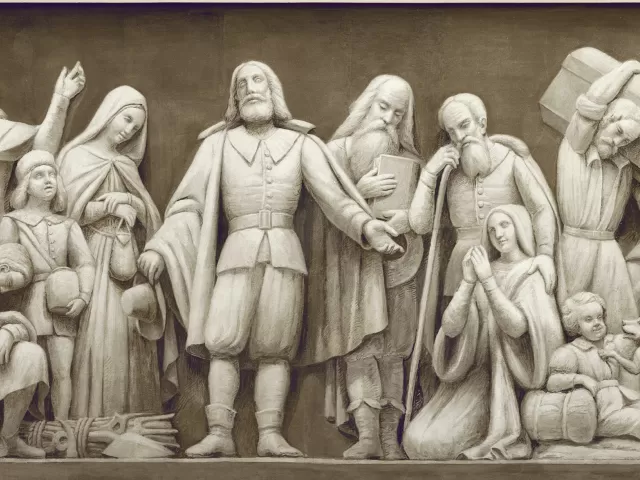
A group of Pilgrims, led by William Brewster, is shown giving thanks for their safe voyage after their arrival in Plymouth, Massachusetts. (1620)
Highlight
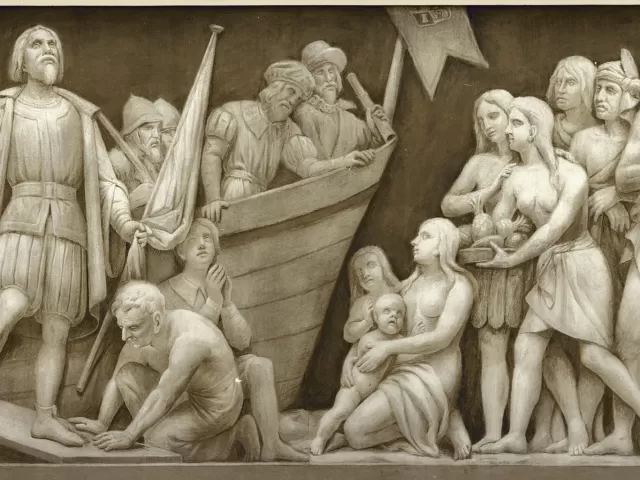
Christopher Columbus disembarks from the Santa Maria on a plank, greeted by Native Americans. This is the first of four scenes of Spanish conquest. Brumidi's central figure seems to have been inspired by a statue of Columbus by Luigi Persico, which was then at the east central steps of the Capitol.
Highlight
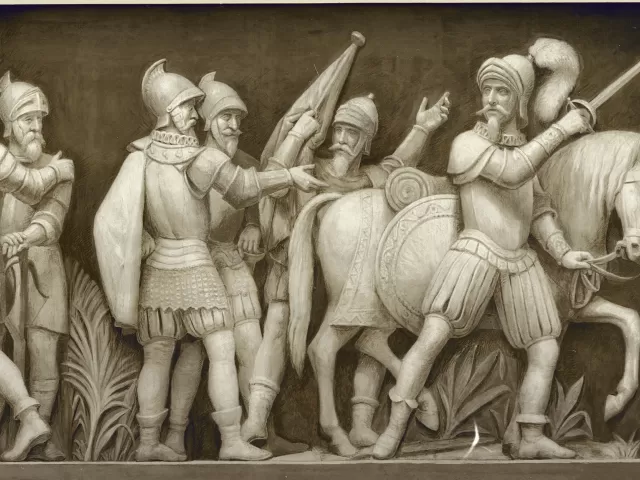
The Spanish conqueror of Peru, Francisco Pizarro, leading his horse, pushes through the jungle searching for El Dorado, the mythical land of gold. Pizarro eventually captured the Inca capital, Cuzco. (1533)
Basic page
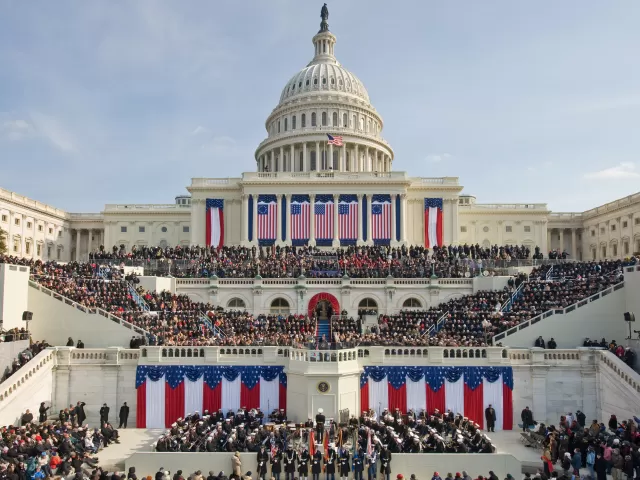
The Architect of the Capitol (AOC) erects the inaugural platform, sets up the necessary seating and fencing on the grounds, and coordinates other activities with the Joint Congressional Committee on the Inaugural Ceremonies (JCCIC) regarding all of the physical arrangements that are necessary to
Highlight
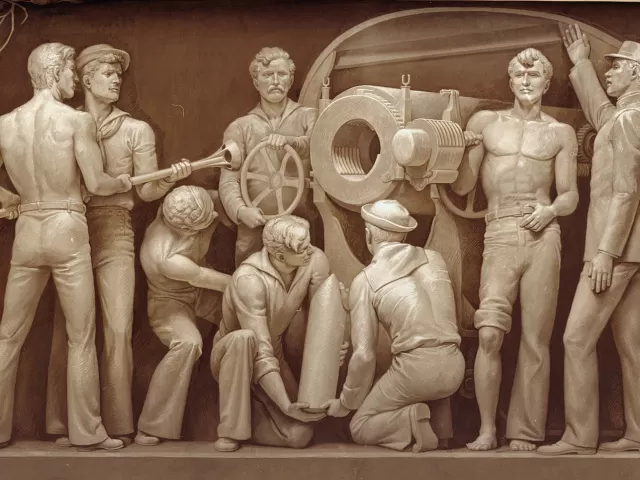
A gun crew prepares to fire a Naval gun in one of the two great naval battles of the Spanish-American War. In the course of helping Cuba win independence from Spain the United States became prominent in world affairs by acquiring a colonial empire (Puerto Rico and Guam) and establishing naval
Highlight
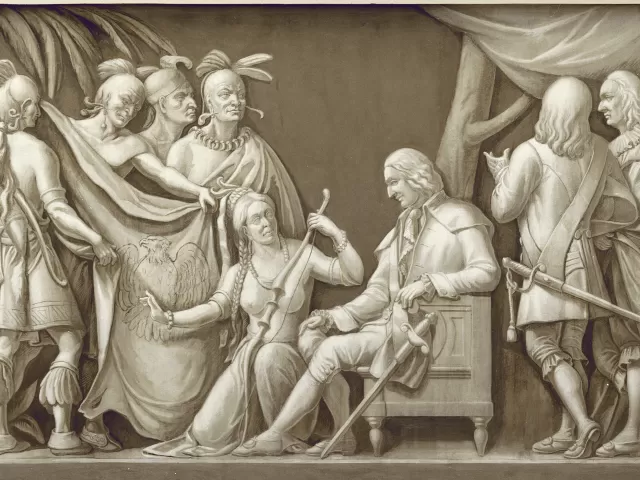
James Oglethorpe, who founded the colony of Georgia and became its first governor, is shown making peace on the site of Savannah with the chief of the Muscogee Indians, who presents a buffalo skin decorated with an eagle, symbol of love and protection. (1732)
Highlight
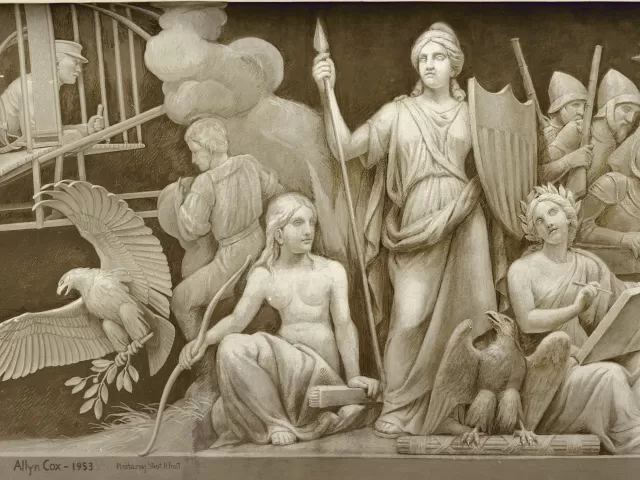
The first panel contains the only allegorical figures in the frieze. America, wearing a liberty cap, stands in the center with her spear and shield.
Basic page
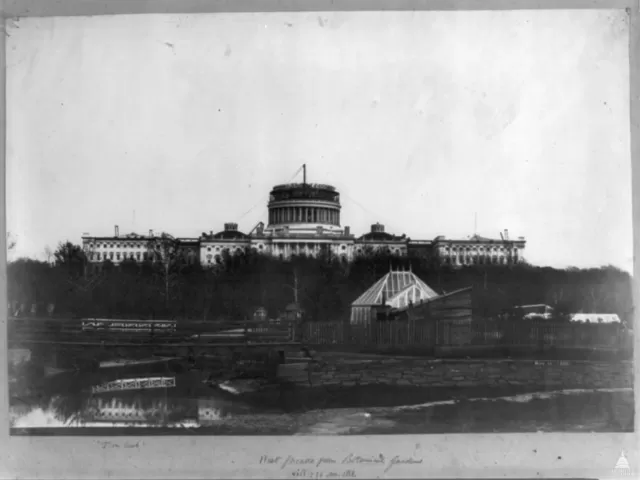
In accordance with the "Residence Act" passed by Congress in 1790, President Washington in 1791 selected the area that is now the District of Columbia to serve as the nation's capital. French engineer Pierre Charles L'Enfant was charged with planning the new city of Washington. He located the U.S
Highlight
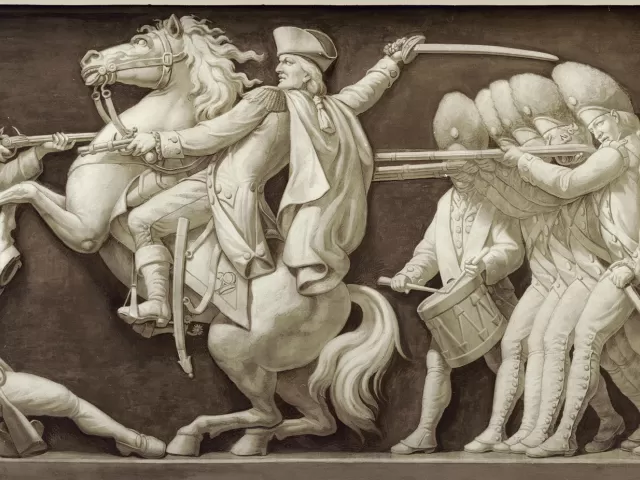
British troops fire on colonists, who had gathered at Lexington to stop them from going on to Concord to destroy a colonial supply depot. Major Pitcairn, the British officer on horseback, had ordered the colonists to disarm and disperse. As they began to do so, a single shot was fired, which led to
Highlight
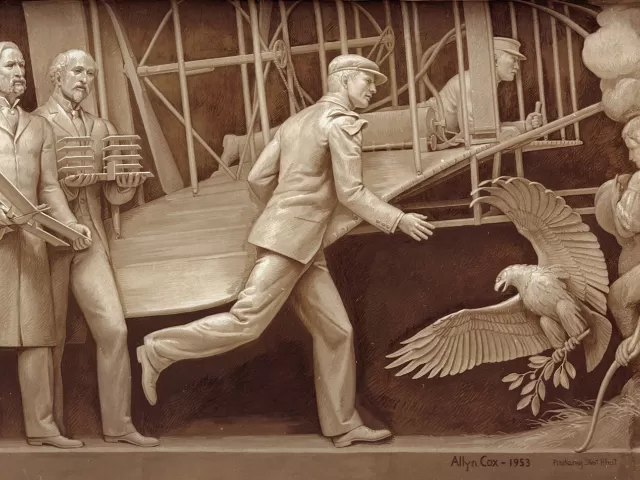
The first flight at Kitty Hawk (December 17, 1903) is depicted, with Orville Wright in the Flyer, which has just left the ground, and Wilbur running alongside to steady the wing. In the background stand Leonardo da Vinci, Samuel Pierpont Langley, and Octave Chanute; each holds a model of his earlier
Highlight
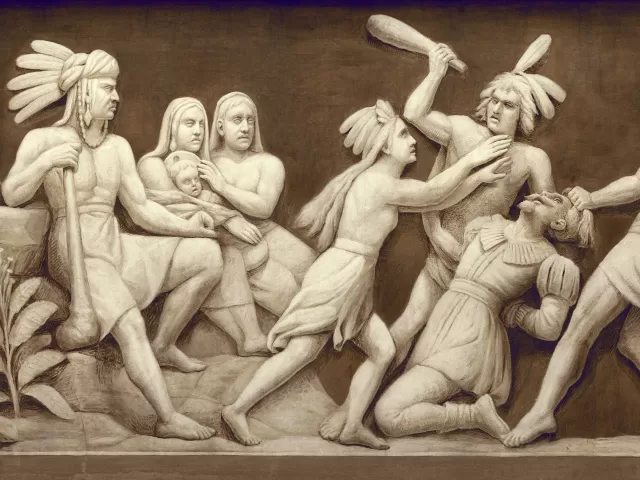
Pocahontas saves Captain John Smith, one of the founders of Jamestown, Virginia, from being clubbed to death. Her father, Chief Powhatan, is seated at the left. This scene is the first showing English settlement. (1607)
Basic page
The Architect of the Capitol Talent Acquisition and Classification Branch (TAC) issues vacancy announcements for job opportunities that are filled through a competitive process. Vacancy announcements are posted daily Monday through Friday through the AOC's electronic application system. The vacancy
Highlight
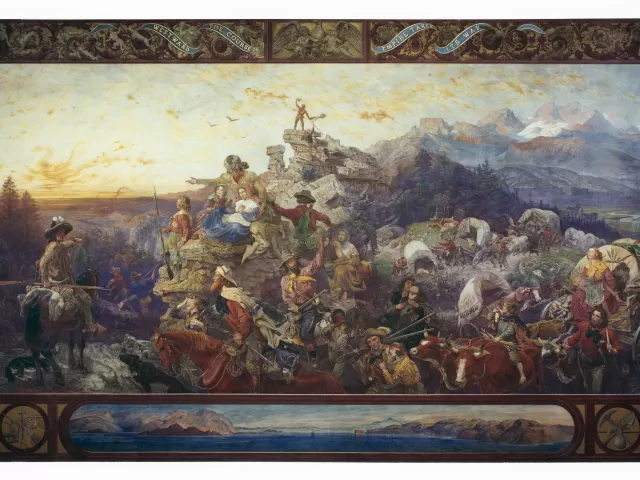
Emanuel Leutze's mural celebrates the western expansion of the United States. A group of pioneers and their train of covered wagons are pictured at the continental divide, looking towards the sunset and the Pacific Ocean. The border depicts vignettes of exploration and frontier mythology. Beneath
Highlight
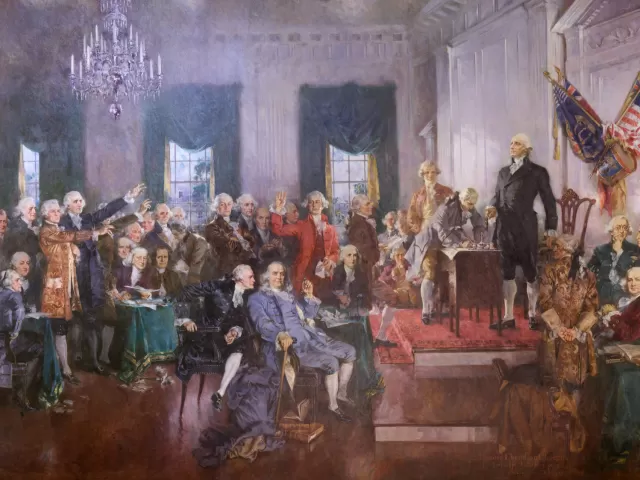
Howard Chandler Christy's painting depicts Independence Hall in Philadelphia on September 17, 1787. Completed in 1940, the 20-by-30-foot framed oil-on-canvas scene is on display in the east grand stairway of the House wing.
Highlight
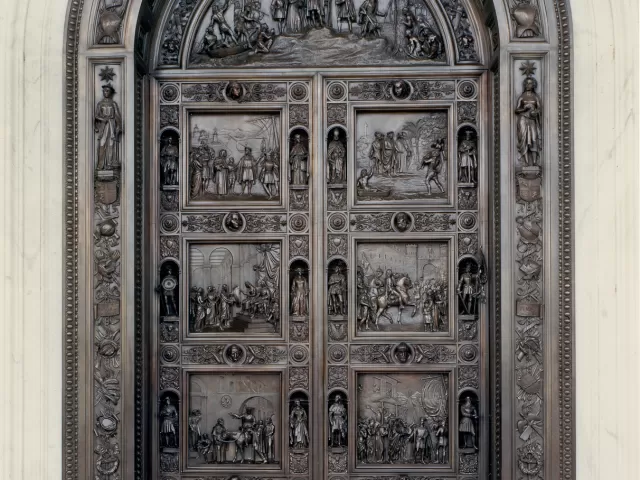
The Columbus Doors, also called the Rogers Doors or Rotunda Doors, stand imposingly at the main entrance to the U.S. Capitol Building, almost 17 feet high and weighing 20,000 pounds. Designed by American sculptor Randolph Rogers, each scene depicting the life of Christopher Columbus is finely
Basic page
Examples of FW&A violations include: Contract fraud, including contract mischarging by the contractor Kick-backs and bid rotation by competing contractors Contractors failing to pay full wages to employees Bribery and acceptance of gratuities by government employees Significant mismanagement and
Highlight
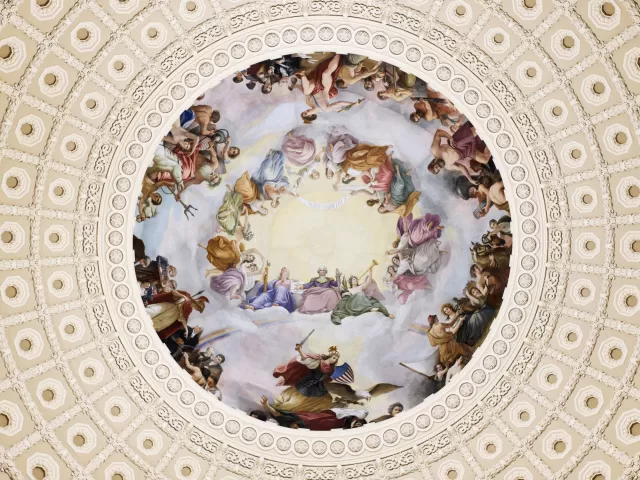
Painted in 1865 by Constantino Brumidi, the Apotheosis of Washington in the eye of the U.S. Capitol Building's Rotunda depicts George Washington rising to the heavens in glory.
Highlight
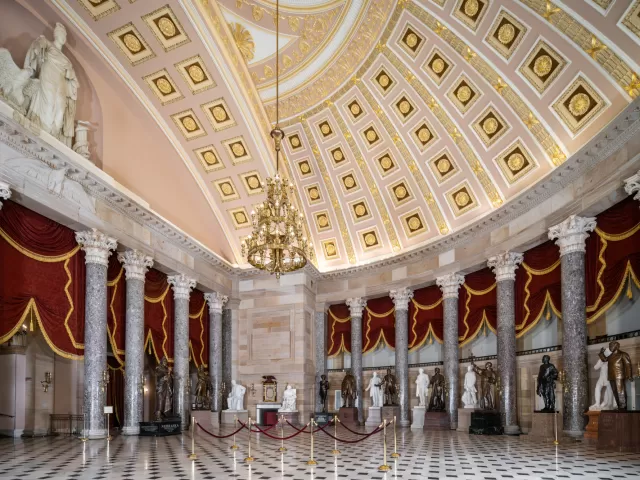
The National Statuary Hall Collection is comprised of statues donated by individual states to honor persons notable in their history.
Highlight
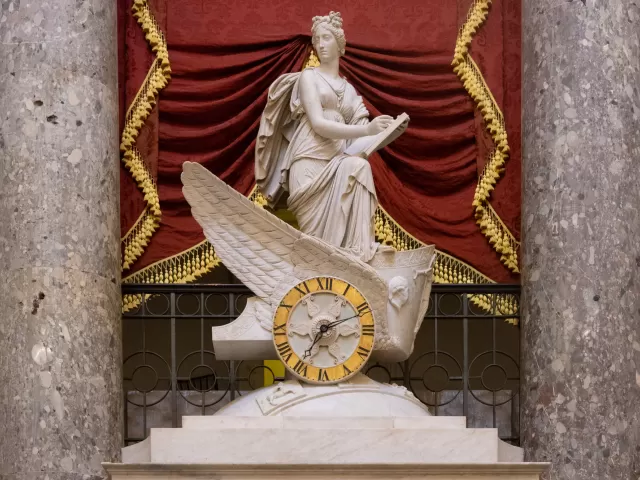
The marble Car of History by Carlo Franzoni (1789-1819) is located above the north door to National Statuary Hall (the Old Hall of the House of Representatives) in the United States Capitol.
Highlight
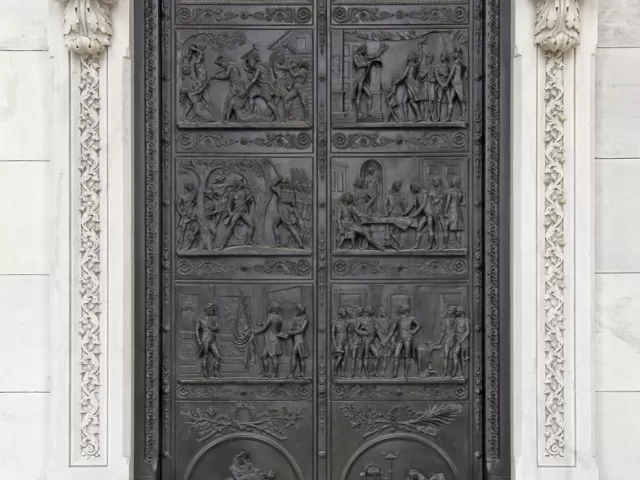
The bronze doors of the House wing are comparable to those in the Senate. Each valve consists of three panels and a medallion depicting significant events in American history.
Highlight
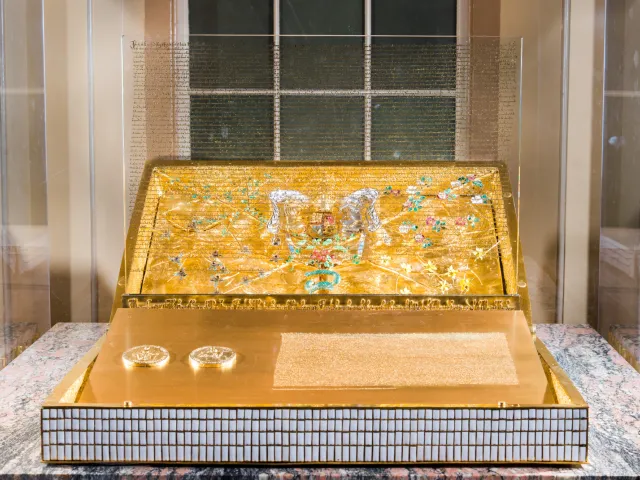
The Magna Carta display in the Crypt of the United States Capitol was made in England by the artist Louis Osman and was presented to the United States as a gift from the British government to celebrate the bicentennial of American independence.
Highlight
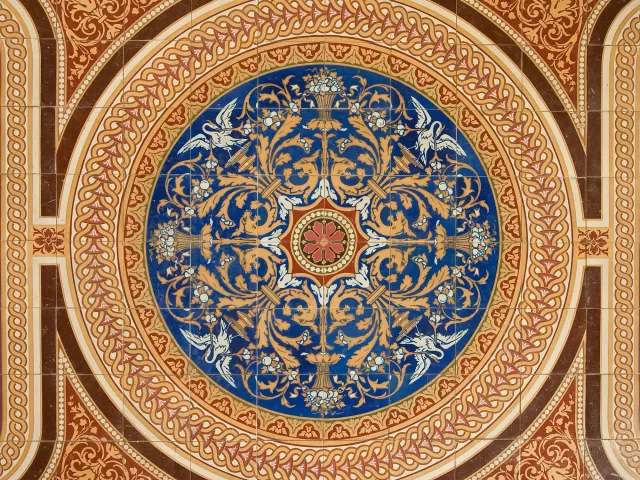
The richly patterned and colored Minton tile floors are one of the most striking features of the extensions of the United States Capitol. They were first installed in 1856, when Thomas U. Walter was engaged in the design and construction of vast additions to the Capitol (1851-1865). For the floors
Highlight
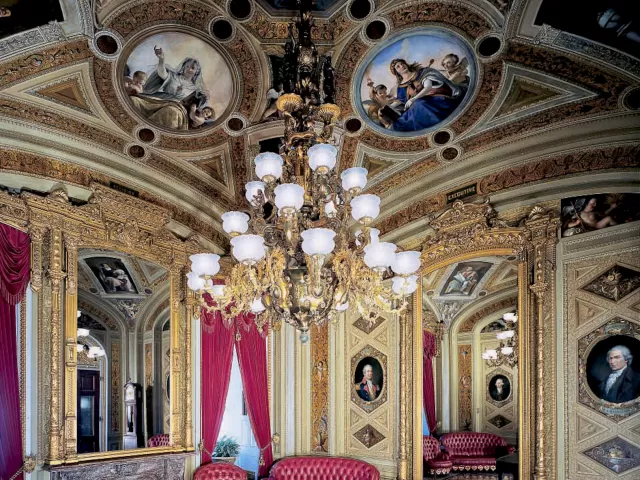
This bronze chandelier provides light for the President's Room of the U.S. Capitol.
Highlight
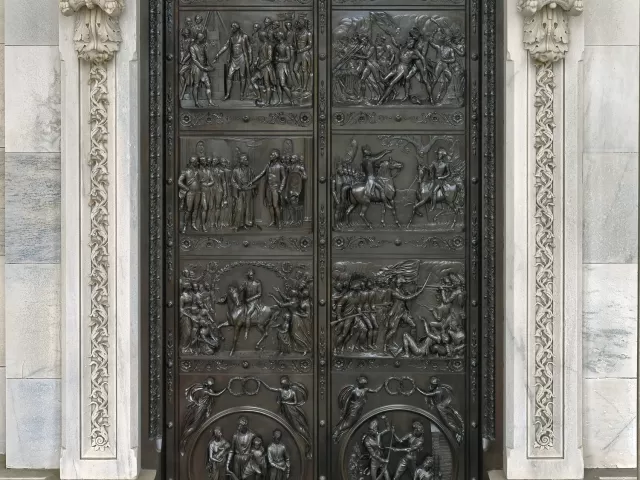
The bronze doors of the Senate wing are comparable to those in the House. Each valve consists of three panels, depicting events in the life of George Washington and Revolutionary War scenes, and an allegorical medallion.
Highlight
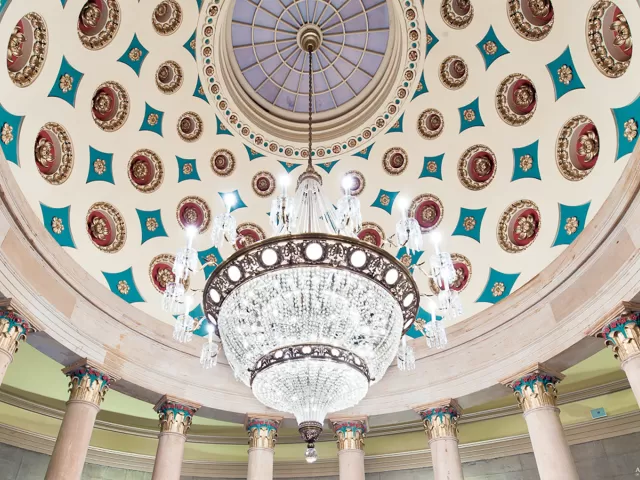
This chandelier has hung in the Small Senate Rotunda since 1965. Imported from Europe in 1903, it previously hung in a historic Baltimore theater and a Capitol Hill church. Originally smaller, it has been enlarged and modified over its history.
Basic page
The Federal Employee's Compensation Act (FECA) provides compensation benefits to Federal civilian employees for disability due to personal injury or disease while in the performance of duty. FECA also provides for payment of benefits to dependents if the injury or disease causes an employee's death
Basic page
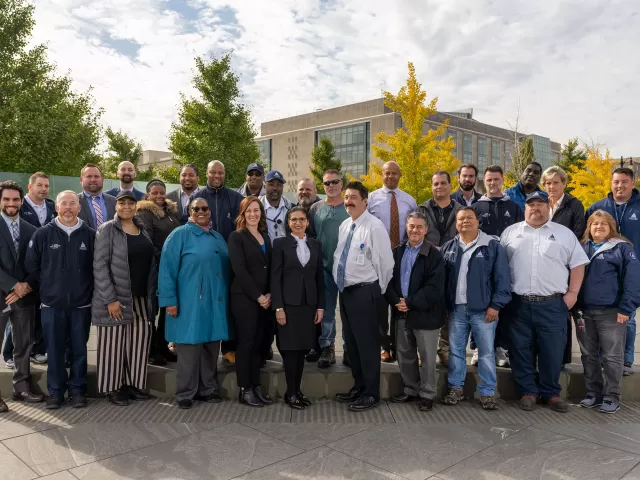
Find out information about working at the Architect of the Capitol (AOC), the application process and our open positions.