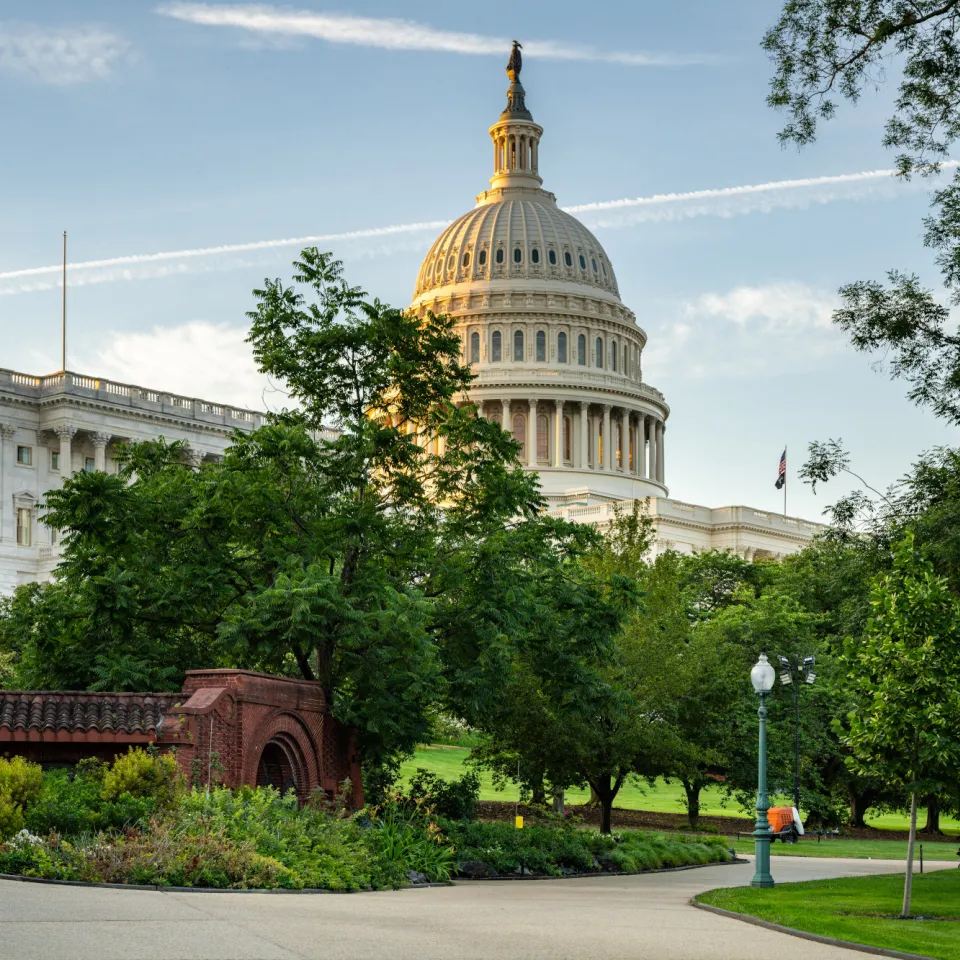
What is the biggest tree on the U.S. Capitol Grounds? I was asked this question immediately after onboarding at the Architect of the Capitol (AOC) a few months ago. It must be easy enough to find; they aren't exactly hiding. Somewhere, among the 4,800 trees on campus, was the biggest of them all.

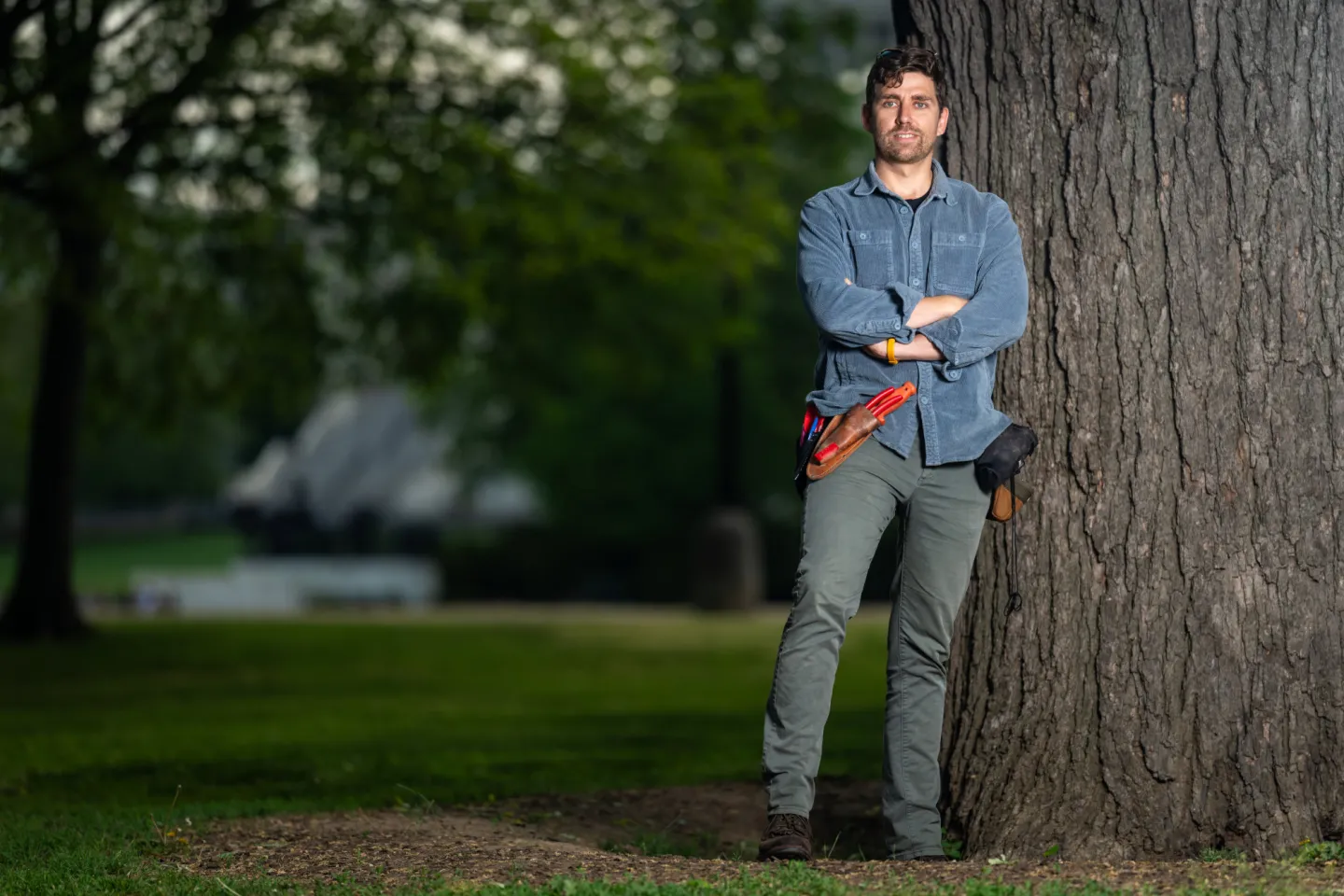
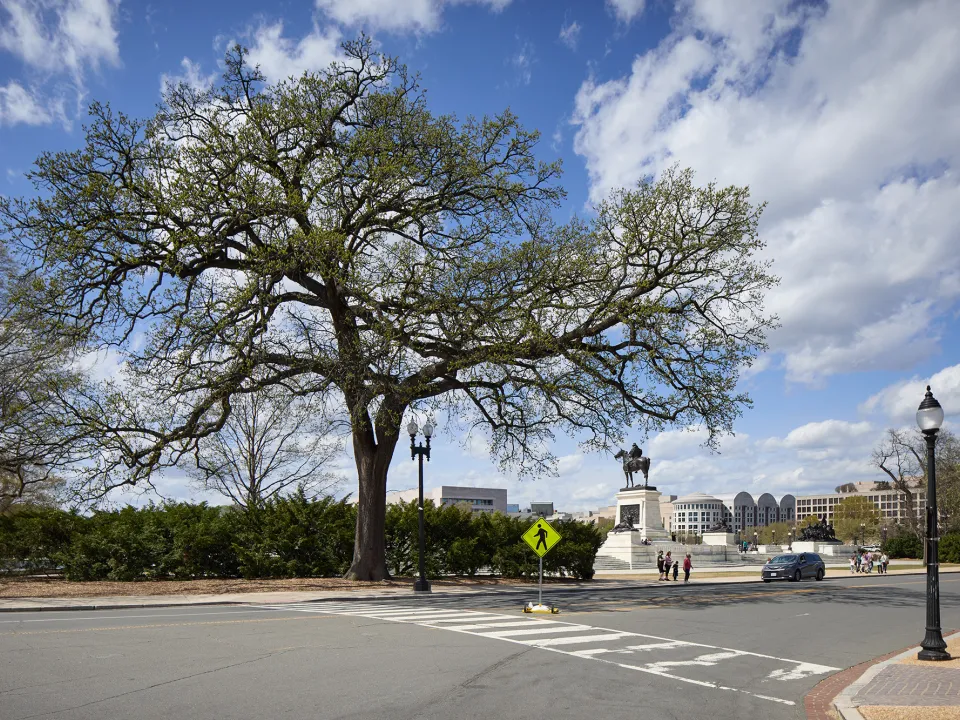
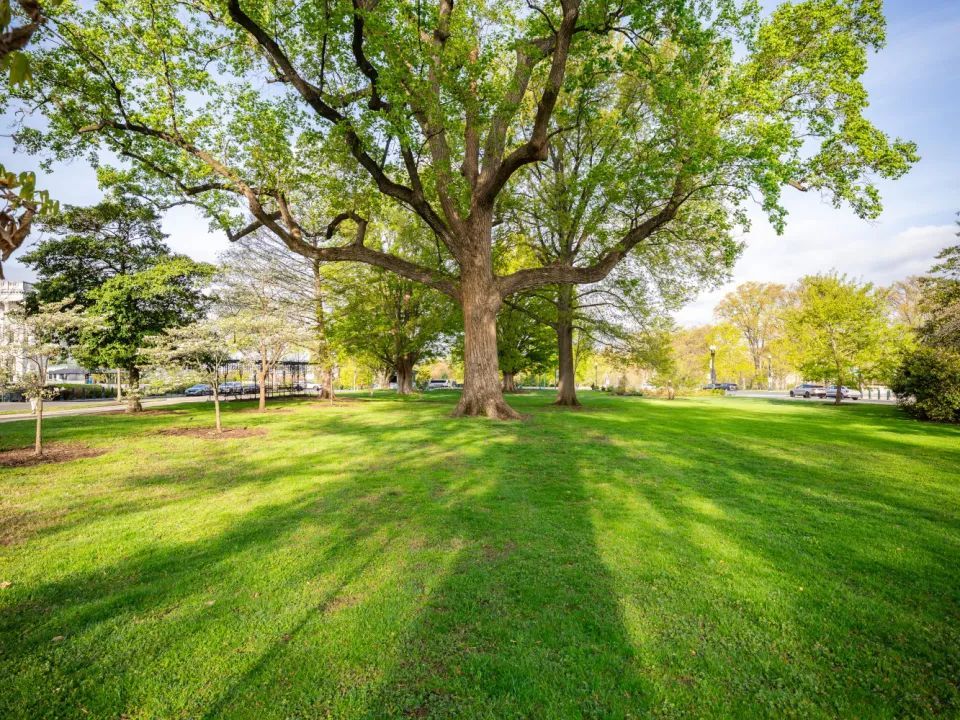
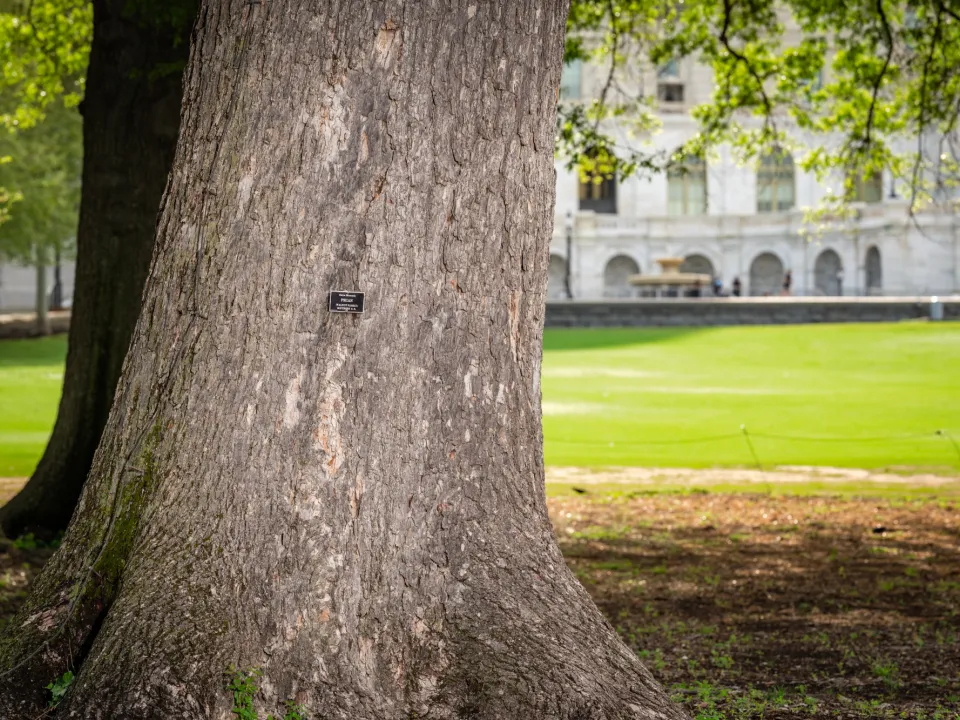
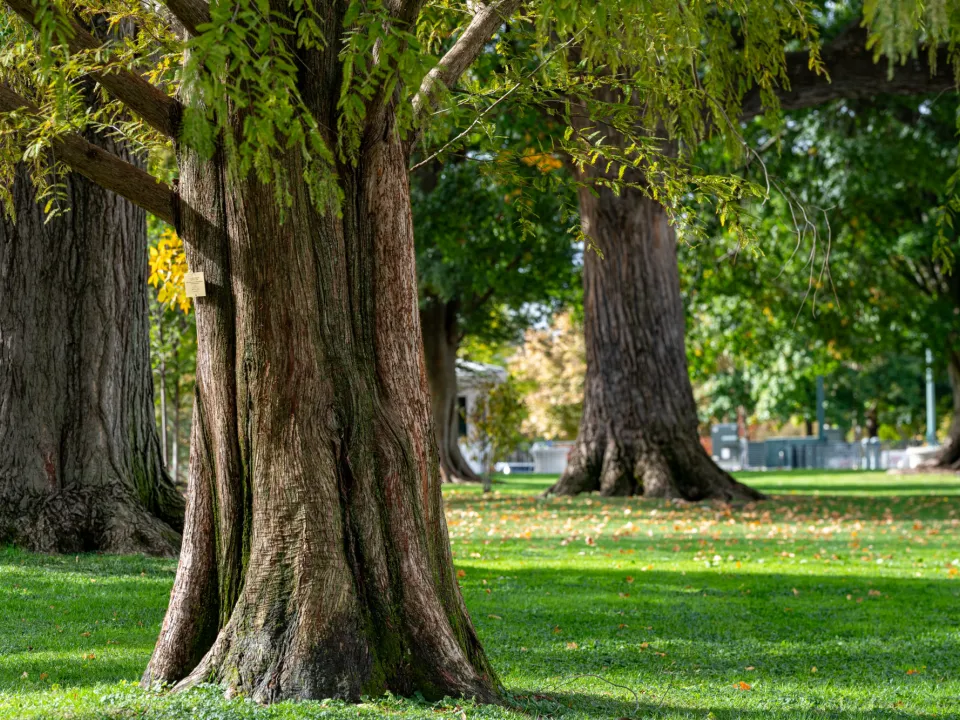
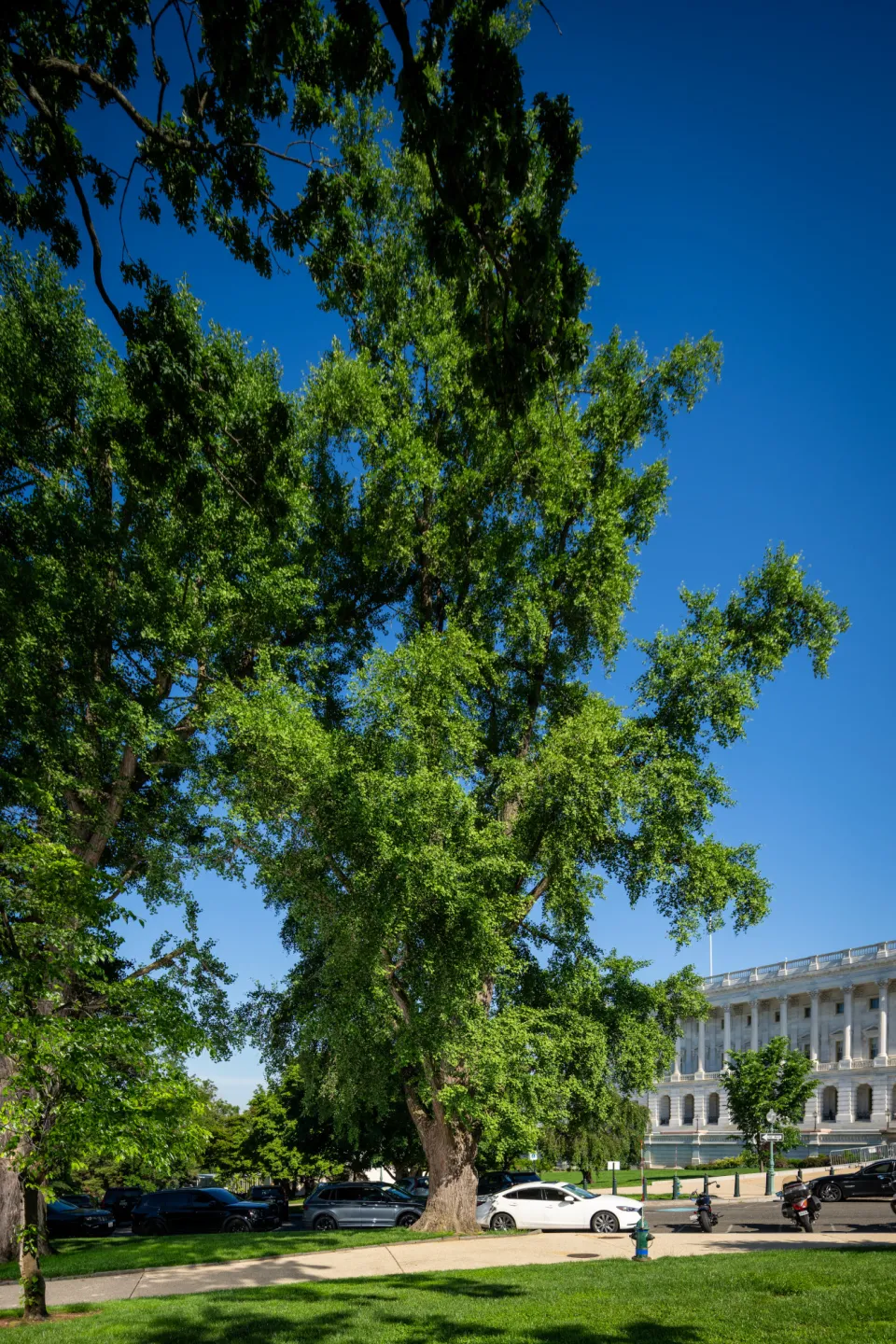
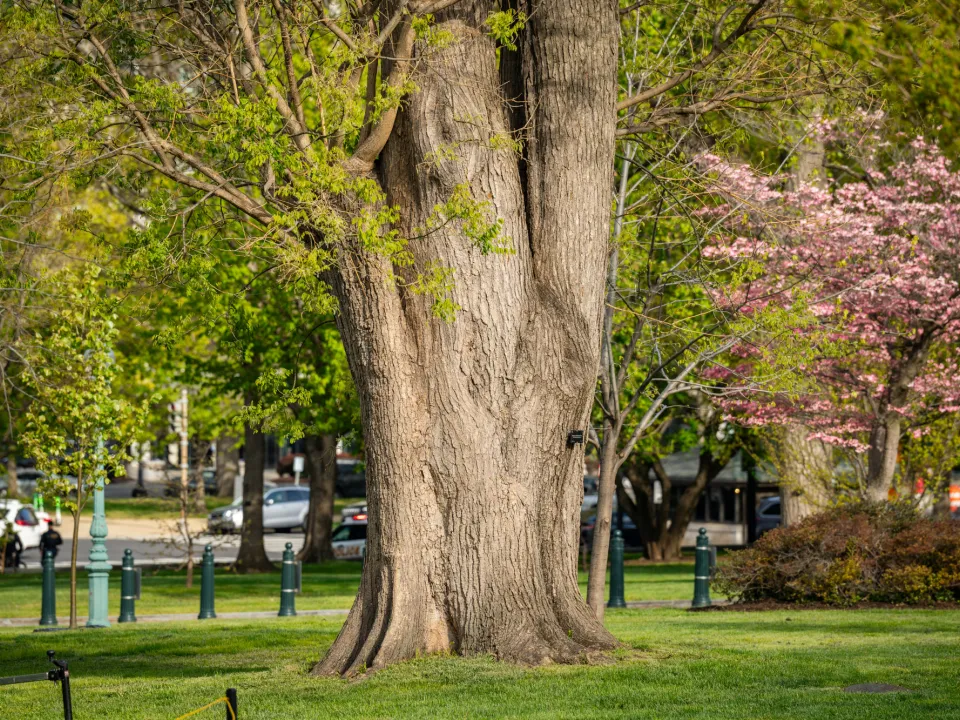
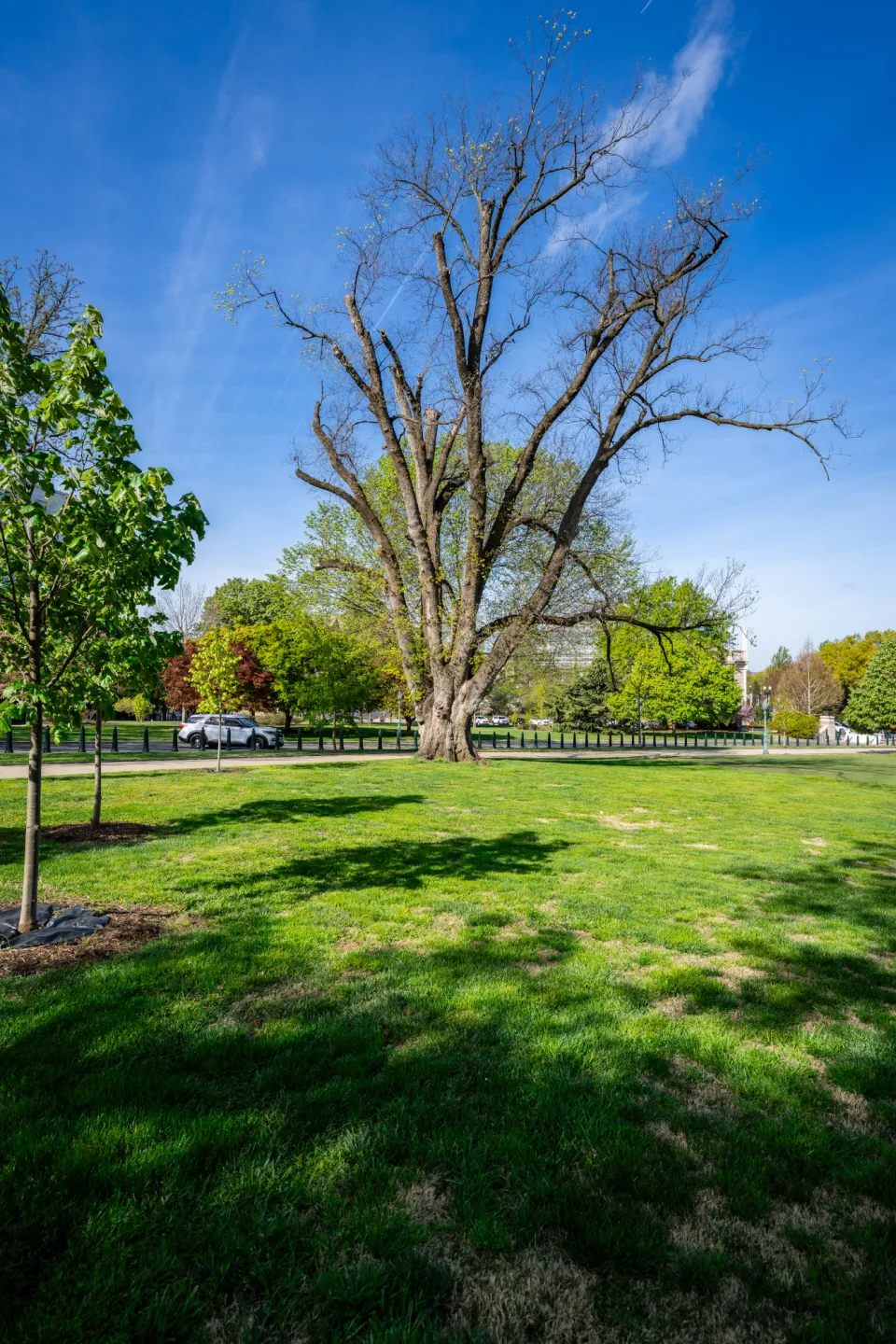
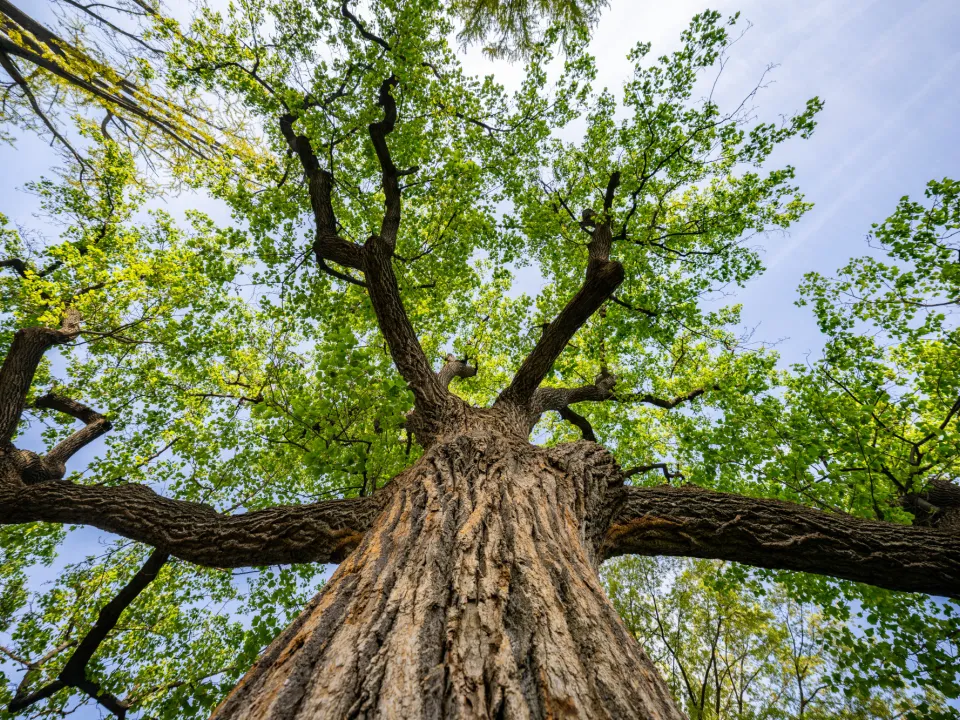
No need to reinvent the wheel here; a sensible first step was to ask our dedicated arborists who work on these trees every day, keeping them healthy and safe for everyone who visits. I took guesses from the team and heard a lot of overlap, with a few spirited tangents: "Definitely that monster bur oak over past Grant [Memorial]," "Oh yeah, absolutely," "Maybe the tulip by Northeast drive," "The pecan."

Image
Photo by
Luke Walter
Image
Photo by
Thomas Hatzenbuhler
Image
Photo by
Thomas Hatzenbuhler
Initial guesses for the biggest tree included bur oak, tulip and hardy pecan.
Photos by
Luke Walter; Thomas Hatzenbuhler

What does it mean to be the biggest tree? In conversation, people sometimes reference height as an indicator, it certainly jumps out to an observer. But the world's biggest tree, a Sequoiadendron giganteum, stands about 100 feet shorter than the world's tallest tree, a Sequoia sempervirens. A tree's size is captured by its mass.

I decided to use the National Champion Tree Program's simple formula to account for DBH (trunk diameter measured at breast height), canopy spread and height. Lucky for me, the AOC has excellent tree records that include all of that information, regularly updated when any new work is done on a tree. Maybe this task will be over with a few clicks.

Pull the full report, filter for relevant traits, run them through the formula, and see what we get! And the biggest tree on campus turned out to be… a crape myrtle by the Thurgood Marshall Federal Judiciary Building? No way. There's a 99% chance someone's thumb slipped and entered 111" DBH for an 11" tree. Still, I want to be thorough, so I set out to see if a record-breaking behemoth crape myrtle was hiding in plain sight. Turns out no, it was a typo.

Image
Photo by
Rodney Norman
Image
Photo by
Thomas Hatzenbuhler
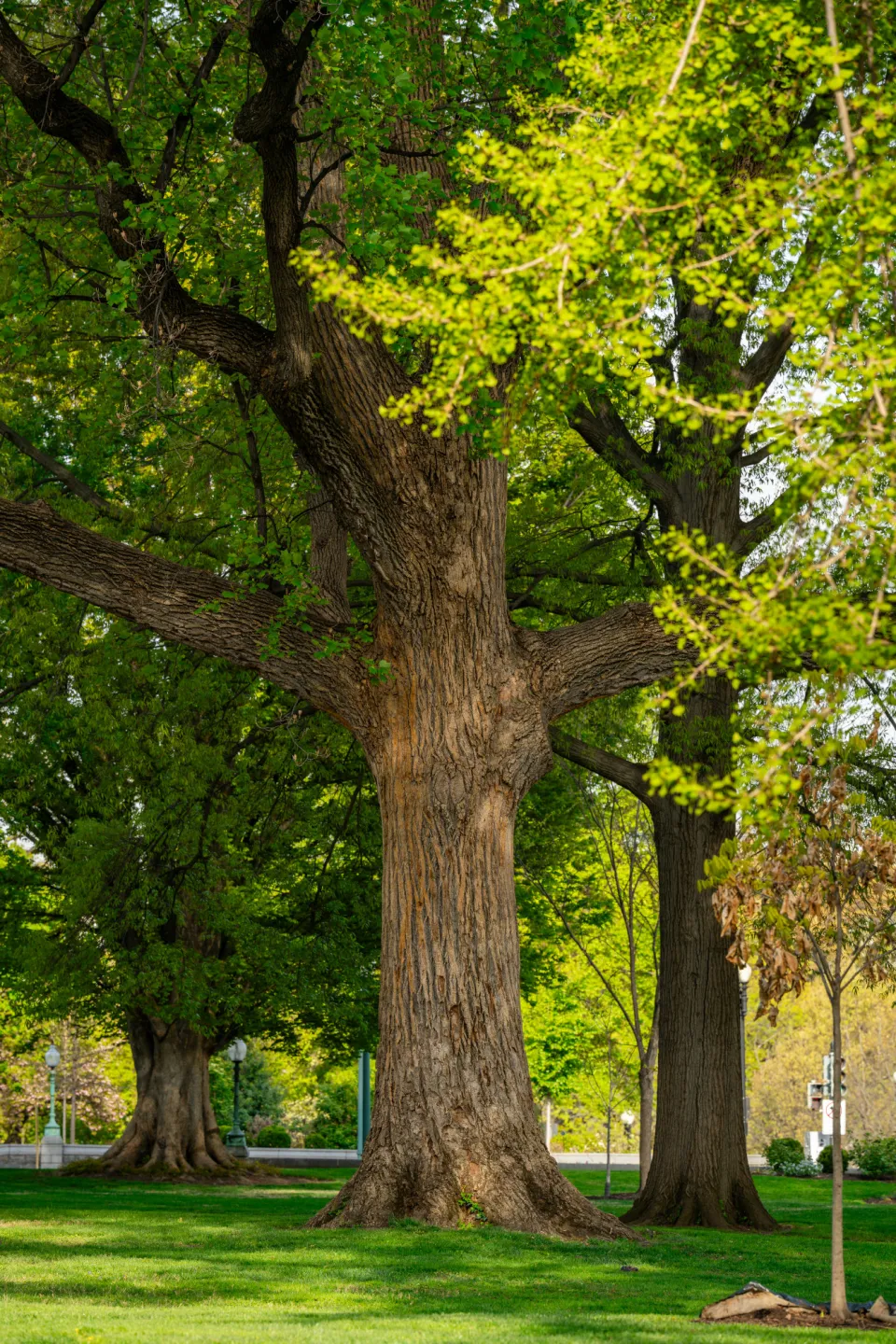
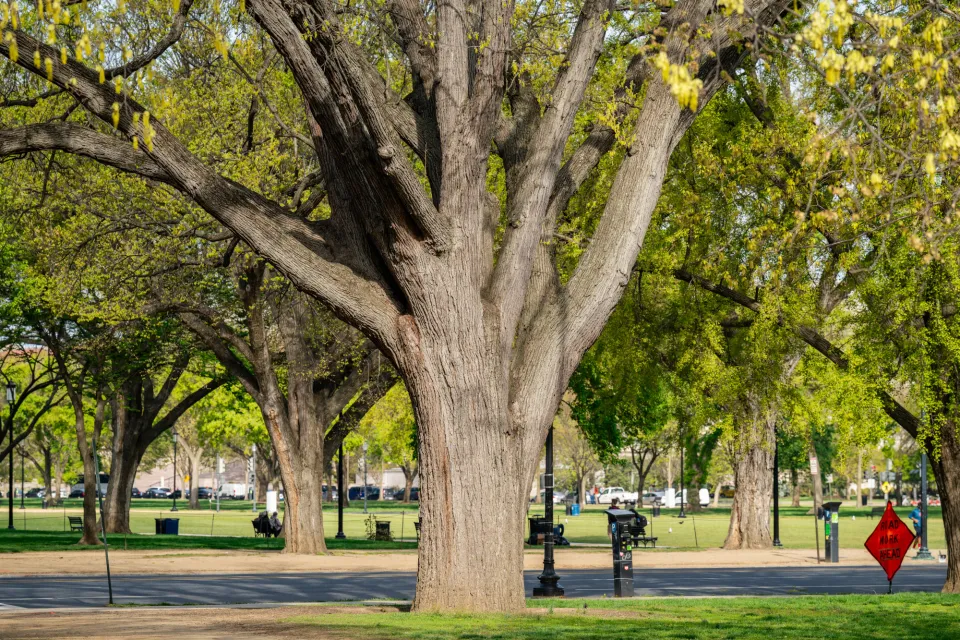
Ginkgo and dawn redwood trees on the U.S. Capitol Grounds.
Photos by
Thomas Hatzenbuhler; Rodney Norman

As I wandered the rest of campus, a few trees really stood out from the landscape. Several of the ginkgoes, a towering dawn redwood, a grove of old oaks by Union Square. I approached the trunk of the oldest and widest zelkova I'd ever seen and looked up to see its crowns dwarfed by the tulip behind it. We have some massive trees.

I made a shortlist of the top 10 biggest trees (no crape myrtles this time) using the Champion Tree formula to scope them out and measure them in person. Topping the list according to the data was a Japanese pagoda, Styphnolobium japonicum, by the Summerhouse. In our system its listed as 90' tall, 63" DBH, with a canopy spread of 65'. Impressive stats, but up close, it was clear this tree has lived through some hardship, and the raw numbers might be misleading. The tree has two codominant stems, meaning the base splits into two competing trunks. DBH, the most heavily weighted metric in tree size, has a formula for calculating multiple stems, but only if they diverge higher than 4.5' from the ground.

This tree's measurements were accurate, but the wide base implied a more massive tree than what stands there today. On top of that, it has undergone significant pruning over the years to remove declining branches. This is a remarkable tree, but it's not the one. The search goes on.

Image
Photo by
Thomas Hatzenbuhler
Image
Photo by
Thomas Hatzenbuhler
These Japanese pagoda and Wych elm trees had top marks.
Photos by
Thomas Hatzenbuhler

The widest tree on the list was a Wych elm, Ulmus glabra, with a 69" DBH. That's 18' in circumference, and you feel all of that up close. However, even more than the Styphnolobium japonicum, the crown has been heavily reduced since these measurements were recorded. There's a chance that this was once the biggest tree on campus, but now almost all of the arching branches have been cut back.

How about the tulip tree I heard mentioned? It was my personal guess for the biggest one, before having seen any of them. The tallest tree in the District of Columbia is a 180' tulip, and their fast growth rate makes them a likely contender on a site where few trees date back farther than 150 years. As soon as I caught sight of this thing, I was sold; it has to be the one.

Tulips are notorious lightning rods, and their fast-growing wood is relatively weak against windthrow. Yet this tree looked amazing, great form with no major defects visible from the ground. I scanned it with the laser rangefinder, and it stood at a respectable 85'. That's tall, but not nearly as tall as a 61" DBH would imply for this species. I've got a leading contender now, let's see if anything else comes close.

Image
Photo by
Thomas Hatzenbuhler
Image
Photo by
Thomas Hatzenbuhler
Views of the tulip tree in Capitol Square, NE.
Photos by
Thomas Hatzenbuhler

The arborist team had thrown out a few suggestions, but just about everyone started with the bur oak, Quercus macrocarpa, in Union Square. Approaching from the east, I wondered if it would stand out from a distance. By the time I reached the Capitol Reflecting Pool, I had a clear view of a couple of giants. The especially tall one that drew me closer turned out to be Quercus rubra, a northern red oak. And the one behind that was a bur oak, but with a straight central leader and minimal lateral branching. Tall, but not that massive.

Once I saw it, there was no question. Obviously, this was the tree. In a clearing, south of the tall ones that initially drew me in, was a perfectly round, broad spreading oak like you'd see drawn in a children's book. I confirmed the DBH at 64" and the height at about 75'. What really sets it apart is the branching habit. I had to measure the canopy spread three times to make sure I had it right. The average spread from one edge of the canopy to the other was 113'.

Trees of the same species can take on a different shape, or habit, depending on their growing conditions. This is easy to observe in the Union Square oaks. Trees that grow together in a dense stand will devote their resources to vertical growth to outcompete their neighbors for sunlight. The result is a tall and thin tree, with most of the foliage up top. Walk through D.C.'s Rock Creek Park, and you'll see this in action. Conversely, the same oak grown in an open field will spread wide in all directions, soaking up all the sun for itself. The bur oak in question stands alone, while the taller, narrow ones are clustered, and we can imagine this difference extending back to when they were established.

Image
This bur oak is officially the biggest tree on the U.S. Capitol Grounds this year.
Photo by
Thomas Hatzenbuhler

I updated the data for the trees I measured, and sure enough, the bur oak came out on top. Numbers and photos can't do it justice, though, standing underneath it, you can feel that this is a special tree. None of this should have come as a surprise. While I was running around campus with measuring equipment and pushing data through formulas, our team had the answer from the start.

So, is that it, the official answer set in stone? Not exactly. This is a snapshot of our trees at a certain point in time as they grow and decline. These estimates get us close, but we'll never know its exact mass unless we scan it with light detection and ranging (LiDAR).

Urban forestry is a science that requires precision, but outcomes are not guaranteed. Make a structural pruning cut here to stimulate growth there, then see how the tree responds next season. This field rewards years of knowledge building, along with a honed intuition. The AOC's Capitol Grounds and Arboretum arborists prove they have plenty of both.

Comments

Wonderful article! It makes me want to tour the grounds.

Really enjoyed reading this piece. I spent some time a few years back in my early retirement years, seeking out down champion trees in RI. Magnificent, majestic trees!

I walk 3-4 times a week on the Capitol grounds with my golden retriever. Olmsted's landscape design for the grounds remains a masterpiece. I love to watch the trees change seasonally. It is a place to meditate, reflect, and recharge. My dog loves to watch the squirrels.

Wowed! Great learning adventure nurturing admiration for these impressive giants and trees in general. Well done.
Would love to see pictures capturing the whole tree!

Very well done, Dana! Informative and interesting, all at once. A fun read.

Add a new comment

The content of this field is kept private and will not be shown publicly.

Plain text

  • No HTML tags allowed.
  • Lines and paragraphs break automatically.
  • Web page addresses and email addresses turn into links automatically.

Join Us on Social

Follow @uscapitol on X or Instagram for more.

Our Stories

Recent Articles
History & Discoveries

Revolutionary Paintings by John Trumbull

Our Curator takes a deeper look at the four large history paintings by John Trumbull in the U.S. Capitol Rotunda, which depict pivotal moments before, during and after the Revolutionary War. #America250