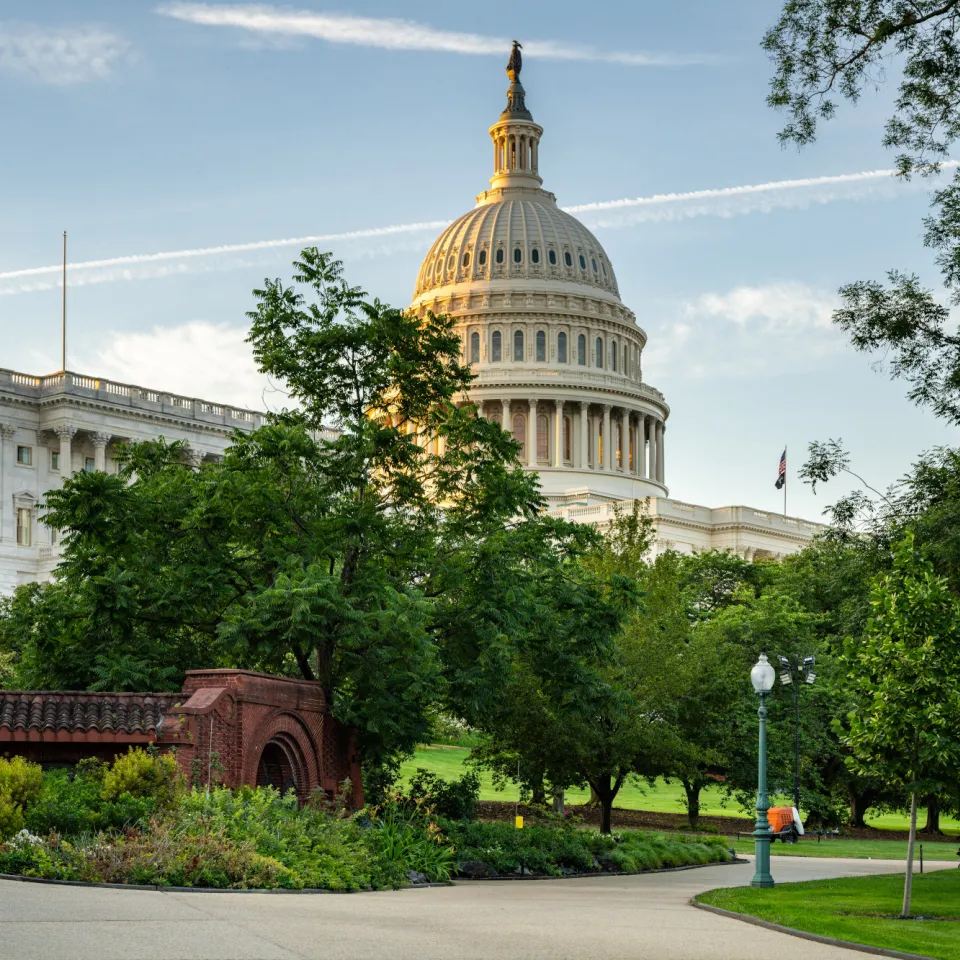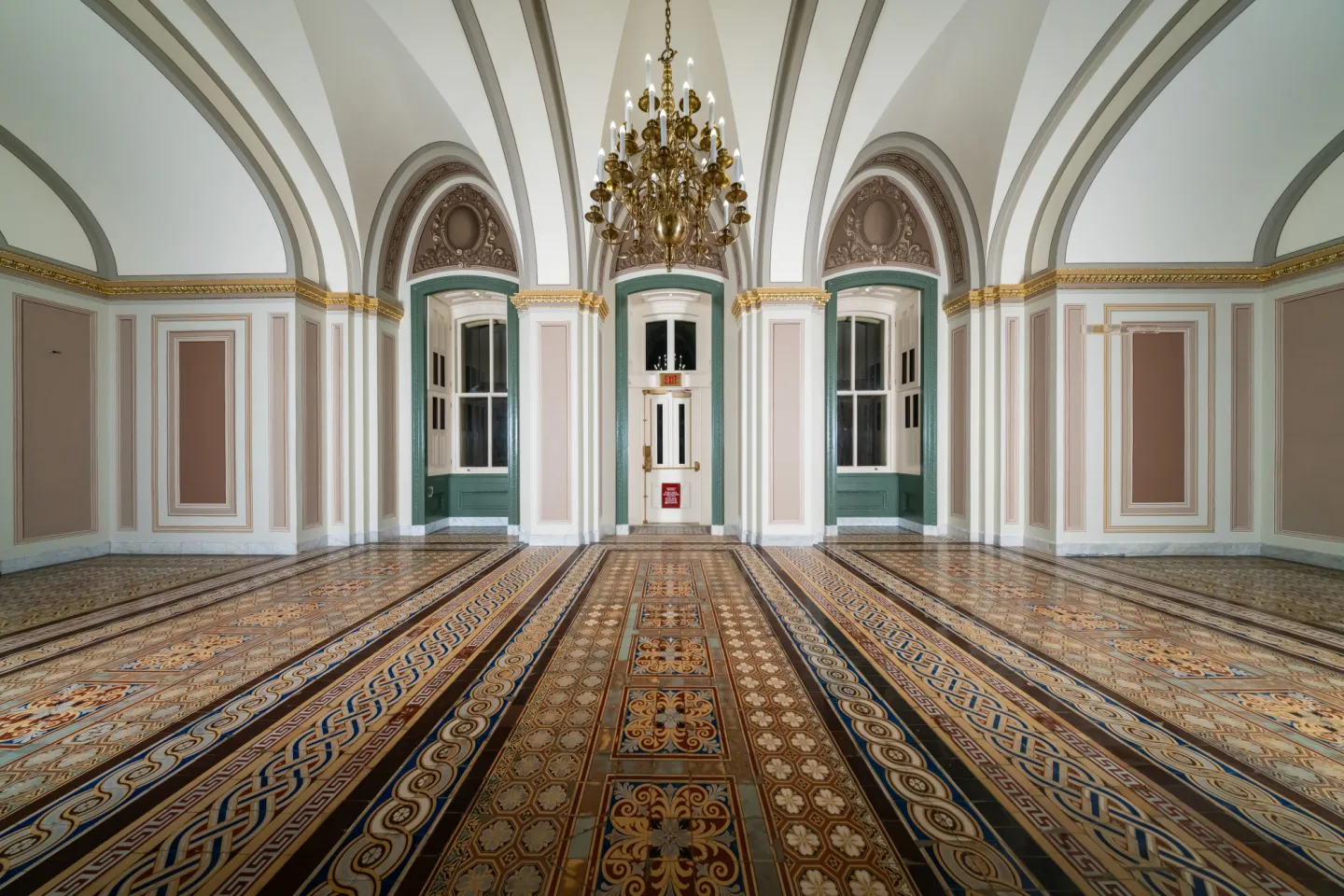
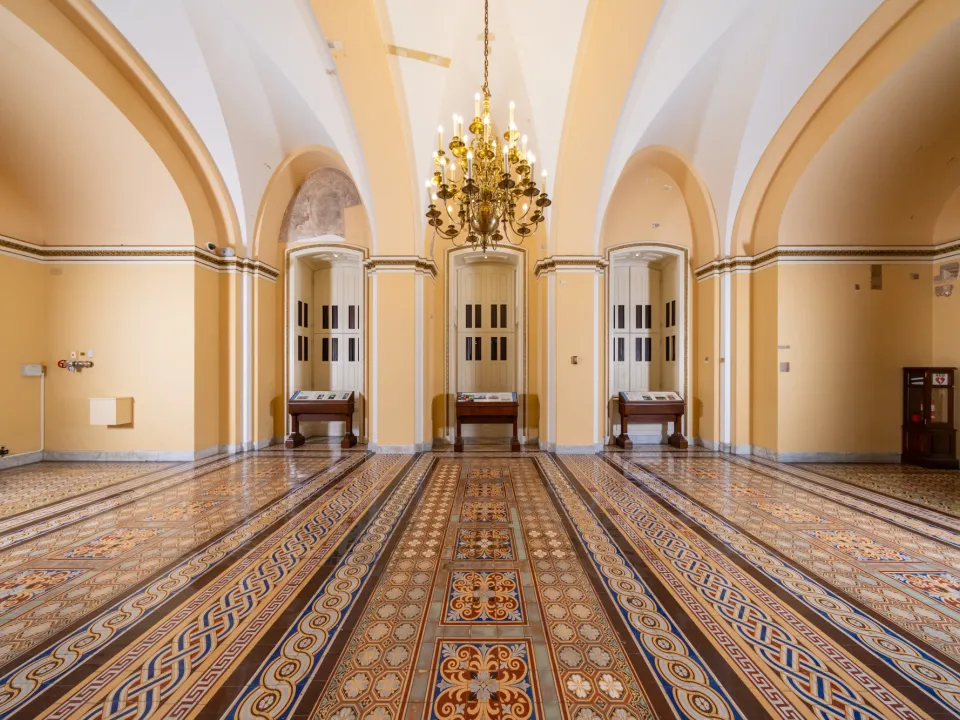
If you enter the U.S. Capitol from its Senate side, you'll quickly fnd yourself immersed in richly decorated corridors, in contrast to the Capitol's brightly painted Aquia Creek sandstone facade. Here, under the warm light of a 1930s chandelier, you'll see richly ornamented walls, gold-accented crown molding, and patterned, colorful encaustic tiles welcoming Members and visitors to the Capitol. These corridors, additions made as part of the 1852 to 1859 Capitol extension, lead to a light-filled connecting hallway.

Here, a vaulted ceiling, trompe l'oeil framing, and sage green accents complement the arched windows from which one can see the lawn of the West Front all the way down the National Mall to the Washington Monument.

For years, few visitors lingered to view these features. The space was characterized mostly by busy foot traffic from Members, staff and groups using it as a byway to reach offices and committee rooms. Within the last year, however, more folks are taking their time walking through the corridor — thanks to the rejuvenating endeavors of Architect of the Capitol (AOC) shops that include carpenters, insulators, painters, masons, electricians, plumbers, project managers and custodians. Together, the AOC's in-house Capitol Building teams collaborated to complete a renovation project that restored the corridor to its "period of significance."

A 150-Year-Old Treasure

Completed in June 2025, these comprehensive efforts restored the connecting corridor to look much as it did nearly 175 years ago. In historic renewal, a "period of significance" is determined by studying a place or object's age, historical context, and the presence of any unique materials. In a building like the U.S. Capitol, marked by notable goings-on and innumerable VIP visits since its construction, identifying the period of significance is difficult, said Dr. Michele Cohen, the AOC's Curator. Of course, this was one of the first steps in getting the renovation project started.

"We asked ourselves: was the corridor most significant when its construction was first executed?" Cohen said. "Or would it be considered more notable 100 years later? So our job is to collectively examine the most important contiguous visual factors of this particular space and then study their relationship to the rest of the building's features."

The renewed corridor would, of course, need to be compatible with the surrounding area of the Capitol and the five other Brumidi corridors. After much in-depth analysis, the year 1859 was agreed to mark the period of significance.

Scoping the Work

Jayashree Shamanna, the Historic Preservation Architect within the AOC Capitol Building jurisdiction, was aware of ongoing efforts to restore this space shortly after joining the AOC in 2022. Peeling paint and chipped plaster appeared up and down the walls, and water damage had obscured patterns. The 1962 East Front Extension covered half the windows on the left side of the corridor, and a chandelier brought over from the U.S. Supreme Court during a lighting upgrade campaign at the Capitol had been installed to make up for the lost natural light, but it had never been cleaned.

Shamanna's teams also anticipated there would be plaster damage beyond what was visible and were determined to uncover years of smaller remediations. They were also aware of the unique challenge of renovating such a well-tread corridor — they'd have to find solutions that did not disrupt the flow of traffic coming through the hall every day, nor disturb safety protocols.

From day one, Shamanna said, the restoration was a group effort. "It took a village and the AOC as a whole answered that call." Alongside Jason McIntyre, Executive Director of Facilities Operations, and Marshall Graves, Deputy Executive Director of Facilities Operations for the Capitol Building, Shamanna collaborated closely with Cohen to determine the project's priorities and preservation duties.

The group hired an outside firm to perform paint analysis and combed through archival records and materials that provided a glimpse of the space's original aesthetic effect and use as a main entrance to the Capitol Senate wing when coming from the Capitol's center. Achieving an accurate historic restoration in the 21st century means sourcing new materials that perfectly or at least closely match those used in the 19th-century construction period.

Image
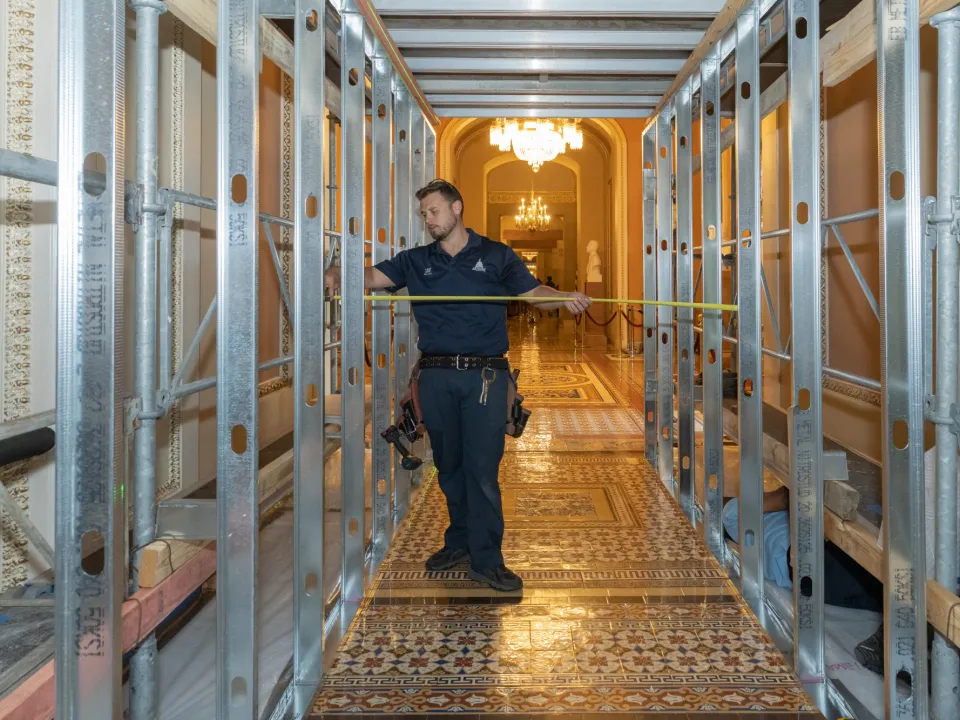
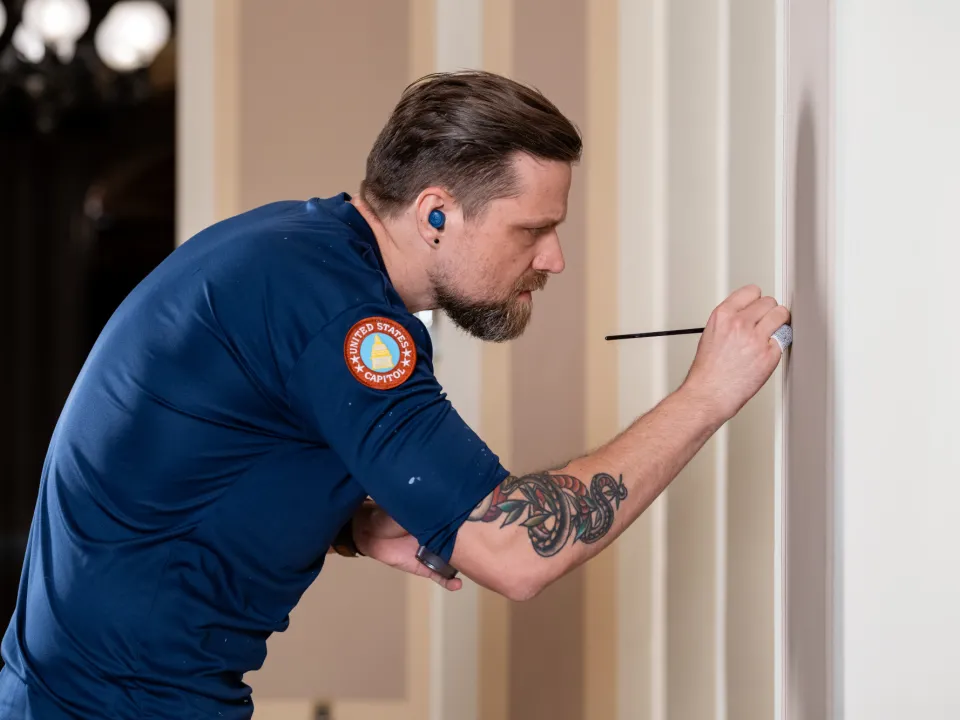
Woodcrafter William Slack from the AOC carpentry shop, measuring in preparation for building a walkway similar to the one in the connecting corridor, from a previous phase of plaster and paint repair at the Capitol Building.
Photo by
Kaleena Dwyer
Image
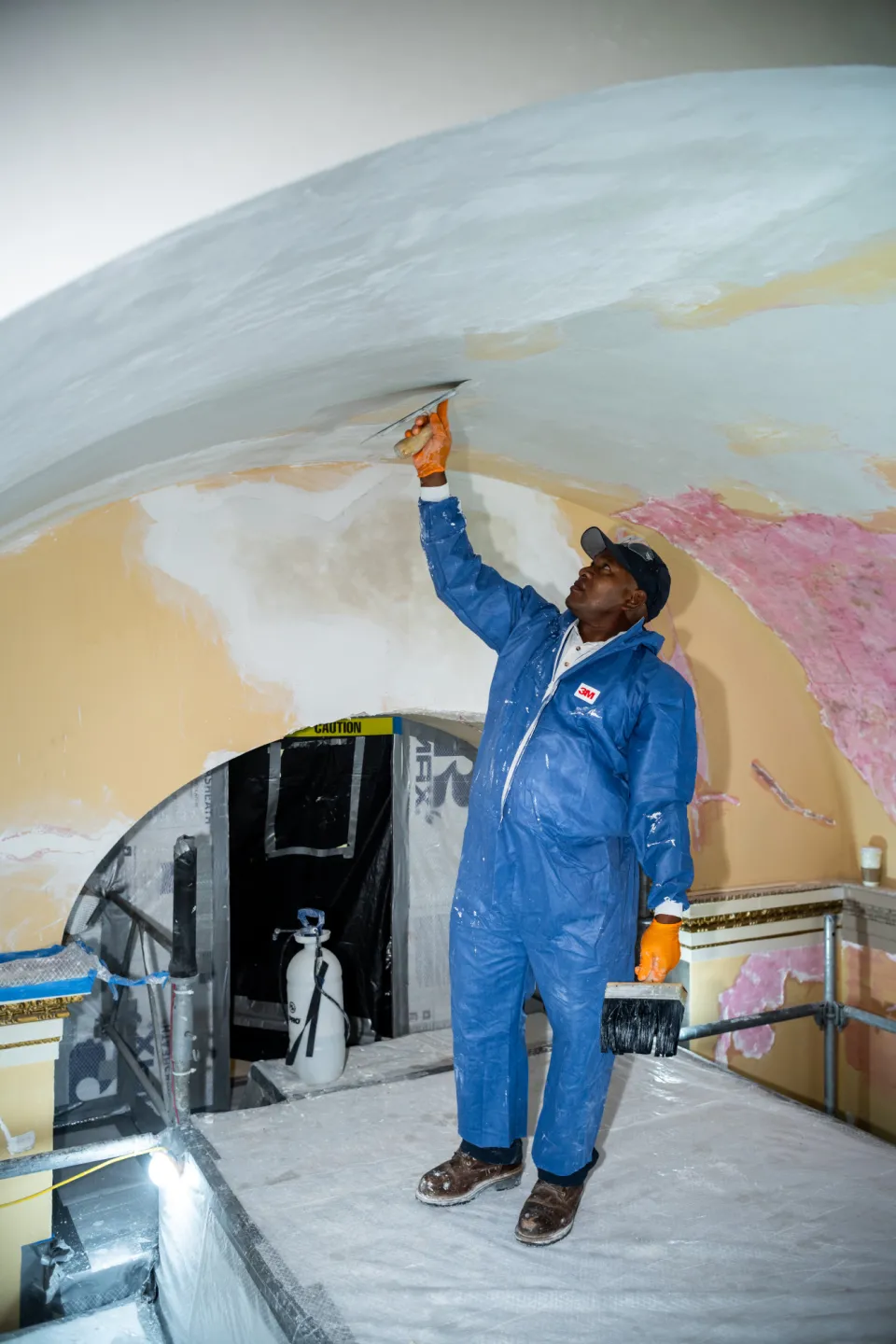
AOC Decorative Plasterer Raymond Andrew troweling the finish coat of the three-coat plaster on the ceiling.
Photo by
Thomas Hatzenbuhler

Having in-house experts accustomed to working with the AOC Capitol shops proved to be key in every stage, from planning to procurement to construction. Many of the teams have tackled similar renovations and are accustomed to the building's quirks as well as its unique safety and security challenges, like limits on entrance or exit closures and working hours.

"We're in a unique position to be capable of doing all this work ourselves using AOC experts — and to have natural camaraderie between our teams," Shamanna said. "We trust each other."

A testament to the AOC's "One Team, One Mission" goal, this camaraderie was vital in meeting the project deadlines on time. Shamanna and her teams aimed to have all the construction work accessible by the scaffold completed by the presidential inauguration, giving them about eight months from the start of work. They were successful, and the corridor was cleared for normal operations with only the finishing details on the walls and windows remaining. The entire project was wrapped in 13 months.

Getting to the Core of Layered Paint

Cori Wright, Painter-Decorator Supervisor in the Capitol Building jurisdiction, oversaw the painting elements of the connecting corridor project. Wright has been with the agency for 27 years and believes this to be her most visible decorative work to date.

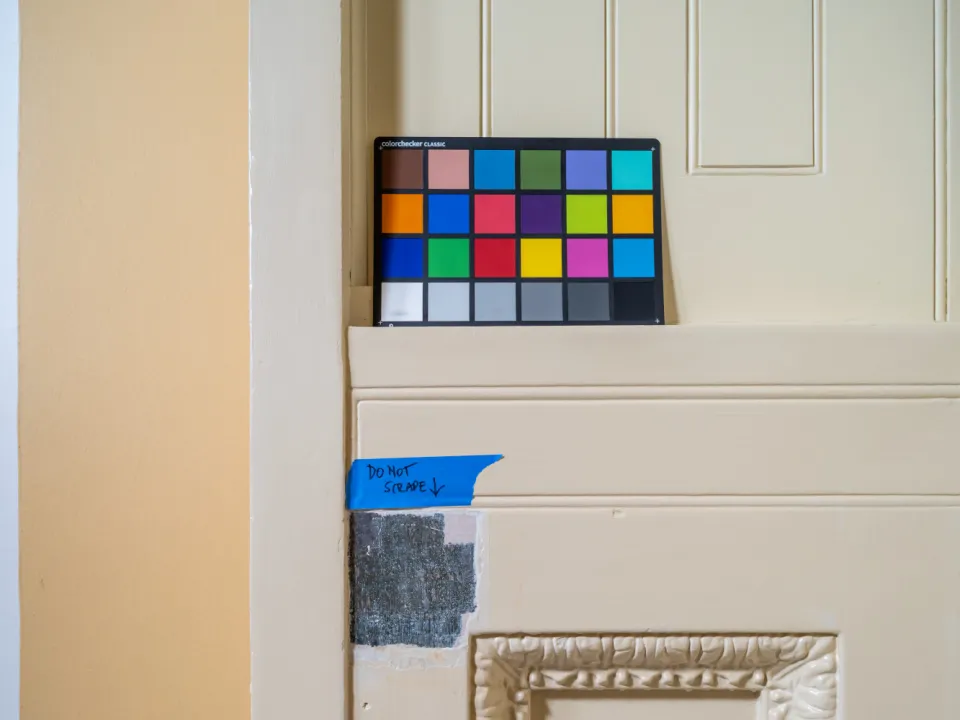
In any paint-involved renewal project, Wright said, large or small, paint analysis is one of the best ways the AOC can ensure consistency, longevity and historic integrity that reflects a period of significance. In the Senate connecting corridor, analysts first used a scalpel to cut 88 small, square-shaped representative samples of paint from the walls. Then, using a drill, they pulled out a "core" much like scientists do when examining an ice or soil sample. The sample was sent to a lab, where individual layers of paint, both oil- and water-based, appeared under a microscope.

Image
Historic paint exposure on the cast iron enframement and reference color chart.
Photo by
Thomas Hatzenbuhler
Image
A "before" view showing colors from previous paint campaigns and multiple paint exposures on the walls and ceiling, which helped determine the final color scheme.
Photo by
Thomas Hatzenbuhler
Image
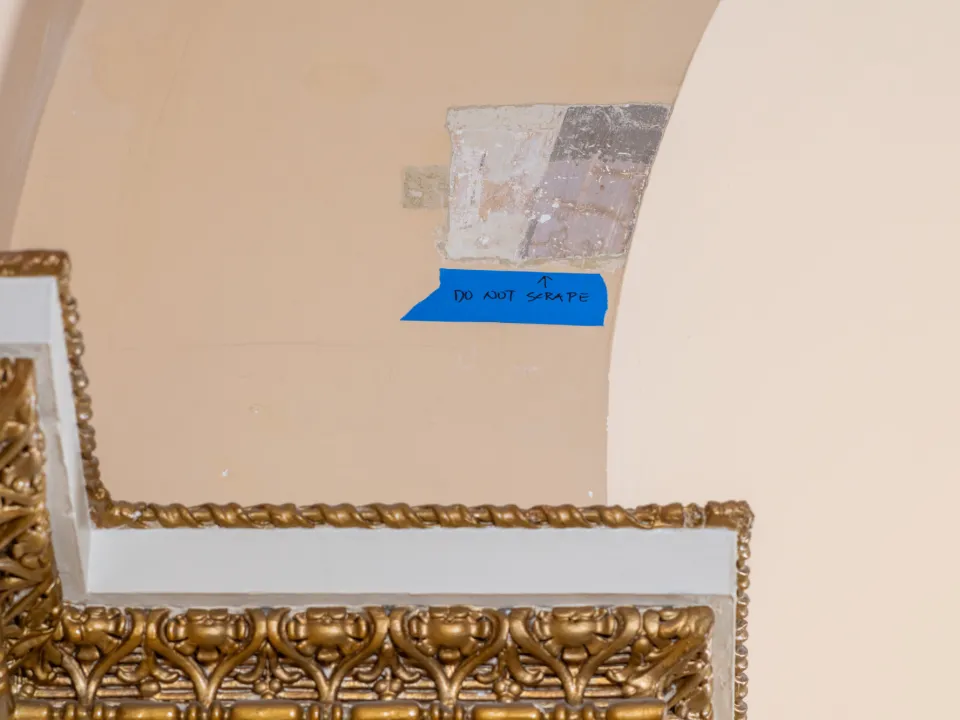
Paint exposure shows the historic paint scheme revealed during paint analysis.
Photo by
Thomas Hatzenbuhler
Historic paint exposure on the cast iron enframement and reference color chart; A "before" view showing colors from previous paint campaigns and multiple paint exposures; Paint exposure showing the historic paint scheme revealed during paint analysis.
Photos by
Thomas Hatzenbuhler

When the results of the analysis came back, the AOC teams discovered multiple layers of paint in over 50 exposures in the walls, enframements, and ceiling. Some of the oil-based paints had bled into the water-based paints, making it harder to distinguish individual colors. With a careful eye and a lot of patience, the paint experts developed and confirmed a palette of paint colors that perfectly matched those of the period of significance.

Wright's Painter-Decorator colleagues Brian Lindsay and Matthew McDonald used that same data — which also included information on the light sources in the hall and profiles of the trompe l'oeil — to develop digital and physical models for the project. These could be easily referenced by the nine-person paint team, who would eventually work around the clock to recreate Constantino Brumidi's original patterns and borders.

Efficiently Protecting the Space and Our Team

While the painters planned and practiced, the AOC's carpentry team created a safe working environment and established a path for pedestrians. The scaffolding that was erected guarded plasterwork and formed a makeshift hallway, which included a tunnel for safe passage through the active work site. The electrical team removed the chandeliers, safeguarded their wiring, and installed temporary lighting systems to best illuminate the area for detail-oriented work.

The insulation shop's responsibilities fell into two key categories: abatement of the plasterwork and lead paint, both of which are considered hazmat work, and building the containment structure around the scaffold. In some places, the insulators scraped through 4 inches of layered plaster, all the way down to the Capitol's original brick. Complicating the task was the team's instruction to save specific areas of the plaster around the paint exposures for historic preservation, which Erin Jordan, Insulation Supervisor, said was a unique challenge.

"There were layers of paint that needed to be preserved in the middle of areas where the plaster was loose. If you allow one area to remain, it can loosen others by default. The AOC was determined to save those spots, though — so we did!"

Jordan highlighted the teamwork needed to complete such a big job. His insulators worked with a hygienist to abate the dust and paint chips coming off the surface areas of the walls and ceiling. Using a pump spray, one member of the team misted the air with water while the other three insulators scraped plaster. The entire team worked to complete the abatement and removal at night, ensuring the walkway was clear for pedestrians by morning every day. It was one of the largest projects Jordan has been involved with at the AOC and ranks among his favorites.

"We didn't want to leave [the project] for the next generation of AOC folks — we wanted to get it done. We consider the Capitol our house. We stand by our work and know that no one will do it better than us. And we love when we're given projects like this!"

A "knock test" was used to identify otherwise invisible plaster damage. A team member tapped sections of the walls with a small mallet and listened for hollow or muffled sounds, which could indicate that the paint and/or plaster are loose from the brick wall (substrate). (A knock against well-insulated plaster should sound fuller.) This was mapped out on a drawing to document exactly how much delamination and damage had occurred, ensuring minimal waste and more efficient work. In some places, three layers of plaster were removed and redone, while in other areas, only the top layer of paint was scraped off. In highly delaminated areas, almost 4 inches of plaster was removed.

Once below-the-surface damage was rectified, the plumbing team came in to move the area's fire hose to an accessible area. With these safety protocols in place and a cleared space to work in, painting could begin.

A Coat of Many Colors

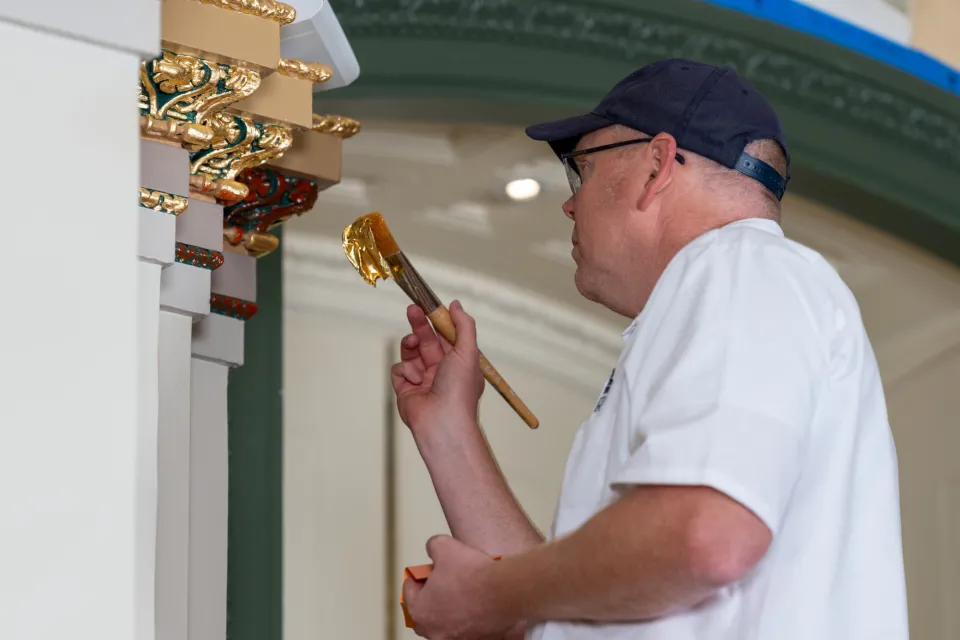
In accordance with the analysis findings, the corridor walls were primed and painted in shades of off-white and cream, with the window wells a deeper, more dramatic green. The cornice is bedecked in gold leaf, hearkening to the hallways just a few steps away.

Image
AOC Decorative Painter Brian Lindsey working on trompe l'oeil details and painting on the newly replastered walls.
Photo by
Thomas Hatzenbuhler
Image
AOC Decorative Painter Matthew McDonald gilding the decorative cornice with gold leaf.
Photo by
Thomas Hatzenbuhler

To the untrained eye, the lower halves of the corridor walls seem adorned with panel molding. But as one approaches the wall, the three-dimensional border flattens into simple concentric rectangles painted in complementary beige and mauve hues. This is a tromp l'oeil (translated, "trick of the eye") effect: an optical illusion that's a testament to the painters' mastery of perspective. Likewise, the "marble" base bordering the enframement at the bottom of the corridor displays their faux finish skills. In fact, the base is made of cast iron, painted in shades of marble-esque white with grey "veins" running throughout.

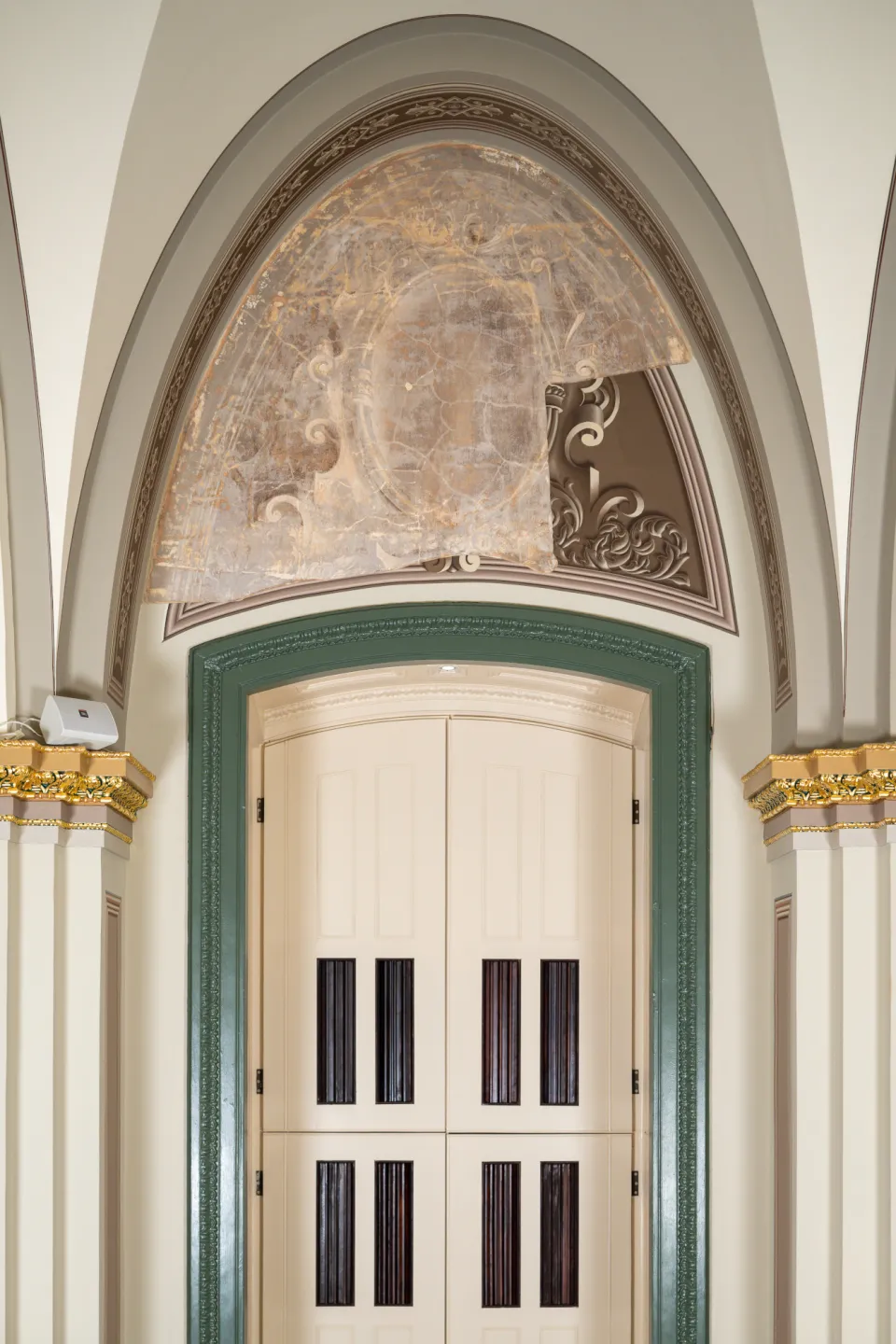
Of all the paint features updated through the renovation, the most remarkable is the lunettes. Intricate frescoes are visible in each of the six arches atop the corridor windows. Painted medallions are bordered by rinceaux on either side, set against light brown backgrounds. Each lunette is shaded slightly differently, corresponding to the amount of light that hits the arch throughout the day. While the shading is intentionally unique, the six designs look identical. The average layperson would never know that Wright trained her shop in recreating the design, having them practice on canvas for several weeks until they'd mastered the design. Practice made perfect, and after each painter finished a final version, the canvases were attached to the wall using wallpaper adhesive. The painters also restored the guilloche — the repeating patterns visible above the lunettes on the arches.

"Having several painters skilled in decorative design makes the work a lot more efficient," Shamanna said. "Because of Cori's planning, what would have taken five weeks for one person to do took just three mornings."

Of the six lunettes, only five are new, as Shamanna and Cohen agreed to leave one original lunette exposed, which offers a striking contrast. The untouched medallion is but a faint circular outline. The vines curl outward and then dissipate, and patches of fading and wear taint the once solid-colored background. The visual is an important teaching tool, Shamanna says, and is one of three small areas of the corridor left purposefully unfinished.

Image
Juxtaposed with the exposed original, the recreated canvas inset creates opportunities for teaching moments.
Photo by
Thomas Hatzenbuhler

Almost on cue, as we stood below the lunette and Shamanna detailed the exposure, a passing Capitol Visitor Center visitor guide stopped his tour group to point out the difference between old and new. The contrasting lunettes offer a rare opportunity for the Capitol Building team's work to be visible to the public. It's rare for them to have the limelight, especially since the AOC's ultimate goal is to make the space look as it always has.

"It's an exciting chance to educate the public as they're passing through the space; they get that 'a-ha!' moment when the work teaches through example," said Cohen. "In this project, we set up a dialogue in the space: here's what we exposed, here's our source, here's how we interpreted it. This is historic preservation in action, and it's true to Brumidi's original intent."

Final Touches

Once the paint work wrapped and the chandeliers were rehung, the teams completed the remaining punch list items with efficiency and ease. Noisemaking work was completed overnight, between 8 p.m. and 8 a.m., and the labor team was on-site at the project's conclusion to complete a thorough cleanup. Thanks to the dedicated teamwork of the in-house teams, the connecting corridors renovation project was completed in early summer 2025.

Though 19th-century builders are no longer overseeing the job site, AOC teams were able to trace their work back to the era — restoring this public passageway, one of the oldest spaces in the Capitol, to its original look and feel. Today, the corridor is an important antique and an example of the stylistic vision established long ago for the home of American democracy.

Add a new comment

The content of this field is kept private and will not be shown publicly.

Plain text

  • No HTML tags allowed.
  • Lines and paragraphs break automatically.
  • Web page addresses and email addresses turn into links automatically.

Join Us on Social

Follow @uscapitol on X or Instagram for more.

Our Stories

Recent Articles
History & Discoveries

Revolutionary Paintings by John Trumbull

Our Curator takes a deeper look at the four large history paintings by John Trumbull in the U.S. Capitol Rotunda, which depict pivotal moments before, during and after the Revolutionary War. #America250
Public Notice

Volume 31 of Tholos Magazine Now Available

Highlights include tools the House Carpentry Branch uses, restoration of a U.S. Capitol Senate corridor, and how the U.S. Botanic Garden is testing its orchids for viruses.